

 English
 中文简体
中文简体 Español
 日本語
日本語 русский
 عربى
عربى

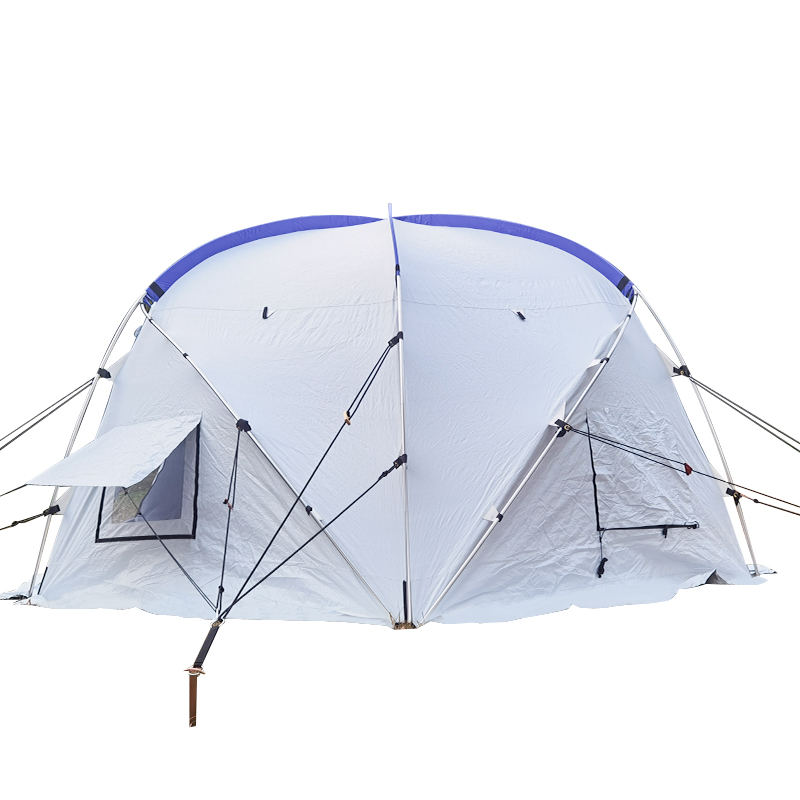


TO SHELTER ALL, TO SMILE ALL.
Our story is about how to uphold the spirit of humanitarianism in the face of disaster, how to find solutions amidst challenges, and how to sow hope in despair.
Content
Rain usually arrives at night, and it always finds the weakest point in your shelter. You wake up to a cold drip landing on your sleeping bag, run a finger along the inside of the flysheet, and feel the fabric spongy where it should be slick. Before you search for how to rainproof a tent, stop and take stock: a leaking tent is rarely a lost cause. In most cases, the problem is one of three failures - worn seam tape, a degraded polyurethane (PU) coating, or a DWR finish that no longer beads water. Each of these can be restored at home with the right sealer and a few hours of work.
A tent's weather protection works as a layered system. The outer face of the flysheet carries a DWR (durable water repellent) finish so rain collects into droplets and runs off before the fabric can absorb it. Below the surface, a PU or silicone coating blocks water that does saturate the outer fibres. At every seam, tape or liquid sealant closes the needle holes left by stitching. The floor adds its own heavier coating and is cut with raised edges - the bathtub floor design - so water at ground level cannot seep in from below.
Many "leaks" are not leaks at all. Condensation forms when the warm, humid air produced by your breathing and body heat hits the cold flysheet at night. It shows up as a fine mist or small droplets on the inside of the fabric and can drip when you brush against it. A true leak, by contrast, is a steady drip or a growing wet patch caused by water passing through the material. Testing before you treat will stop you from spraying sealant on a tent that was dry all along.
One more distinction helps. "Water-repellent" means the fabric sheds light rain and mist, while "waterproof" means the coated and sealed fabric resists a column of water several metres high without a drop passing through. Rainproofing a tent, in practical terms, means restoring both properties: the face fabric must shed water, the coating must block it, and the seams must stay closed to moisture.
Understanding how tent waterproofing is measured will save you money on unnecessary treatments and help you judge whether a product is worth its price. Most tents arrive from the factory with a known waterproof rating, and your goal is to keep the tent performing at that rating - or as close to it as possible - for as many seasons as you can.
The standard measure is hydrostatic head (HH), expressed in millimetres. A fabric sample is placed under a clear column of water, and the water level is raised until three droplets appear on the underside. A rating of 1,000 mm means the fabric held back one metre of water pressure; 3,000 mm means three metres. In practice, 1,000-1,500 mm is enough for a light shower, 2,000-3,000 mm handles moderate rain, and 3,000 mm or more is the level most campers need for a full night of rain.
The chart below summarises the typical hydrostatic head ranges you will meet when comparing tents and shelters. Entry-level recreational tents often sit near the bottom of the scale, which explains why they soak through in a real downpour. Mid-range three-season tents cluster around the 2,500-3,000 mm mark, which most campers describe as the comfort threshold for weekend trips. Family and expedition tents climb higher because they are expected to withstand prolonged exposure and wind-driven rain. PVC-based industrial and humanitarian shelters occupy a different world entirely, with ratings many times higher than any consumer tent. Use this chart as a benchmark before you decide whether your tent needs a light refresh or a full re-treatment.
Typical Hydrostatic Head Ratings by Tent Category (mm)
The first thing this chart tells you is that not every "waterproof" label means the same thing. A tent rated at 1,000 mm will repel drizzle and a short shower, but the moment rain pools on a flat panel or beats against the flysheet for hours, the fabric reaches its limit. The 3,000 mm level is significant because it roughly matches the pressure of steady rainfall driven by a moderate wind; at this rating, a well-sealed tent should keep a family dry through the night. Family models rated from 3,000 to 5,000 mm add a safety margin for heavy storms, sagging fabric, and the natural loss of performance that happens as a tent ages. Expedition tents in the 5,000-10,000 mm band are designed for alpine and winter conditions where snow loads and wind-driven rain punish the weakest panels. PVC industrial shelters, rated above 15,000 mm, are a different category altogether: they are built for months of continuous exposure, and their coating does not degrade the way a consumer PU coating does. The chart also explains why a simple DWR spray is not a cure-all. DWR only restores the outer beading layer; it does nothing for the coating layer underneath. If your tent's original rating was 1,500 mm and the PU coating has degraded, re-applying DWR will make the surface shed water while the body of the fabric still wets out and darkens. For the same reason, a sealer applied to the inside of the flysheet can revive an old coating, but it cannot raise the fabric's rating beyond what the base material will physically hold. Ratings also drop with age and use: UV exposure, repeated folding, and machine washing all reduce the effective hydrostatic head long before you notice visible damage. This is why manufacturers state a fresh-off-the-line rating, not a lifetime guarantee. When you compare tents, look at the rating of the flysheet fabric, the floor, and the quality of the seam taping, because a 5,000 mm flysheet with untaped seams will still leak at every stitch line. In short, the chart is a reminder that seams, coating, and DWR work as one system, and a rainproofing routine should treat the system, not just the surface.
Field reports from camping communities and return data collected by tent manufacturers point to a clear pattern. The most common leak sites, in rough order of frequency, are the taped seams, the floor near the corners, the lower wall panels, and the zipper tapes. Seams fail because the tape loses adhesion under UV light and flexing; floors fail because dirt and grit grind through the coating when you walk or lie on them; lower walls fail because rain splashes back from the ground and keeps the fabric wet for long periods.
| Component | Typical failure | What you notice | Best fix |
|---|---|---|---|
| Seams | Tape lifts or cracks | Drips along stitch lines | Apply seam sealer |
| Flysheet coating | PU hydrolyses | Fabric darkens and stays damp | Refresh with coating |
| DWR finish | Worn by washing | Water soaks in instead of beading | Re-apply DWR |
| Floor | Abrasion damage | Damp patches near edges | Patch and seal |
| Zipper tapes | Stitch holes open | Drips beside zipper | Seal tape with sealer |
Before you buy anything, run a ten-minute inspection. The cheapest rainproofing job is the one you discover you do not need, and the fastest way to find a weak spot is to simulate rain in a controlled space.
| Symptom | What it means | Next step |
|---|---|---|
| Water beads and rolls off | DWR is working | No DWR treatment needed |
| Surface wets out and darkens | DWR has worn off | Apply DWR spray to flysheet |
| Drips appear along seams | Seam tape has lifted | Apply seam sealer inside and outside |
| Damp spots on floor near corners | Floor coating worn | Patch or coat the floor |
| Fine mist on flysheet interior | Condensation, not a leak | Improve ventilation |
The biggest mistake campers make is treating condensation as a leak. Condensation appears evenly as a fine mist and usually clears when you open the vents; a true leak is localised, steady, and grows. If your tent has poor cross-ventilation, even a brand-new tent will collect moisture on the flysheet, and no amount of waterproofing spray will fix it. In that case, the solution is a better airflow design, a higher bathtub floor, or simply pitching the tent so the breeze flows through the doors and vents.
With the inspection complete, you can work through the treatment in order. The sequence matters: a clean tent accepts treatment, dry seams hold sealer, and a protected floor gives you the longest service life. Plan for a dry day with a few hours of daylight, and never apply treatments to a damp tent.
Coatings and sealers bond only to clean fabric. Dirt, sunscreen, insect repellent, and food residue all block the treatment. Wash the tent by hand in a bathtub or large container with lukewarm water and a mild soap - never a washing machine, and never a detergent with bleach or fabric softeners. Rinse thoroughly, then pitch the tent and let it dry completely in the shade. Do not leave it in direct sun for long periods, because UV accelerates coating breakdown.
Seam sealing is the highest-value rainproofing step. Buy a solvent-based seam sealer made for tent fabric; if your tent uses silicone-coated fabric, buy a silicone-compatible sealer instead, because a standard sealer will not stick to silicone.
Most campers seal the outside of the seams, which is correct for polyester and nylon tents. For extra protection in heavy rain, a second thin coat applied to the inside of the same seams adds strength without making the fabric stiff.
The DWR layer is what makes rain bead and roll off the flysheet. After a few seasons, or after washing, that finish wears away and the outer fabric soaks up water, which makes the tent heavier and forces the coating to work harder. Restore it with a spray-on DWR product.
DWR is not a substitute for coating. If the flysheet wets out but the inside stays dry, the DWR has failed and the coating is fine; spray the outside. If water is coming through the fabric, the coating has failed and you need a coating treatment or a new flysheet.
The floor takes the most abuse: boots, grit, tent pegs, and the ground itself. Small holes and worn patches can be fixed with a repair patch and a waterproof sealant. For larger areas, use a liquid tent floor coating brushed on the inside of the floor. Always work on a clean, dry floor, and allow several hours of cure time before folding the tent. Because a floor coating adds weight and stiffness, use it only on the floor, not the walls.
The fastest way to keep rain out is to stop water from reaching the tent at all. A lightweight tarp pitched above the tent acts as a second roof, keeps morning dew off the flysheet, and allows you to leave the tent doors open in light rain. On the ground, a footprint - a cut-to-size tarp placed under the tent - protects the bathtub floor from rocks and abrasion. Fold the footprint so it sits just inside the tent's outline; if it sticks out past the edge, it will catch rainwater and channel it under the floor. A tarp and footprint add very little weight and dramatically reduce the frequency of re-treatment. For heavy-duty relocation and humanitarian-style deployments, a reinforced plastic tarpaulin can be the difference between a dry store of supplies and a water-damaged one.
The same spray bottle will not work on every tent. Polyester, nylon, cotton canvas, and PVC each respond to rainproofing differently, and applying the wrong treatment can ruin the fabric's breathability or make the coating peel.
Most consumer tents use polyester or nylon with a PU coating on the inside and a DWR finish on the outside. These fabrics are light, pack small, and tolerate seam sealing and DWR spray without special preparation. The main risk is the PU coating, which gradually hydrolyses - reacts with moisture and breaks down - after about five years. You can slow that process by storing the tent dry and loosely rolled, and by re-applying a PU coating treatment once the shiny inner layer starts to powder or peel.
Cotton canvas tents behave in a completely different way. The cotton fibres swell when wet, closing the weave and becoming naturally water-resistant; that is why traditional expedition tents are still made from canvas. Canvas also breathes, which reduces condensation. The trade-offs are weight, drying time, and the need for regular treatment with a canvas-specific waterproofer. A cotton-canvas bell tent, for example, needs its seams treated with a wax-based or acrylic-based canvas sealer, and the body should be re-treated before a wet season. If canvas is allowed to dry fully before storage, it resists mildew and lasts for many years. You can see this approach in a quality cotton-canvas shelter like our 3 m standard waterproof bell tent, which is designed for family camping and glamping and benefits from the same canvas care routine.
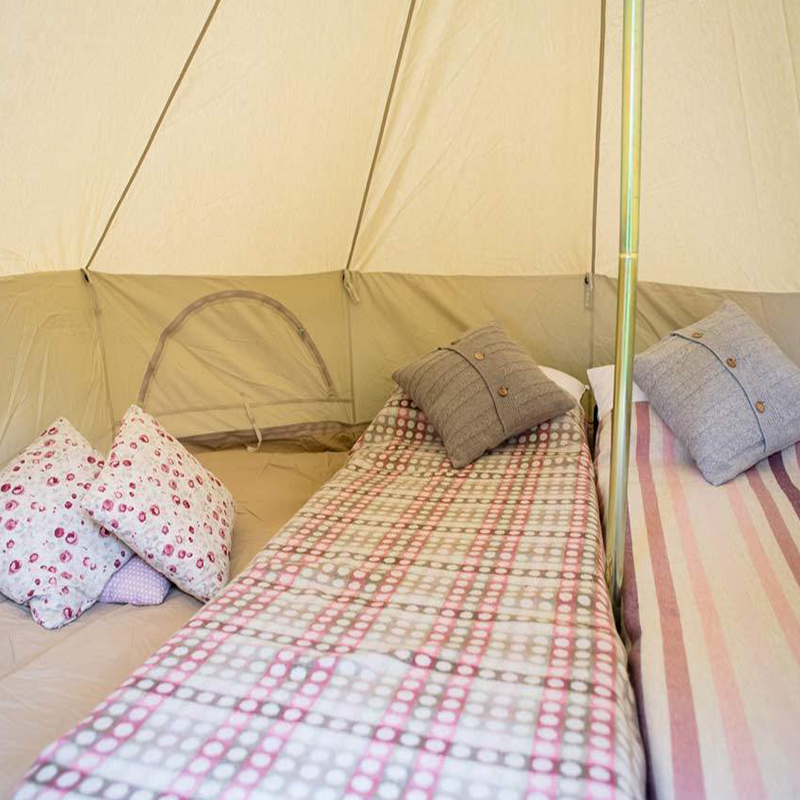 3m Standard Waterproof Bell Tent Camping Tent Suppliers, Factory - Yangzhou MailMailenda is a China OEM/ODM 3m Standard Waterproof Bell Tent Camping Tent suppliers and custom factory, Item No. BES03 Item Name 3m ...View Product →
PVC and PE tarpaulins and shelters are in a different league. These fabrics are laminated or coated with PVC from the start, so they are effectively waterproof without DWR. They are used for storage tents, party marquees, carports, and humanitarian shelters because they survive months of sun and rain. The practical issue is that PVC is heavy, non-breathable, and difficult to repair in the field; it also requires heat-welded or pressed seams. Rainproofing for a PVC shelter is mostly maintenance: clean the surface, check the seams, and re-seal any weld that has opened. PVC shelters are common in our storage tent and party tent ranges because they shrug off rain with very little yearly care.
PU-Coated Polyester
|
Cotton Canvas / Polycotton
|
Rainproofing after the fact is always second-best. When you buy a new tent, the features that keep water out are decided at the factory: fabric rating, seam taping, flysheet coverage, floor design, and ventilation. The same logic applies to anyone purchasing tents in bulk - a retailer, an event company, or a disaster-relief buyer should specify these details in the product datasheet from the start.
| Feature | Why it matters | Minimum you should accept |
|---|---|---|
| Hydrostatic head rating | Measures fabric resistance to rain | 3,000 mm for the flysheet |
| Factory-taped seams | Closes needle holes before you ever pitch it | Taped critical seams |
| Bathtub floor | Raised edges keep ground water out | 10-15 cm raised walls |
| Full-coverage flysheet | Protects walls and doors | Reaches near the ground |
| Ventilation | Reduces condensation | Two vents or a canopy gap |
If you buy from a wholesaler or import directly from a manufacturer, ask for the hydrostatic head test report and the fabric weight in grams per square metre. A supplier that cannot show you these numbers is giving you a reason to walk away. For humanitarian and institutional buyers, tents built to recognised standards - such as the ICRC, IFRC, or UNHCR specification families - are the usual benchmark, and their fabric ratings are generally higher than consumer models.
As an example, our ICRC/IFRC/UNHCR standard five-person all-weather family tent is designed for long deployment in harsh conditions, with a taped rainfly, a strong bathtub floor, and materials selected for repeated use. It is the kind of tent that a relief agency or a family camper can trust for years after a routine seam-sealing pass. The same factory capability that produces institutional-grade shelters is what makes a good consumer family tent: attention to seam detail, generous flysheet overlap, and a floor that does not let groundwater through.
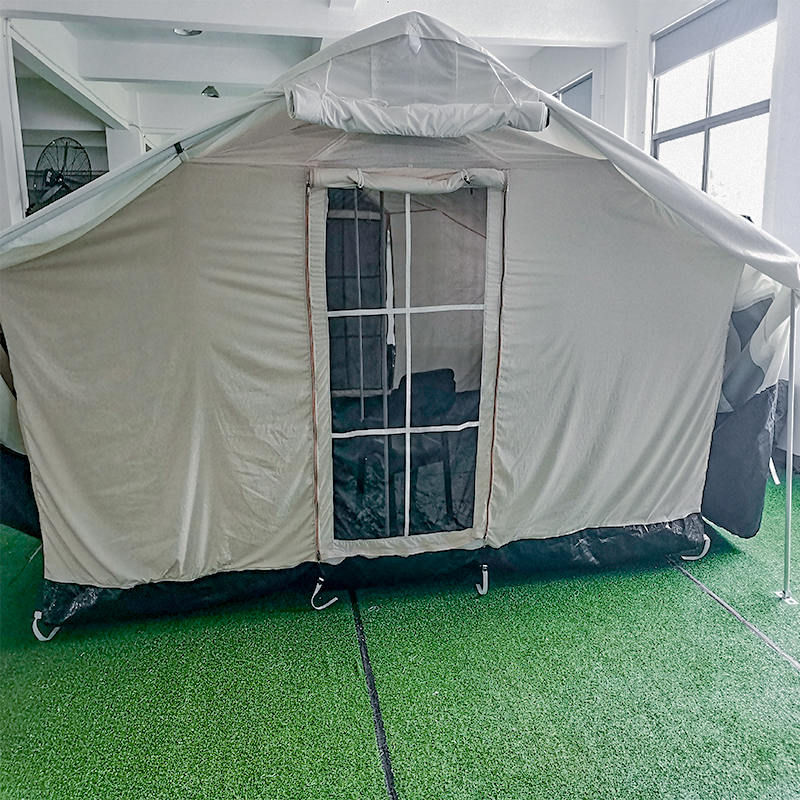 ICRC IFRC UNHCR Standard 5-Person Double Foldable All-Weather Family Tent SuppliMailenda is a China OEM/ODM ICRC IFRC UNHCR Standard 5-Person Double Foldable All-Weather Family Tent suppliers and custom factory, Sp...View Product →
Inflatable air-beam tents are worth considering when you regularly set up in rain. A conventional tent takes minutes to assemble, and every minute spent in a downpour means water finding its way onto the inner tent. An inflatable tent uses a single air pump to raise the whole structure in about a minute, so you spend less time exposed and less time letting rain into the sleeping area. An inflatable model such as our 8-10 person four-season waterproof inflatable air tent for camping uses a heavy, coated fabric and air beams that set up quickly. The fabric is also thicker and more abrasion-resistant than a backpacking shell, which improves long-term waterproofness. If you camp in groups or need a shelter that can be deployed in poor weather, this style of tent is a strong option.
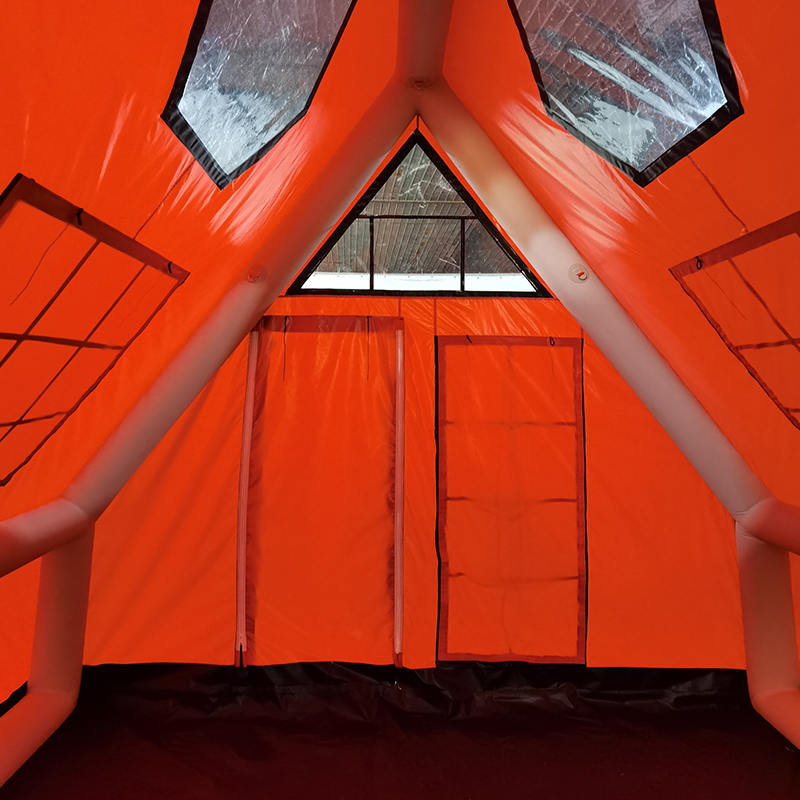 8-10 Person Four Season Waterproof Inflatable Air Tent for Camping Suppliers, FaMailenda is a China OEM/ODM 8-10 Person Four Season Waterproof Inflatable Air Tent for Camping suppliers and custom factory, Item No. ...View Product →
A tent that is packed wet for a week will develop mildew and lose its coating far faster than one that is dried and stored properly. Storage conditions and a simple annual routine do more for waterproofing than any spray.
| Component | Re-treatment frequency | Method |
|---|---|---|
| Flysheet DWR | Every 2-3 years, or when water stops beading | Spray-on DWR |
| Seams | Every 2 years, or when tape lifts | Seam sealer |
| Floor coating | Every 3-5 years, or when floor wets out | Liquid coating |
| Canvas body | Before each wet season | Canvas waterproofer |
| PVC shelter | Inspect seams each season | Weld or seal repair |
Once a year, before the wet season, pitch the tent and repeat the spray-bottle test described earlier. If you keep a careful eye on the seams and the DWR, you will typically get five to eight years of service from a good tent, and much longer from canvas or PVC models. A deeper look at the practical side of tent care covers everything from fabric repair to frame maintenance, and it is worth reading before your next long trip.
Here are the questions campers and buyers ask most often when they search for how to rainproof a tent.
If this guide helped you understand how to rainproof a tent, the following resources from our team cover related topics in more depth.
Read the practical camping tent manual for repairs, cleaning, and frame maintenance.
Why inflatable tents are popular with campers, and what to look for in air-beam designs.
What makes a family tent reliable in wet weather, from layout to fabric choice.
Rainproofing a tent is not a mysterious ritual. It is a matter of checking the seams, restoring the DWR, refreshing the floor coating, and protecting the tent with a tarp and footprint. Do the inspection every season, treat the weak points early, and store the tent dry, and even a budget tent can keep you comfortable through years of rain.
For regular campers, the takeaway is simple: the best time to rainproof a tent is before you need it. Pitch it at home, run the spray-bottle test, and seal any seam that looks doubtful. For buyers and procurement teams, the same principle applies at scale - specify the hydrostatic head rating, the seam taping, and the bathtub floor design in writing, and verify them in the factory or from the datasheet. Whether you are a weekend camper, a wholesale buyer, or a relief organisation sourcing tents from a manufacturer, the basic requirements do not change: clean fabric, sealed seams, and a coating that holds.
Related Products

Our story is about how to uphold the spirit of humanitarianism in the face of disaster, how to find solutions amidst challenges, and how to sow hope in despair.
Copyright © Yangzhou Mailenda Outdoor Products Co., Ltd.
All Rights Reserved.
Custom Tent OEM/ODM Manufacturers


