

 English
 中文简体
中文简体 Español
 日本語
日本語 русский
 عربى
عربى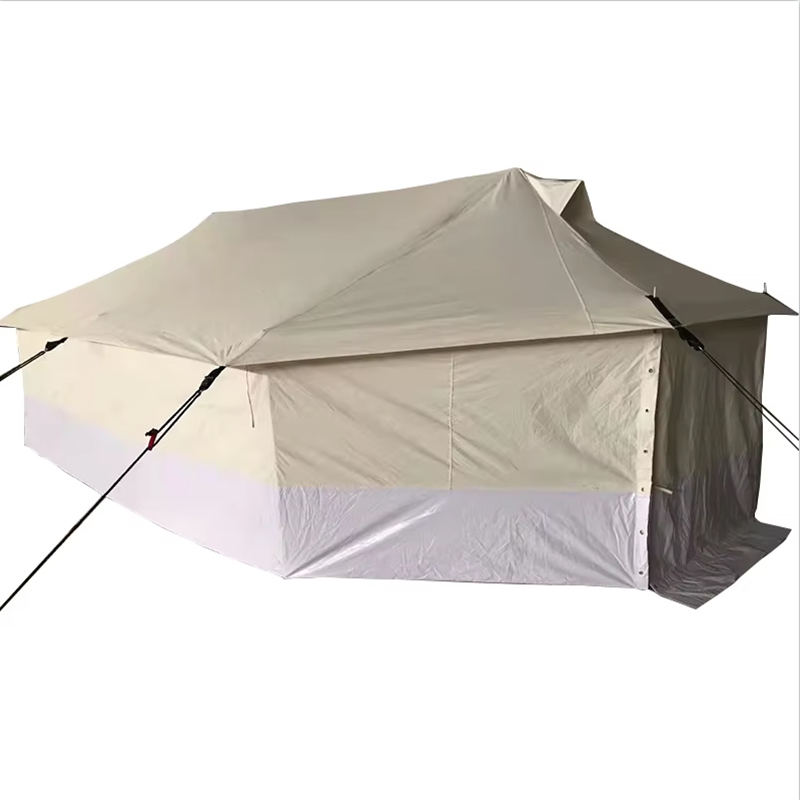

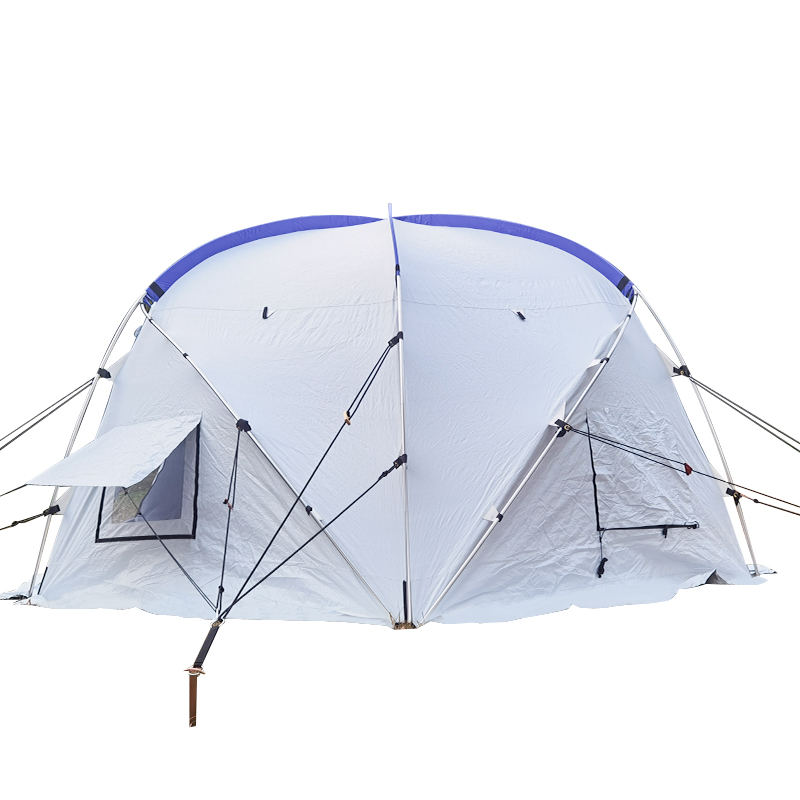


TO SHELTER ALL, TO SMILE ALL.
Our story is about how to uphold the spirit of humanitarianism in the face of disaster, how to find solutions amidst challenges, and how to sow hope in despair.
Content
When disaster strikes or large-scale events demand rapid shelter deployment, the choice of tent structure determines how quickly and effectively people are protected. Yangzhou Mailenda Outdoor Products Co., Ltd. — a relief tent producer and refugee tent manufacturer with over 20 years of field-tested expertise — supplies a full spectrum of solutions: from the ICRC/IFRC Standard 33.6m2 Multi-Purpose Shelters Tent to inflatable rapid deployment shelters, warehouse tents, and high performance tents (HPT). This guide covers every major category, compares specifications, and helps procurement officers, humanitarian organizations, and event planners identify the right structure for their needs.
Selecting the wrong shelter structure leads to failed deployments, occupant safety issues, and wasted logistics budgets. A dispensary tent or hospital tent needs clean-room partitioning and blackout capability; a warehouse tent or storage tent requires high eave clearance and forklift-passable entry; an inflatable family tent demands fast setup with minimal tools. Matching the tent category to the mission is the first decision — and the most consequential one.
The table below maps common deployment scenarios to the most suitable tent types and notes which MSU Relief Items or shelter kit components are typically bundled with each.
| Scenario | Recommended Tent Type | Key Shelter Kit Items | Setup Time |
|---|---|---|---|
| Refugee camp family shelter | ICRC/IFRC 33.6m2 Multi-Purpose Shelters Tent / Family Tent | Plastic sheeting, sleeping mat, thermal blanket, jerry bucket | 3–4 hrs (4 people) |
| Field clinic / dispensary | Dispensary Tent / Hospital Tent / HPT 72m2 | Partition sets, ground sheet, water container | 4–6 hrs (6 people) |
| Rapid post-disaster shelter | Inflatable Rapid Deployment Tent / Low-Pressure Inflatable Shelter | Thermal blanket, folding bed / filed cot | Under 20 min |
| Military / army forward base | Military Tent / Army Tent / MGPT / 10-Men Tent | Folding bed, sleeping mat, plastic tarpaulin | 2–3 hrs (4 soldiers) |
| Outdoor events / weddings | Marquee / Wedding Tent / Event Tent / Party Tent / Pagoda / Pavilion | Flooring, sidewalls, lighting anchor kits | 4–8 hrs (crew) |
| Seasonal vehicle / equipment storage | Portable Garage / Carport / Car Shelter / Warehouse Tent | Ground anchors, cover tarp | 1–2 hrs (2 people) |
| Agriculture / livestock | Greenhouse / Polytunnel / Livestock Tent / Corral Shelter / Pasture Tent | Cover sheeting, ventilation panels | 2–4 hrs (2 people) |
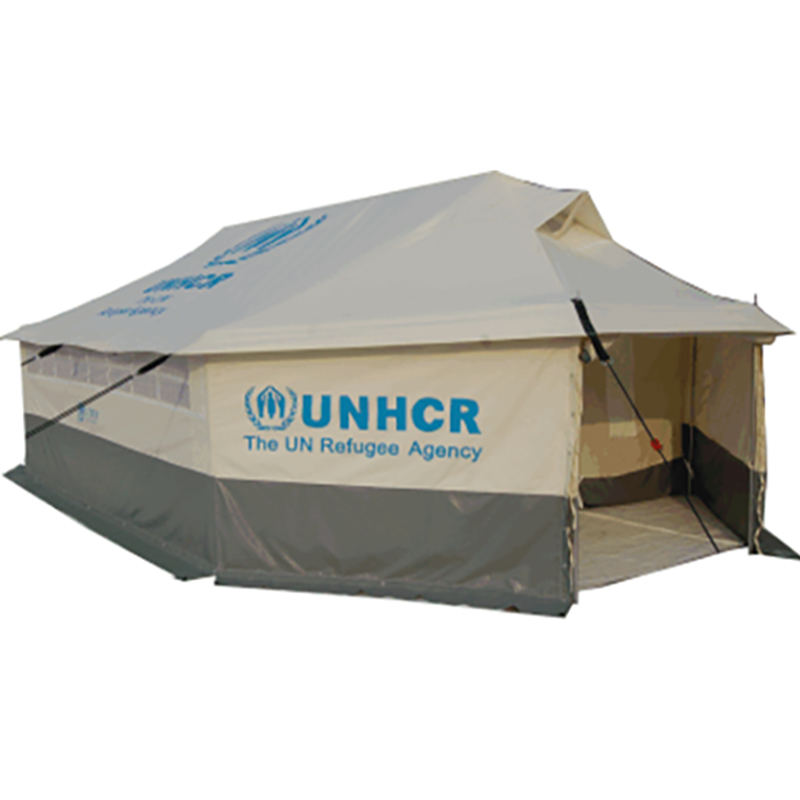
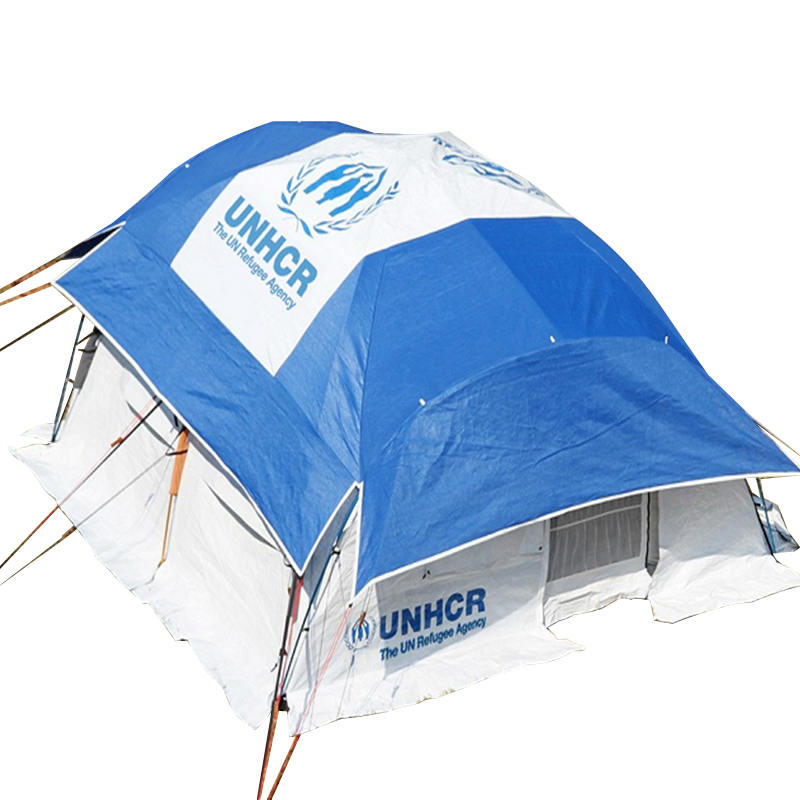
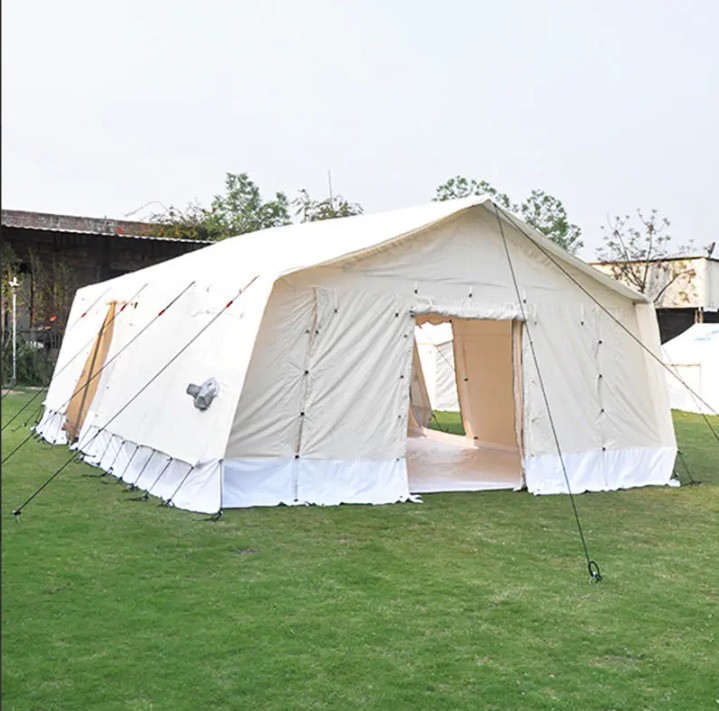
The ICRC/IFRC Standard 33.6m2 Multi-Purpose Shelters Tent (Base Tent) is the global reference point for emergency relief shelters. Covering 33.6 square meters of usable floor space, it accommodates 15 to 30 occupants depending on use — from a refugee family tent to a small dispensary tent or classroom. The outer fly is fabricated from 280 g/m2 polyester-cotton canvas, UV-treated on both faces, with a water column resistance exceeding 3,000 mm. The inner tent uses a breathable cotton lining that reduces condensation and maintains habitable interior temperatures.
This multipurpose tent design supports a modular expansion approach: two or more base tents can be joined end-to-end to create a Modular General Purpose Tent (MGPT) configuration, enabling field hospitals, schools, or coordination centers to scale without additional structural engineering. Optional components include:
Chart 1 — Approximate usable floor areas across major tent categories
The High Performance Tent (HPT) designation covers shelters engineered to exceed standard humanitarian norms in structural integrity, insulation, and lifespan. The HPT 72m2 is the flagship: a double-fly, steel-frame construction offering 72 square meters of enclosed space suitable for a hospital tent, coordination center, or large storage tent. Key specifications that distinguish an HPT from a standard emergency tent include:
From a procurement standpoint, HPT structures are most cost-effective when deployed for 12+ months in a single location, such as a refugee camp health post or a semi-permanent warehouse tent at a logistics hub. For shorter-duration missions, a standard multi-purpose shelters tent kit offers better cost-per-deployment metrics.
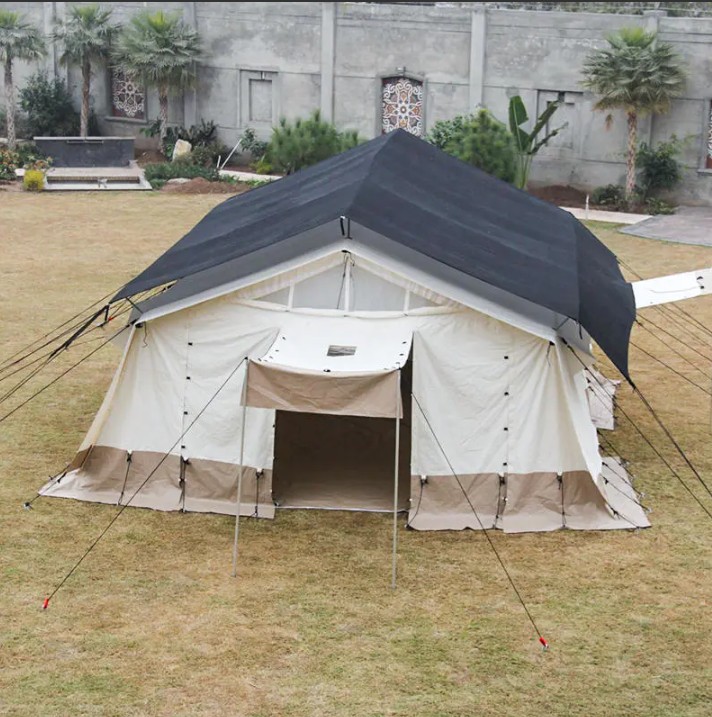
The Inflatable Rapid Deployment Tent — also referred to as a low-pressure inflatable shelter — replaces traditional pole and frame systems with air-beam technology. Inflate the structural tubes with a standard electric or hand pump and the shelter rises in 8 to 20 minutes with two to three operators. This makes the inflatable relief tent particularly valuable in the first 72 hours of a disaster response, when every minute of shelter deployment matters.
Mailenda manufactures inflatable tents across multiple size categories: inflatable camping tent, inflatable family tent, inflatable outdoor tent, and large-format inflatable shelters for command or medical use. Air beams maintain pressure through a closed-valve system; even a puncture in one beam section does not cause immediate structural collapse, giving field teams time to effect repairs.
Chart 2 — Setup time increases with structural complexity; inflatable shelters offer the fastest deployment
Defense and peacekeeping procurement typically demands heavier construction standards than civilian relief. The military tent and army tent range begins with compact 5-men tent units — approximately 14 m2, designed for squad-level field use — and scales through the 10-men tent (approximately 28 m2) to the Modular General Purpose Tent (MGPT), which connects multiple bays to create forward operating base (FOB) infrastructure for command, maintenance, or medical use.
Military canvas tents from Mailenda use a heritage peg and pole tent design with improvements: center poles are hot-dip galvanized steel, ridge lines use polyester webbing rated to 800 kg breaking strength, and all seams are hot-air sealed in addition to stitching to prevent moisture infiltration. These tents comply with relevant NATO STANAG dimensional standards and can be integrated with compatible liner kits. Note: Mailenda also supplies western frame tent and frame tent variants for bases requiring a self-supporting structure without external guy ropes.
Chart 3 — Typical occupant capacity figures; actual numbers vary with configuration and use (sleeping vs. workspace)
Beyond humanitarian applications, Mailenda's product range covers the full commercial event shelter spectrum. The party tent and marquee category — which encompasses wedding tent, event tent, sukkah tent, gazebo, pavilion, pagoda, and high peak tent structures — uses 650 g/m2 PVC-coated polyester fabric in clear, white, or colored finishes. As the earliest factory in China to engage in PVC party tent products, Mailenda brings 20-plus years of material science and structural engineering to this category.
Frame options include the classic pole tent / peg and pole tent, the self-supporting frame tent / western frame tent, and the increasingly popular stretch tent / stretch marquee / flex tent that achieves dramatic sculptural roof forms. For temporary outdoor venues where ground anchoring is impossible — rooftops, parking decks, or indoor arenas — the frame tent variants with ballast-weighted base plates are the appropriate choice.
| Grade | Weight (g/m2) | Tear Strength (N) | Typical Use |
|---|---|---|---|
| Standard | 550 | 300+ | Pagoda, gazebo, short-term events |
| Heavy Duty | 650 | 450+ | Wedding tent, marquee, event tent |
| Premium FR | 700 | 550+ | Sukkah tent, pavilion, permanent venue |
The portable garage and carport / car shelter category serves homeowners, fleet operators, and construction sites that need weather protection without permanent building permits. Mailenda's carport range uses hot-dip galvanized oval steel tubing (wall thickness 1.2–1.8 mm) paired with 180 g/m2 PE cover or 550 g/m2 PVC cover depending on durability requirements. Standard footprints range from single-car (3.0 m x 5.0 m) to multi-vehicle widths of 6.0 m and beyond.
For agricultural clients, the product line extends to greenhouse and polytunnel structures with UV-stabilized polyethylene or twin-wall polycarbonate covering, and to livestock tent / pasture tent / corral shelter designs with roll-up sidewalls for natural ventilation. These structures allow farmers to extend growing seasons, protect crops during extreme weather events, and shelter livestock without the cost of permanent barns.
The resurgence of premium outdoor hospitality has driven demand for canvas tent structures that combine traditional aesthetics with modern weather performance. The bell tent, safari tent, and glamping tent share a common heritage in expedition canvas design but are now manufactured with contemporary fabrics. Mailenda uses 280–360 g/m2 poly-cotton canvas with silicone impregnation for water repellency combined with breathability, preventing the internal condensation that pure PVC structures generate in humid climates.
Camping-focused variants include the geodesic dome, scout tent, bow tent, tipi tent / teepee tent, backpacking tent, and standard dome tent. Each configuration offers different trade-offs between wind resistance, interior headroom, weight, and packed size. The geodesic dome is particularly well-suited to high-altitude or high-wind sites due to its triangulated panel geometry; the tipi / teepee tent provides maximum headroom and center-post stability for car camping or festival use.
Chart 4 — Relative performance across six criteria; scores are normalized to 100 and reflect typical production-grade specimens
A tent structure alone rarely constitutes a complete shelter solution. Humanitarian procurement standards typically specify a full MSU Relief Items bundle alongside the tent unit. The most commonly required items — and their key specifications — are outlined below.
Chart 5 — Approximate unit weights for common MSU Relief Items; folding bed is heaviest single item in a standard shelter kit
Yangzhou Mailenda Outdoor Products Co., Ltd. is an international trade enterprise combined with factory, specializing in the manufacturing of all kinds of relief tent, inflatable tent, party tent, carport and warehouse tent. The company operates advanced machinery including automatic cutting machines, laser machines, automatic cutting tables, automatic welding machines, high-frequency machines, hot air machines, and hot air seam sealing machines.
Mailenda is the earliest factory in China to engage in PVC party tent products. The company team has been in the industry for more than 20 years and has rich experience in PE, PVC, TPU, polyester-cotton fabric, steel, aluminum, and other materials. The company has rich experience in international bidding and cooperation with supermarkets. Products are mainly exported to dozens of countries and regions including Germany, the United States, Japan, the United Kingdom, Spain, Italy, Canada, Chile, and more. Customers include United Nations agencies, humanitarian organizations, and many well-known supermarkets worldwide.
Q1: What is the difference between a Multi-Purpose Shelters Tent and a High Performance Tent (HPT)?
A multi-purpose shelters tent (such as the ICRC/IFRC 33.6m2 base tent) is designed for rapid relief deployment with a service life of 2–3 years. A High Performance Tent (HPT) uses heavier fabric, a more robust frame, and achieves a service life of 5–8 years, making it better suited to semi-permanent installations such as long-term refugee camps or field hospitals.
Q2: How quickly can an Inflatable Rapid Deployment Tent be set up?
Most inflatable shelter models can be fully erected by two or three operators in 8 to 20 minutes using the supplied electric pump. This is considerably faster than peg-and-pole or frame tent alternatives, which typically require 1.5 to 4 hours.
Q3: Can the MGPT (Modular General Purpose Tent) be connected to create larger structures?
Yes. The MGPT is specifically designed for modular end-to-end connection. Two base tents joined together create a 67.2 m2 structure; larger configurations can accommodate field hospitals, classrooms, or coordination centers without additional ground anchoring beyond the individual tent perimeters.
Q4: What shelter kit items are typically supplied with a relief tent order?
Standard MSU Relief Items bundled with emergency tent orders typically include plastic tarpaulin (plastic sheeting), thermal blankets, water containers or jerry buckets, sleeping mats, and optionally folding beds or filed cots. Exact specifications follow UNHCR or IFRC procurement standards and can be customized per contract.
Q5: Are these tents suitable for very hot climates such as sub-Saharan Africa or the Middle East?
Yes. All ICRC/IFRC-compliant relief tents and HPT structures can be equipped with a frame-mounted shade net and a ventilated inner liner. The shade net reduces solar heat gain through the outer fly, while the inner liner creates an air gap that improves thermal comfort. Polyester-cotton canvas fabrics also breathe more effectively than pure PVC in high-humidity environments.
Q6: Does Mailenda supply tents that meet international bidding requirements for UN or NGO procurement?
Yangzhou Mailenda has extensive experience in international bidding and has supplied United Nations agencies and humanitarian organizations directly. Products comply with ICRC/IFRC tent standards and can be produced to UNHCR, WFP, or WHO specification upon request, including independent third-party fabric testing and full documentation packages.
Related Products

Our story is about how to uphold the spirit of humanitarianism in the face of disaster, how to find solutions amidst challenges, and how to sow hope in despair.
Copyright © Yangzhou Mailenda Outdoor Products Co., Ltd.
All Rights Reserved.
Custom Tent OEM/ODM Manufacturers


