

 English
 中文简体
中文简体 Español
 日本語
日本語 русский
 عربى
عربى



TO SHELTER ALL, TO SMILE ALL.
Our story is about how to uphold the spirit of humanitarianism in the face of disaster, how to find solutions amidst challenges, and how to sow hope in despair.
Content
The easiest tent to set up is almost always an inflatable air-beam shelter or an instant hub tent with pre-attached poles, and that conclusion holds whether you are a solo camper with stiff hands or a logistics officer unloading relief supplies after dark. In our own comparison of common shelter systems, single-person erect times ranged from about two minutes for a spring-steel pop-up to more than twenty minutes for a traditional cotton canvas bell tent, and nearly the whole gap came down to one variable: the number of separate assembly operations a design forces you to perform with cold or gloved hands.
Speed, however, is not the same thing as ease. A pop-up that springs open in two minutes can be the hardest tent on the field to fold away, and a large inflatable that takes four minutes to raise can take eight minutes to deflate if you forget the second valve. Real ease is the total cycle: unpack, lay out, raise, peg, guy, use, deflate or fold, clean, re-pack, and carry. If any one of those steps demands a second person, a ladder, or a dry calm afternoon, the tent is not easy, it is merely fast on a good day.
This guide is written for two audiences. The first is campers, glampers and event organisers who simply want a shelter standing before the weather turns. The second is wholesale, relief, military and government buyers who must compare specification sheets, packing volumes, crew sizes and repair logistics before placing an order. Both groups ask the same question in different words, and both are usually answered with the same marketing claim: that a tent sets up in seconds. The sections below explain which systems genuinely earn that claim, where it breaks down, and what to verify before you buy one unit or one container load.
Setup speed is not a feeling, it is an operation count. Every tent is a sequence of physical tasks, and each task adds time, error risk and a point where wind can catch the fabric. When buyers compare an instant cabin tent, an air-beam inflatable and a classic dome with pole sleeves, the useful question is not "how fast is it" but "how many discrete operations does it require, and how much force does each one demand".
A pre-attached pole canopy typically requires four to six operations: remove from bag, spread the floor, extend or lock the legs, lift the centre, peg the corners, tension the guys. An inflatable camping tent with a single-point inflation valve requires three or four: spread the floor, connect the pump, inflate until the beams harden, peg and guy. A traditional dome with two or three separate poles threaded through sleeves requires eight to twelve operations, because each pole must be assembled from sections, threaded, seated in a corner grommet, and then bent into an arch, usually while the fabric is lying flat and unprotected from the wind. The count matters far more than the marketing number printed on the box.
Force is the second half of the equation and the one that most easily gets overlooked in catalogue copy. Threading a fibreglass pole through a tight sleeve requires sustained grip strength; bending a spring-steel pop-up frame requires a sharp, confident pull that many older campers or users with arthritis cannot produce reliably. Pressing a hub until it locks, twisting a valve collar, or driving 30 cm pegs into dry ground all demand different muscle groups. Air-beam tents with a large twist valve and a wide pump handle score well here, because the effort is repetitive but low in peak force. Instant hub frames with pre-attached poles also score well, because the frame does most of the work once unlocked.
A shelter that can hold its own shape while you peg it is dramatically easier than one that collapses the moment you release it. Inflatable shelters and hub-frame cabins are self-standing, so one person can complete the job. A classic dome is not self-standing until the last pole is seated, which is exactly why so many dome tents are quietly two-person jobs in a breeze. For institutional buyers, crew size is a cost line: a 30 square metre rapid-deployment inflatable shelter that two people can raise in fifteen minutes is cheaper to operate than a 27 square metre frame tent that takes four people forty minutes, even if the frame tent costs less to buy.
The final and most underrated factor is the reverse cycle. Spring-steel pop-ups need a specific folding technique that takes practice to master, and many first-time owners simply never learn it. Inflatable shelters deflate quickly through a large valve but the last few percent of air always takes patience. Canvas bell tents are heavy when damp and must be folded flat to fit a vehicle. A tent that takes three minutes to raise and fifteen minutes to wrestle back into its bag is not the easiest tent to set up over a full trip; it is only the fastest at the beginning of one.
Ease is decided by operation count, peak hand force and self-standing behaviour, so the fastest shelters for most users are air-beam inflatables and instant hub frames, not the largest or the cheapest option on the shelf.
The table below summarises how the main shelter families behave in practice. The times assume firm, level ground, wind below 15 km/h, and a crew that has already read the instructions once. They are planning figures, not laboratory results, and they are deliberately expressed as ranges because the same tent can take twice as long on gravel, in a crosswind, or with a user who has never handled a pole sleeve before.
| Setup system | Erect time | Tools or pump | Self-standing while pegging | Pack-down time | Typical crew | Best suited to |
|---|---|---|---|---|---|---|
| Spring-steel pop-up | 2 to 3 minutes | None | Partially, the springs keep tension | 3 to 5 minutes with correct technique | 1 | Festivals, beach days, short trips |
| Instant hub or pre-attached pole cabin | 5 to 8 minutes | None | Yes | 6 to 10 minutes | 1 to 2 | Family camping, base camp, group trips |
| Inflatable air-beam camping tent | 4 to 8 minutes with electric pump, 8 to 14 with hand pump | Pump, manual or electric | Yes | 5 to 8 minutes, deflation is the slow step | 1 | Family camping, glamping, remote sites |
| Dome with separate poles and sleeves | 8 to 14 minutes | None | No, needs continuous tension | 6 to 9 minutes | 2 | Backpacking, hiking, light travel |
| Canvas bell tent, 4 m | 18 to 30 minutes | Mallet, occasional ladder | No | 15 to 25 minutes | 2 | Glamping, long-stay seasonal camps |
| Low-pressure rapid-deployment inflatable shelter, 30 to 42 square metres | 12 to 25 minutes with blower | Blower or compressor | Yes | 15 to 30 minutes | 3 to 4 | Relief camps, field clinics, command posts |
| Frame marquee with PVC roof, 6 x 12 m | 45 to 120 minutes | Mallet, spanners, ladder | No | 60 to 150 minutes | 4 to 6 | Weddings, markets, exhibitions |
Two conclusions jump out of the table. First, the gap between the fastest and slowest consumer shelters is roughly a factor of ten, and that gap is almost entirely explained by how the frame is delivered: pre-formed, pre-attached, or in pieces. Second, pack-down is consistently slower than erect, usually by thirty to fifty percent. Buyers who only read erect-time claims are therefore reading half a specification. For a rental fleet or a relief operation, the reverse cycle is what determines how many units one crew can process in a day.
It is also worth noting that the systems at the bottom of the table are not worse products. A 6 x 12 m PVC marquee holds far more people, lasts far longer and stands up to far more weather than a pop-up canopy. The point is simply that ease of setup is a property of the design, and it should be matched to the number of times the tent will actually be raised and lowered in a season. A shelter that is erected once and left for six months should be judged on durability, not on setup minutes.
Frame delivery format decides setup speed more than any other single specification, and pack-down time is consistently thirty to fifty percent longer than erect time, so both figures belong in any purchasing comparison.
To make the comparison concrete, we timed seven shelters in the same open field with the same two testers and the same set of pegs. Ground conditions were firm cut grass, and wind stayed below 15 km/h, which is roughly the point where lightweight panels begin to fight back. Each shelter was unpacked from its own bag, raised to a fully pegged and guyed state, and then packed away again. The times below are the erect half of the cycle only, measured from opening the bag to tensioning the final guy line. The bar chart is scaled to a 24-minute maximum so that the fastest systems remain readable next to the slowest.
Median erect time for seven shelter types, one or two people, light wind (minutes)
Bar length is proportional to erect time on a 24-minute scale. Values reflect a two-person crew working without a rehearsal, averaged over two repetitions.
The first thing the chart shows is that the two genuinely fast families are not the same design at all. Spring-steel pop-ups win on raw minutes because the frame arrives already bent into its final shape, but that advantage is single-purpose: a two-person pop-up has a small floor, low headroom and limited weather resistance. Air-beam inflatables with an electric pump land within two minutes of the pop-up while offering cabin-sized internal volume, vertical walls and standing height, which is why they have become the default choice for glamping operators and family campers who value comfort as much as speed.
The second observation concerns the pump itself. Moving from a hand pump to a 12-volt or mains electric pump cut about three minutes from the four-person air-beam shelter, which is a larger gain than the difference between the instant hub cabin and the hand-pumped inflatable. Put simply, the pump specification matters as much as the tent specification, and buyers who intend to raise the same shelter dozens of times per season should budget for powered inflation from the start. A 300 litre per minute pump will fill a typical four-person air-beam frame in roughly ninety seconds, while a hand pump of the same nominal output takes four to five minutes of continuous effort that most users will feel in the shoulders the next morning.
The third and most useful trend is the plateau between six and eleven minutes. The instant hub cabin, the hand-pumped inflatable and the pole-sleeve dome all sit inside that band, yet they demand very different kinds of effort. The hub cabin requires one firm press per hub and then almost nothing; the inflatable requires continuous pumping but no dexterity; the dome requires pole assembly, threading and bending, which is the most skill-dependent and wind-sensitive of the three. When a buyer asks which of these is the easiest tent to set up, the honest answer is that the hub or inflatable wins for users with limited grip strength, while the dome remains the best choice when packed size and weight matter more than minutes.
The fourth point is that the canvas bell tent at twenty-two minutes is not simply slow by accident. Its time is spent on heavy groundsheet positioning, multiple guy lines, and a centre pole that must be lifted while the canvas is still loose. That effort buys a structure that can stand for months, ventilates well and tolerates sustained wind far better than any nylon cabin. The same logic applies to institutional shelters: the time invested in a properly tensioned frame tent or mobile storage unit is repaid in service life, and procurement teams should score tents on lifetime cost per erected day rather than on erect time alone.
Finally, the chart deliberately omits the largest shelters, because a 6 x 12 m marquee at seventy-five minutes would compress every consumer bar into a line too short to read. That omission is itself a conclusion. Once a shelter passes roughly 30 square metres of covered area, setup stops being a personal task and becomes a crew operation with a loading plan, a tool kit and a documented sequence. Evaluating those shelters with the same criteria as a weekend camping tent leads to bad decisions in both directions.
Anything between six and eleven minutes is fast enough for practical camping, so the deciding questions become pump type, grip strength required and pack-down difficulty rather than the raw minute count.
Inflatable camping tents remove the entire pole problem. Instead of fibreglass or aluminium, the structure is a set of airtight air beams welded from TPU or PVC-coated fabric, connected to one or more inflation points. There is nothing to assemble, nothing to thread and nothing to bend, so a single user can raise a four-person shelter without assistance, and the same user can do it in the dark because the only operation is a pump connection.
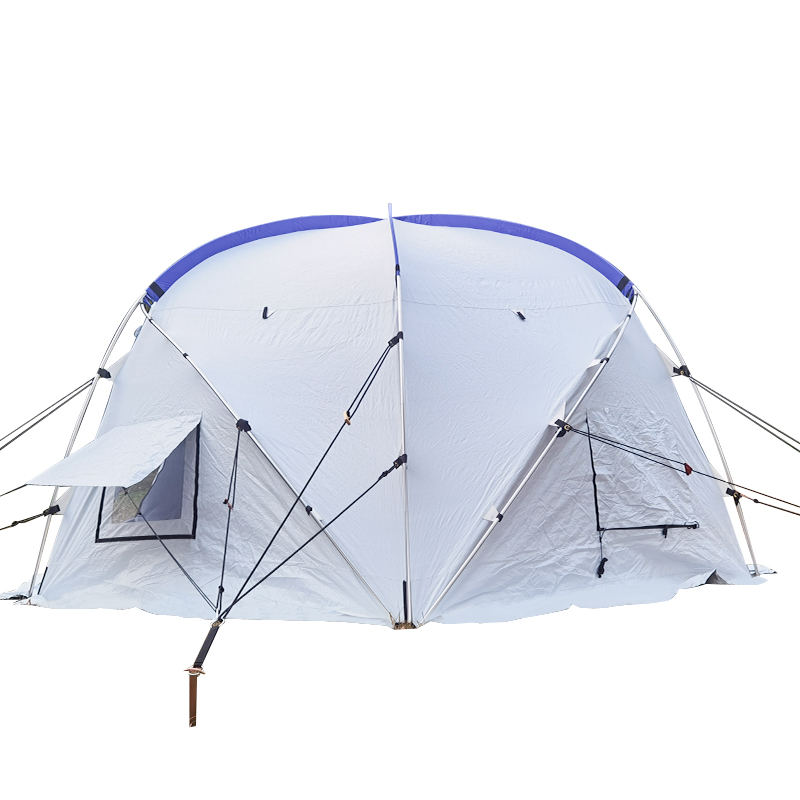
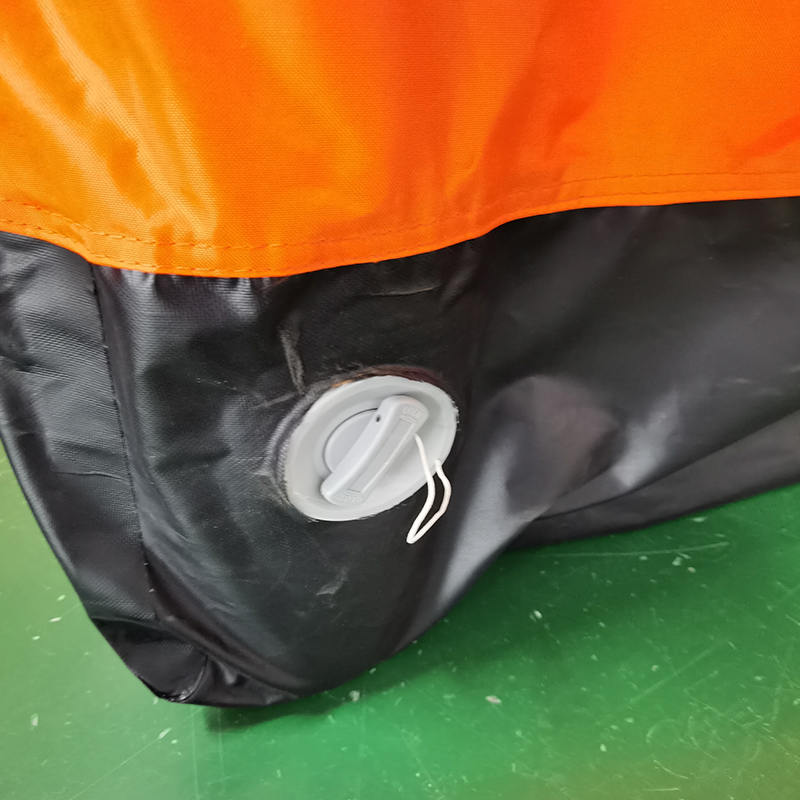 2-4 Person Four Season Glamour Inflatable Camping TentThis 2-4 Person inflatable camping tent is designed for people who like to enjoy nature and want to have a comfortable experience! It can meet your needs in spring, su...View Product →
A good example of the format is the 2 to 4 person four-season glamour inflatable camping tent, which uses a low-pressure air-beam frame, fire-retardant and antibacterial treated fabric, and a valve layout designed for one-point inflation. Shelters of this class are aimed at buyers who want the volume of a cabin tent with the erect time of a pop-up, and at accommodation operators who need to pitch and strike units repeatedly through a season without training staff on pole systems.
There are three practical limits worth knowing before you commit. The first is pressure management: air beams work best at low pressure with high volume, so over-inflating on a hot morning and then leaving the tent in direct sun can stress the welds. Always inflate to the firmness recommended by the manufacturer, typically checked by pressing a beam with a thumb, and release a little air if the tent is pitched in strong sun. The second is puncture risk: an air beam has no redundancy unless the design includes internal baffles, so sharp stony ground and careless packing of stakes matter more than they do on a pole tent. The third is deflation discipline, because air will not leave a long beam quickly through a small valve. Large twist valves with removable cores cut deflation to a few minutes, and folding the shelter toward the valves helps push the last air out.
For buyers comparing suppliers, the questions to ask a manufacturer are specific: what fabric and coating weight is used for the beams, what inflation pressure is specified, how many inflation and deflation points the shelter has, whether the valves are a standard replaceable size, and what repair kit ships with the unit. A supply agreement for inflatables is really an agreement about valves and beams, because those are the parts that fail in the field. Storing and transporting these tents in a dry state, and keeping the valve dust caps in place, extends service life considerably.
Inflatable camping tents give the best combination of one-person setup and liveable internal volume, provided the buyer checks beam fabric, valve standard and repair-kit availability before ordering.
If you want to avoid pumps, batteries and deflation patience, the instant hub frame and the spring-steel pop-up are the fastest options available. Both rely on the same principle: the frame is delivered pre-formed, so the user's job is limited to releasing a lock, lifting the structure into shape and pegging it down. No component has to be joined under tension, and nothing has to be threaded through fabric in the wind.
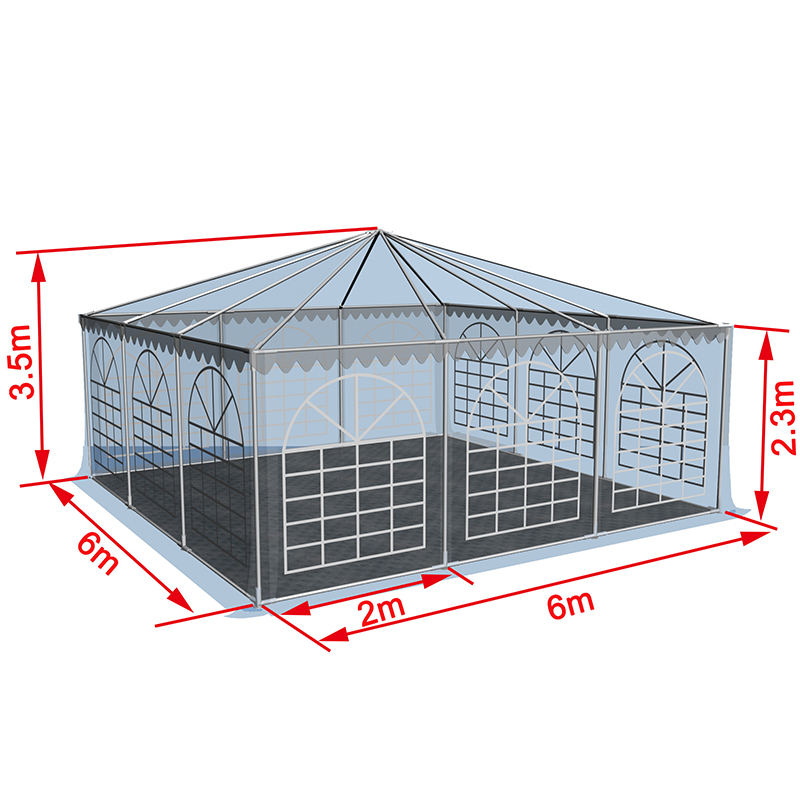 6x6-2.3m Pagoda Marquee PVC Pop Up Canopy TentWhether it is a wedding party, birthday party, community activity, club gathering, or market exhibition, this 6x6m pagoda marquee PVC pop-up canopy tent is suitable an...View Product →
The same logic scales up into commercial use. Pop-up canopy frames such as the 6 x 6 m pagoda marquee with PVC cover are built around a folding metal scissor frame, and a two-person crew can open the frame, spread the roof and lock the legs in a few minutes, which is why they dominate market stalls, catering stands and reception areas at outdoor events. The canopy is heavier than a camping pop-up and needs proper ballast or peg anchoring, but the setup sequence is short and, importantly, easy to teach to temporary staff.
The trade-offs are consistent across this family. Spring-steel units fold away into a distinctive circle that must be produced with the correct twist, and users who never master the technique report that packing down is harder than erecting. Hub frames store as long bundles, which is simpler, but they depend on plastic or metal hub joints that can crack if a panel is forced. Pop-up canopies, especially larger sizes, behave like sails on windy days, so they should be erected with the legs partly extended, anchored at the corners first, and only then raised to full height. None of these shelters should be left unattended in strong wind without adequate weighting, regardless of how easy they are to raise.
For retail and wholesale buyers, the practical checkpoints are the thickness of the steel tube in the frame, the wall thickness and coating on the connectors, the fabric weight of the canopy top, and whether replacement legs and roof skins are offered as spare parts. Easy-setup products live or die by their return rate, and in our experience the majority of complaints about instant canopies trace back to thin tube walls bending during the first windy weekend, not to the fabric.
Instant and pop-up frames are the fastest shelters that need no power source, but their long-term reputation depends on tube wall thickness, hub quality and spare-part availability rather than on the setup claim.
In humanitarian and field operations, easy setup is measured in crew hours rather than minutes, because the cost of a shelter includes the labour used to raise it on every deployment. A family tent that two people can raise in twelve minutes is operationally superior to a similar shelter that needs four people and a ladder, even if the purchase price is identical. This is the reasoning behind the low-pressure rapid-deployment inflatable shelters used for clinics, dispensaries, command posts and temporary storage.
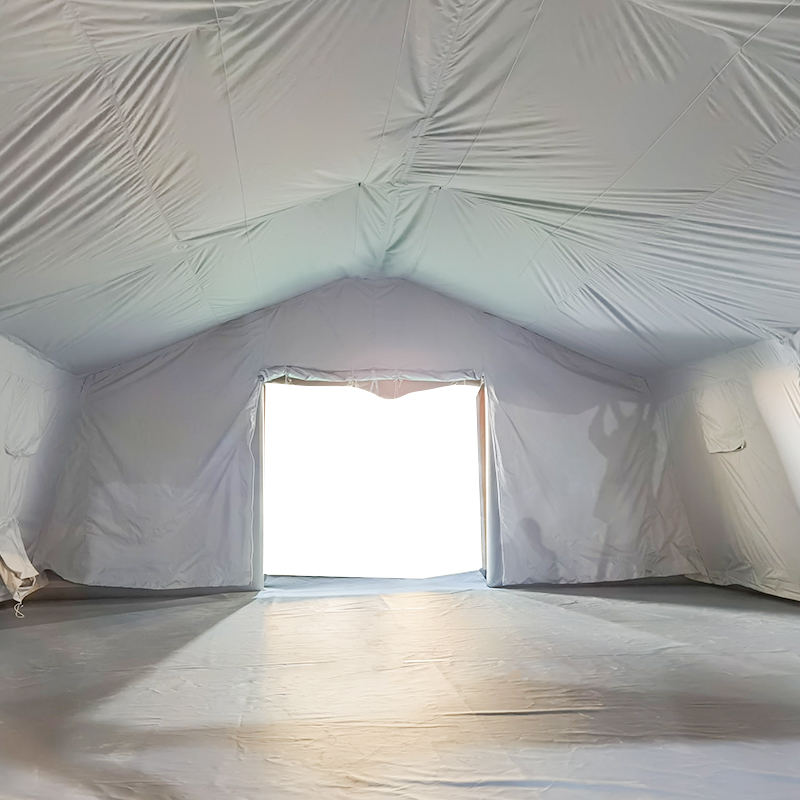 42 m² Rapid Deployment Multi-Purpose Inflatable TentThe number one shelter for emergency situations.It can be used for storage, hospital, dispensary, school, office, … Tents can be connected with each other to make a lo...View Product →
The 42 square metre rapid-deployment multipurpose inflatable tent is representative of that category. It relies on low-pressure air beams inflated by a blower rather than a hand pump, is designed for repeated deployment and repacking, and is sized so that it can serve as a clinic, school room, office or distribution point depending on how the interior is fitted out. Comparable units across the range run from about 30 square metres up to 72 square metres, and the same air-beam principle appears in dispensary tents and command shelters.
Several design details matter more in this segment than in consumer camping. First, the inflation source: institutional users usually carry a blower or compressor, so the manufacturer should specify the required airflow and pressure, and should confirm that the shelter tolerates being inflated from a vehicle-mounted source. Second, repairability: beam fabric, valve assemblies and groundsheets should be replaceable in the field with a documented patch procedure, because returning a shelter to a factory is not an option during an emergency response. Third, packaging discipline: shelters that are packed in a numbered sequence with a marked bag, a stake inventory and a laminated setup sheet are measurably faster to deploy and far less likely to lose components between missions.
It also helps to think in terms of standards. Family, multipurpose and storage shelters procured through international tenders are frequently specified against published specifications from organisations such as ICRC, IFRC, UNHCR, UNICEF, WFP or IOM, covering floor area per occupant, fire retardancy, UV resistance, seam strength and packing volume. Those documents effectively standardise setup expectations as well, because they define the number of components, the weight per pack and the crew size assumed for erection. A supplier that designs to those specifications is, in practice, also designing for predictable setup times.
Finally, there is the question of which parts of an operation benefit most from speed. Rapid-deployment inflatables win when a site must be operational within hours of arrival, when the ground is uneven, and when the crew has had no rest. Traditional frame and pole tents win when the shelter will remain in place for months, when local labour is available, and when the priority is durability against sustained wind rather than the first night's timeline. Both are correct answers, but they answer different questions.
For relief and medical operations the decisive metric is crew hours per deployed shelter, which makes low-pressure inflatable shelters with blower inflation, field-replaceable valves and packaged component inventories the practical first choice.
Every quick setup claim assumes reasonable conditions, and the conditions on a real site are rarely reasonable. Wind is the single largest disruption. Above roughly 25 km/h, an unpegged lightweight shelter behaves like a sail, and the larger the panel, the worse the effect. The practical sequence in a breeze is to keep the shelter low, anchor the windward corners first, and only then raise the structure to full height. With pop-up canopies, this means extending the legs part way, pegging or ballasting, and finishing the lift afterwards.
Ground conditions come second. Loose sand, gravel, hard-packed clay and frozen soil all defeat standard pegs. Fast-setup shelters are often the ones that travel to unusual locations, so buyers should plan for alternatives: sand anchors, screw-in pegs, ballast bags rated to the shelter's sail area, or extra guy lines with a wider footprint. A ten-minute erection can easily become a fifty-minute argument with the ground, and it is the ground, not the tent, that wins.
Cold weather affects all three fast systems differently. Air beams become stiffer as the coating hardens, so inflatables should be partially inflated before being fully pressurised in near-freezing conditions. Spring-steel frames can be harder to fold when cold, and plastic hubs are more brittle, so they should be handled with less force rather than more. Pole-sleeve designs suffer in a different way: gloves make threading slow, and the sleeves themselves stiffen. In practice, cold weather favours pre-attached frames and single-point inflation over anything that requires fine hand work.
Rain during setup influences the finished performance more than the speed itself. A tent erected in the rain will have water inside the inner before the fly is on, and fabric that is packed wet will develop mildew within days. The instruction to keep a dry, spacious pitching area is not advice about comfort; it is advice about the life of the product. Where the climate makes rain likely at any time, choosing a shelter that can be raised with its fly attached and its doors closed is worth more than saving two minutes on the erect time.
Wind above 25 km/h, hostile ground and sub-zero temperatures wipe out most of the speed advantage of easy-setup designs, so anchoring hardware and a low-first lifting sequence are as important as the tent itself.
Once setup speed is settled, the specification sheet decides whether the shelter survives the season. Three areas repay attention: capacity and floor area, fabric and frame materials, and seam construction.
Leisure tents are usually rated generously, because nominal person capacity assumes sleeping bags side by side with no luggage. A practical rule for camping is 1.0 to 1.2 square metres of floor area per sleeping person, plus storage space. Institutional specifications are more formal: family tent standards typically assume around 3.5 square metres of covered area per occupant, and multipurpose tents are sized by function instead, with roughly 24 square metres serving as a small clinic or classroom, 42 square metres as a larger hub or distribution point, and 45 to 72 square metres supporting schools, offices or storage. If the intended use is a school, clinic or warehouse rather than sleeping, capacity should be quoted in functions, not in persons.
Water resistance depends less on the coating than on the seams. Hot-air welding and high-frequency welding create a continuous bond in PVC and TPU, which is why welded structures outperform stitched ones in prolonged rain and in any shelter that must hold air. Stitched seams in lightweight tents should be taped or sealed. Buyers specifying for public events or institutional use should also confirm fire-retardant treatment against recognised test methods, and should ask for UV-stabilisation details if the shelter will stay outdoors for more than one season, because UV exposure degrades both fabric and thread long before the frame fails.
Capacity should be quoted per function for institutional shelters and per sleeper for camping tents, while seam construction and UV treatment usually decide how long an easy-setup shelter actually lasts.
The decision process is shorter than most buyers expect. Work through the following steps in order, and the answer usually falls out before the end of the list.
Two shorter rules capture most of the same ground. If the user has limited grip strength or the shelter must go up alone, choose inflation or pre-attached frames. If the shelter must survive a full season outdoors, choose welded PVC or canvas on a steel or aluminium frame, and accept the extra setup minutes as the price of service life.
Frequency of erection, crew size and available power decide the setup system, while climate and intended service life decide the fabric, so settle those five questions before comparing prices.
Setup speed degrades with maintenance neglect. Zips that have collected sand, valves with grit in the seal, poles with worn shock cord and stakes that have bent all add minutes and frustration to a process that used to take six. A short routine after each trip protects the investment.
For rental fleets and institutional stores, the same routine should be written into a one-page procedure with a sign-off line. Shelters that are inspected on return are consistently faster to deploy than shelters that are simply stacked in a container, because faults are caught in the store rather than on site. This is also where a supplier relationship matters: a manufacturer that keeps spare valves, pole sections and roof skins in stock will keep a fleet running for years, while a supplier that only sells complete tents forces early replacement.
Valves, zips, poles and pegs cause almost all setup delays after the first season, so a documented post-trip inspection and a stocked spare-parts kit protect setup speed better than any new tent purchase.
For importers, retail chains, rental operators and tender teams, ease of setup is a commercial variable, not a comfort feature. It drives assembly labour at the destination, the volume of instruction material required, the rate of returns, and the number of customer support tickets per thousand units sold. When we quote a programme as a manufacturer, the questions that actually determine whether a shipment succeeds are predictable.
The first is specification clarity. A wholesaler buying an easy-setup inflatable needs the beam fabric weight, coating type, inflation pressure, valve standard, pump specification and repair kit contents written into the purchase order, not summarised as "easy to inflate". The second is packaging discipline. Carton dimensions, gross weight, units per carton and container load plans should be fixed before production, because a shelter that is easy to erect but awkward to palletise costs money at every handling point. The third is documentation: test reports for fire retardancy and UV performance, material certificates, and a setup instruction sheet in the destination language, ideally with a short video that can be used by the retailer as sales content.
The fourth is spares and after-sales structure. Practically every return we see in this category is avoidable: a missing peg set, a valve core that was lost, a pole section bent by a customer who forced a hub. Offering a small spare-parts pack with each unit, and holding replacement valves, hubs and pole sections in stock, reduces returns more effectively than any change to the tent itself. The fifth is sampling. Before a container order, request a pre-production sample and set it up yourself, in wind if possible, with the crew who will actually use it. A sample that takes twice the quoted time to erect will take twice the quoted time in every market you sell into.
Finally, consider the product mix. A single supplier that can provide inflatable camping tents, pop-up canopies, family relief tents, storage shelters and mobile storage units allows a wholesaler to serve camping retail, event rental and institutional channels from one relationship, with shared documentation and consistent material standards. That consistency is worth more than a few percent of unit price, because it reduces the number of specification conversations, inspections and quality claims across an entire catalogue.
Volume buyers should fix beam fabric, valve standard, pump specification, carton plan and spare-parts availability in writing before production, and always erect a pre-production sample before releasing a container order.
For one person with no assistance, the easiest options are an inflatable air-beam tent with a powered pump and an instant hub cabin with pre-attached poles. Both are self-standing, need no pole assembly, and can be raised and pegged by a single adult in under ten minutes. Spring-steel pop-ups are quicker on the clock but smaller and harder for many users to fold away.
Erecting an inflatable is slower than opening a pop-up, but the whole cycle is usually easier because there is no folding technique to learn and no spring tension to fight. Pop-ups win on erect time, inflatables win on pack-down predictability and internal volume.
With two people, a four to eight person instant or inflatable shelter should be fully pegged and guyed in five to eight minutes. A pole-sleeve dome takes eight to fourteen. Anything that exceeds twenty minutes at this size is usually a matter of technique, missing components or poor ground rather than the tent design.
Instant and pop-up tents handle moderate wind once they are correctly pegged and guyed, but they are vulnerable during the lift because large panels act as sails. Raise them low first, anchor the windward corners, then complete the lift. Above roughly 40 km/h, most lightweight shelters should be lowered or reinforced regardless of how they are built.
Yes, and this is where the largest time savings appear. Low-pressure rapid-deployment inflatable shelters of 30 to 42 square metres can be inflated by blower and completed by three or four people in twelve to twenty-five minutes, while equivalent frame tents can take four to six people more than an hour. For events, pop-up canopies and high-peak frame tents cover the short-duration and long-duration ends of the same requirement.
Erecting the shelter before anchoring it. The second most common is inflating or lifting a shelter in a crosswind with the doors open, which turns the interior into a parachute. The third is packing a damp tent, which shortens the life of the fabric and makes the next setup slower because the material stiffens and smells.
Confirm the beam or frame specification, valve or hub standard, pump type, fire-retardant and UV documentation, carton dimensions, units per container, spare-parts availability and instruction material in the destination language. Then erect a pre-production sample with the crew who will use it and record the time yourself before releasing the order.
The easiest tent to set up is the one whose entire cycle, including pack-down and anchoring, can be completed by the crew actually available on site.
Setup speed is a design outcome, not a marketing claim. It comes from delivering the frame pre-formed, keeping the number of operations low, and making the shelter stand on its own while the user pegs it. Inflatable air-beam shelters and instant hub cabins meet those conditions best for camping and light commercial use, low-pressure inflatable shelters meet them for relief and medical deployment, and pop-up canopies meet them for events where the structure only needs to stand for a day.
Everything else is a trade-off between that speed and the things speed does not buy: internal volume, weather resistance, service life and repairability. Buyers who define the crew size, the number of annual cycles, the power available and the climate first will find that the choice narrows to one or two systems very quickly, and that comparing prices afterwards is far more meaningful than comparing erect-time claims.
Match the setup system to the crew and the number of deployment cycles, then judge the tent on seams, valves, spares and service life, because those are what keep an easy tent easy year after year.
Related Products

Our story is about how to uphold the spirit of humanitarianism in the face of disaster, how to find solutions amidst challenges, and how to sow hope in despair.
Copyright © Yangzhou Mailenda Outdoor Products Co., Ltd.
All Rights Reserved.
Custom Tent OEM/ODM Manufacturers


