

 English
 中文简体
中文简体 Español
 日本語
日本語 русский
 عربى
عربى

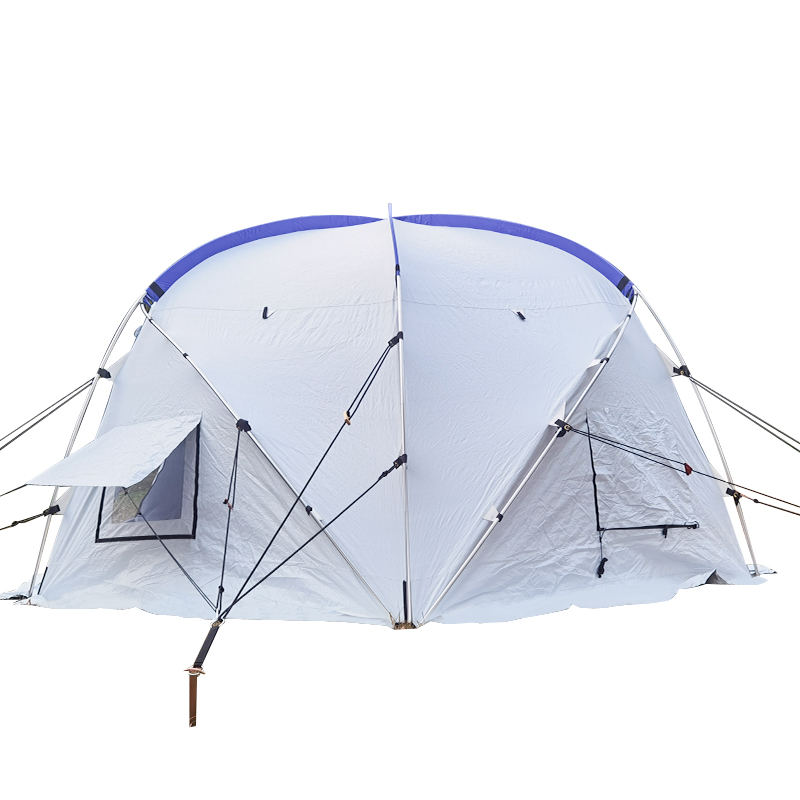


TO SHELTER ALL, TO SMILE ALL.
Our story is about how to uphold the spirit of humanitarianism in the face of disaster, how to find solutions amidst challenges, and how to sow hope in despair.
Content
A cot tent exists for the moment a ground tent lets you down: the night the floor turns wet, the pitch sits on gravel, or the temperature drops and the ground pulls heat straight out of your sleeping bag. The concept is simple. A raised sleeping platform and an overhead shelter are built as a single unit, so you sleep above the terrain rather than on it. That one design decision changes packing weight, setup steps, weather exposure, and unit cost, which is why the format is not automatically better than a conventional tent. What follows sets out where a cot tent earns its place, how the main types differ in structure and material, and what importers, relief buyers, and retail channel partners should verify before placing an order.
A cot tent combines two products that historically sold separately. The lower half is a stretched sleeping surface on a folding frame, and the upper half is a canopy, dome, or A-frame shelter that clips, sleeves, or hinges onto that frame. In the simplest folding designs, the cot legs and the shelter poles share the same mechanical structure, so the whole system unfolds in one motion and packs into a single carry bag. In modular designs, the cot and the canopy are separate items that happen to be dimension-matched, which gives buyers more flexibility but adds assembly steps.
The practical benefit of sleeping raised is easy to underestimate until you have experienced the alternative. Ground contact transfers moisture, so a sleeping bag that touches the tent floor slowly absorbs condensation. Ground contact also transfers cold, and a mat can only insulate so much. Raising the sleeping surface by roughly 30 to 45 centimetres lifts the occupant clear of surface water flow, crawling insects, and the thermal mass of cold soil, which matters most in the shoulder seasons and in the tropics where overnight ground moisture is heavy.
There are also ergonomic arguments. Getting into and out of a raised platform is easier for older campers, for anyone recovering from injury, and for staff working long shifts in field clinics or control rooms. For a rapid-response team arriving at a site after dark, the difference between assembling a ground tent and unfolding a cot tent can be the difference between sleeping and not sleeping.
Weight is the first limitation. A folding cot tent typically lands between 8 and 14 kilogrammes for a single-person model, and a two-person version can exceed 18 kilogrammes. That is not a backpacking product. Packed length is the second limitation: most folding frames settle around 90 to 110 centimetres when collapsed, which fits a car boot or a pickup bed but not a trekking pack. The third limitation is wind exposure. Because the sleeper sits higher, the whole assembly catches more wind load, so pegging and guy-line discipline matter more than they do with a low-profile ground tent. On an exposed ridge with no natural windbreak, a low tunnel tent remains the safer choice.
Cost is the fourth consideration. A raised integrated system uses more aluminium, more fabric, and more hardware than an equivalent ground tent, so the factory cost is typically higher by a meaningful margin. Buyers who do not actually need elevation are paying for capability they will not use.
Most catalogue confusion around camping cot tents comes from mixing up the frame architecture with the shelter architecture. Frame architecture decides how the product packs and how long it takes to erect. Shelter architecture decides weather protection, ventilation, and internal volume. Separating the two makes specification far easier.
This is the classic format. Four legs, a hinged bed deck, and a canopy frame form one connected assembly. The unit folds along its long axis into a flat bundle. Setup usually takes three to six minutes with no pole threading. The trade-off is a fixed internal height, usually 75 to 95 centimetres at the apex, which means the occupant can sit up but not stand. These models dominate the car-camping and fishing markets because they are self-contained and hard to lose parts from.
Here the sleeping platform and the shelter are separate SKUs. A buyer can pair a heavy-duty steel cot with a lightweight canopy, or reuse the cot alone as a field bed. Modular systems are popular in relief and military supply because the components can be replaced independently, which reduces total cost of ownership across a multi-year programme. The disadvantage is more assembly time and a higher risk of mismatched dimensions between suppliers.
A double cot tent is essentially a widened platform, typically 120 to 140 centimetres across, with a dome or ridge shelter above. Weight climbs quickly because the frame must resist a wider span without sagging in the middle. Look for a centre support leg or a cross-brace under the deck; without one, two occupants will roll toward each other and the fabric floor will stretch over time.
Some manufacturers replace the metal shelter frame with an inflatable air beam, which removes pole assembly entirely. Deployment can drop under two minutes. The trade-off is dependency on a pump, a higher risk of puncture, and more complex repair. For humanitarian operations where speed matters more than long-term durability, air-beam shelters paired with folding beds are a reasonable combination, though the two components are usually procured separately.
The frame technology behind a cot tent is the same technology used in folding aluminium field cots, steel field beds, and stretcher-grade platforms used by medical teams. Buyers sourcing for emergency response often consolidate these items into one procurement line, because they share tooling, tubing diameters, and fabric specifications.
For a broader look at how camping shelter formats compare across use cases, the site maintains a practical technical manual for camping tents that covers structure, materials, and field maintenance in more depth.
Almost every field failure in a cot tent traces back to three components: the frame tubing, the deck fabric, and the hinge or joint hardware. Everything else, including the canopy colour, is cosmetic.
Aluminium frames use alloys such as 6061-T6 in diameters of 22 to 25 millimetres with wall thicknesses around 1.2 to 1.5 millimetres. They are light and resist corrosion, but they dent under point loading and they are a poor choice for welding repairs in remote locations. Steel frames, usually galvanised or powder-coated, run 25 to 32 millimetres in diameter with heavier walls. They tolerate rough handling and hold up under repeated deployment, at the cost of two to four additional kilogrammes.
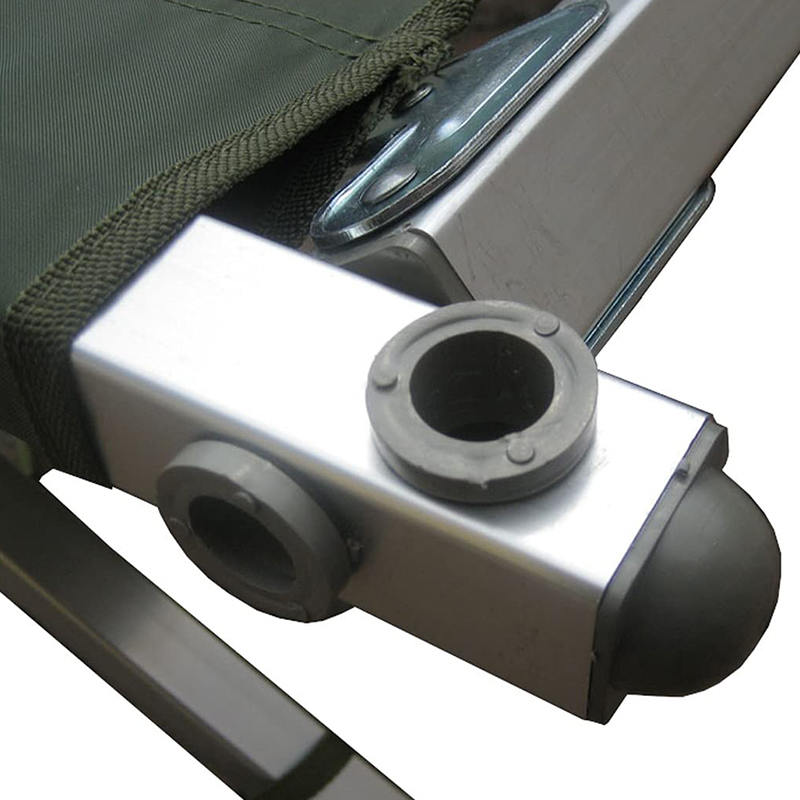 Folding Aluminum Field CotFoldable bed – 1 person, it is made of reinforced aluminum 1,1 mm. Easy to assemble and clean. Transport bag with carrying bag with handle.View Product →
For buyers specifying lightweight aluminium platforms, the key checks are wall thickness consistency, joint rivet quality, and whether the leg locking mechanism is a positive detent or a friction clamp. Friction clamps loosen with use; positive detents do not.
Deck fabric carries the full body load and therefore needs a high tear strength relative to its weight. Common choices are 600D polyester oxford with a PU coating, or heavy cotton canvas in the 280 to 340 grammes per square metre range. Canopy fabric is usually lighter: 190T to 210D polyester, ripstop polyester, or canvas for the premium end. Waterproof ratings between 1,500 and 3,000 millimetres hydrostatic head cover most three-season use. Seams are the weak point, and the difference between taped seams and simple bound seams becomes obvious in the second season of use.
Zips sized 8 or 10 with moulded teeth outperform fine-tooth zips in dusty environments. Mesh panels should be no-see-um grade if insects are the reason the buyer chose a raised system in the first place. Ventilation design matters more than it first appears: an enclosed raised shelter with a solid canopy and no cross-ventilation will condense heavily, and condensation dripping onto the occupant defeats the entire purpose of sleeping off the ground.
When evaluating a supplier, the production equipment list is a useful proxy for quality control. Automatic cutting tables and laser cutters indicate consistent panel dimensions, which reduces seam misalignment. High-frequency welding machines and hot-air seam-sealing equipment indicate the ability to produce genuinely waterproof joints rather than stitched-and-hoped seams. These are not marketing details; they directly determine whether a cot tent leaks at the ridge line after twelve months.
The same product family serves very different buyers, and the specification priorities shift depending on who is sleeping in it.
Car campers, anglers, hunters, and overland travellers are the largest commercial market. Priorities are packed size, setup speed, and comfort. Colour and branding matter for retail channels. A two-person folding cot tent that fits across a pickup bed or inside a station wagon is a strong retail item because it removes the separate mattress decision from the customer's shopping list.
In displacement settings, raised sleeping platforms address three problems at once: they keep occupants away from standing water, they reduce contact with vectors, and they make it possible to sleep inside a larger communal tent without lying directly on the ground. Relief procurement usually separates the platform from the shelter, specifying field beds as core relief items and family or multipurpose tents as the shelter layer. Standards matter here: buyers frequently reference published specifications from international organisations, and suppliers must be able to demonstrate that frame dimensions, load ratings, and fabric performance meet those documents.
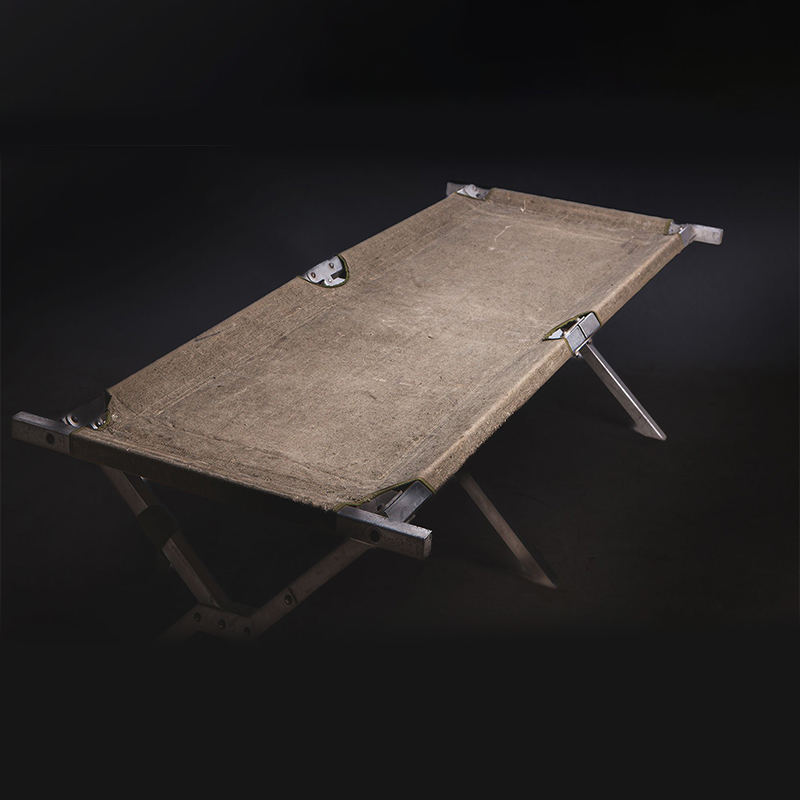 Heavy Duty Steel Field CotFoldable bed – 1 person, it is made of steel, Steel frame structure for extra strength (150 kg max. load). Easy to assemble and clean. Supplied in carrying bag with ha...View Product →
Heavy-duty steel platforms are typically chosen for this environment because they survive repeated loading, stacking, and transport with less deformation than aluminium equivalents, and because they can be repaired locally with basic welding equipment.
Military buyers prioritise durability, low maintenance, and dimensional standardisation. Modular cot tents that share frame components with general-purpose tent systems reduce the spare parts inventory a unit has to carry. Stealth and thermal signature are occasionally relevant, which pushes specification toward matte canvas rather than coated synthetic fabric.
Operators renting out camp equipment care about cleaning time, replacement part availability, and how the product looks after fifty deployment cycles. Raised systems are attractive because guests perceive them as more comfortable, and because staff can strip and inspect a cot tent quickly. The commercial risk is that guests mistreat hinges and zips; specifying heavier hardware upfront pays for itself within a season or two.
Field clinics and observation posts use raised platforms for infection control and for occupant comfort during long shifts. In these settings, the shelter layer is often a larger multipurpose structure, and the cot tent function is reduced to the platform itself.
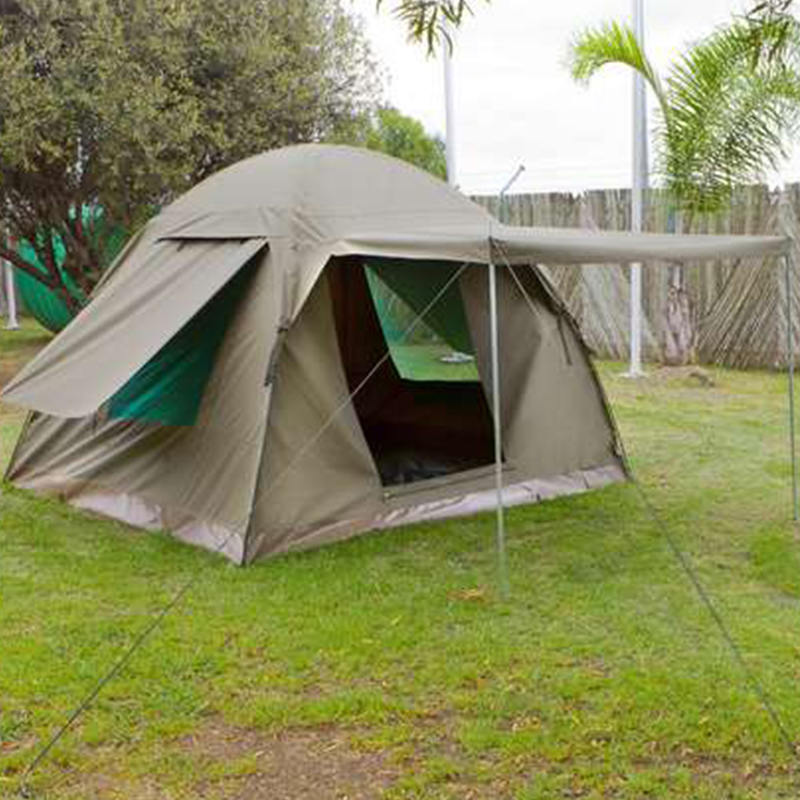 3x3m Durable Bow Tent Premium All-Season Military Backpacking TentEach tent is constructed of premium all-season military grade fabric; rip-stop properties to prevent tearing, fully waterproof, UV rot resistant, and fire retardant. A...View Product →
Where a programme needs a lighter alternative for mobile teams that cannot carry a full raised system, a compact all-season bow tent paired with a lightweight sleeping mat is a practical substitute for patrols and short-duration assignments.
The comparison below uses typical mid-market specifications rather than best-case or worst-case figures. Actual numbers vary with frame material, fabric weight, and canopy design, but the relative positions hold across most product lines.
| Sleeping System | Typical Unit Weight | Sleeping Height | Setup Time | Best Suited To |
|---|---|---|---|---|
| Integrated folding cot tent | 8 to 14 kg (single) | 30 to 45 cm | 3 to 6 minutes | Car camping, fishing, disaster response |
| Modular cot plus canopy | 10 to 18 kg | 35 to 50 cm | 6 to 12 minutes | Relief programmes, field camps, rental fleets |
| Double cot tent | 16 to 22 kg | 35 to 45 cm | 8 to 14 minutes | Couples, glamping, fixed base camps |
| Ground dome tent | 2.5 to 5 kg | 0 cm | 5 to 10 minutes | Backpacking, exposed ridges, weight-limited trips |
| Roof top tent | 45 to 70 kg | 150 to 200 cm | 10 to 25 minutes | Vehicle-based touring, long stays at one site |
| Air-beam raised shelter | 9 to 15 kg | 30 to 45 cm | 2 to 5 minutes | Rapid deployment, emergency medical posts |
Read the table as a set of trade-offs rather than a ranking. The ground dome tent wins decisively on weight and packed volume, and no raised format comes close. The roof top tent wins on sleeping height and internal volume but imposes a permanent payload on the vehicle and is slow to relocate. The cot tent family sits in the middle: it delivers most of the hygiene and comfort benefit of elevation at a fraction of the roof top tent's weight and cost, while accepting a packed length that rules out backpacking.
Two figures deserve extra attention. The first is sleeping height. A 30 to 45 centimetre lift is enough to clear surface water and reduce conductive heat loss, but it is not enough to stand up or to store large amounts of gear underneath, so buyers expecting storage volume will be disappointed. The second is setup time spread. The gap between a three-minute integrated folder and a twelve-minute modular assembly is small on paper and large in practice when it is raining and dark.
Setup speed is one of the few performance characteristics that buyers can measure themselves before ordering, and it is often the deciding factor for institutional procurement. It is also one of the least standardised claims in the market, because manufacturers measure it differently. Some count only the shelter frame, some count the full sequence from bag to pegged-down unit, and almost none state whether the measurement was taken by an experienced user or by someone reading instructions for the first time. The chart below compares total handling time, meaning erection plus packing away, across common sleeping systems under the same test conditions: one trained operator, dry weather, firm ground, and a complete pack-down including bagging.
The values should be treated as directional rather than absolute. Operators improve with repetition, and adverse weather can add 50 per cent or more to any of these figures. The interesting signal is not the exact minute count but the spread between the fastest and slowest formats, and which formats improve most with practice. Rapid-deploy and integrated folding systems have short, flat learning curves because there are few steps to memorise. Modular systems and roof top tents have longer learning curves because the sequence order matters and mistakes cost time. For a relief operation fielding hundreds of units with rotating staff, a flat learning curve is worth more than a marginally faster best-case time, because the operator on the third night is not the operator who unpacked the box on the first day.
The bar on the far left confirms what most field teams already suspect: a purpose-built rapid-deploy cot tent is roughly six times faster to handle than a roof top tent and about half the handling time of a conventional ground dome. That gap is not caused by the raised platform itself but by the frame architecture. A rapid-deploy model uses a pre-assembled scissor or umbrella mechanism, so the operator performs one or two gross movements instead of threading poles through sleeves.
The middle three bars sit close together, within a five-minute band. This is where most purchasing decisions actually happen, because integrated folding models, modular cot-plus-canopy sets, and ground dome tents are all competing for the same customers at similar price points. The three-minute spread between them will not decide a recreational purchase, but it can decide an institutional one. A relief programme deploying two hundred units for a two-week operation executes the handling sequence hundreds of times across a staff team, and a three-minute saving per cycle compounds into dozens of working hours.
The far-right bar deserves the most careful reading. Roof top tents are not slow because they are badly designed; they are slow because they are mounted at height and because the process involves a ladder, a cover, and a mattress that cannot be removed. That is an acceptable penalty for a long-stay touring setup, and an unacceptable one for a mobile operation that relocates every two nights.
Three conclusions follow from the distribution. First, deployment speed is a structural property, not a fabric property; buyers comparing canopy materials first are optimising the wrong variable. Second, the learning curve matters as much as the best-case time, which favours integrated over modular designs wherever staff turnover is high. Third, handling time should always be measured including pack-down, because several formats that assemble quickly are slow to fold, dry, and bag, particularly when the fabric is wet.
The checklist below is written for someone specifying a container load rather than buying one unit. It covers the questions that most often surface after delivery, when correcting a specification is no longer cheap.
Three mistakes recur. The first is ordering a canopy fabric that meets the required waterproof rating while ignoring the deck fabric, which is the component under continuous load. The second is selecting a lightweight aluminium frame for a programme that will store units in unheated warehouses for years and issue them in bulk; steel frames deform less in that environment. The third is treating the cot tent as a single-SKU purchase when the operation actually needs a platform and a shelter specified separately so that either can be replaced.
A cot tent that is stored wet will not survive three seasons, regardless of how good the materials are. The maintenance routine is short but it has to be consistent.
Store folded, dry, and off the floor. Long-term compression is less damaging to cot tent frames than to ground tent poles, because the frame is designed to sit under load, but fabric stored under permanent tension will still take a compression set. Humidity above 70 per cent combined with poor air circulation is the main risk in warehouse storage, particularly for cotton canvas components, which can develop mildew that is difficult to remove without affecting the water-repellent finish.
With reasonable care, an aluminium folding cot tent should deliver five to eight years of recreational use, and a steel-framed institutional unit between eight and twelve years with periodic hardware replacement. The limiting factor is almost always the fabric deck rather than the frame.
Buyers sourcing at volume are usually choosing between three supply routes: a trading company that sources from multiple factories, a manufacturer with its own production line, and a hybrid enterprise that combines factory production with international trade capability. The hybrid route is often the most practical for retail and institutional buyers, because the supplier controls tooling and quality on the production side while handling export documentation, container loading, and multi-market compliance on the commercial side.
When evaluating a cot tent supplier, ask for evidence rather than assurances. Equipment lists are a reasonable proxy for capability: automatic cutting machines and laser cutters indicate dimensional consistency; high-frequency welding and hot-air seam-sealing machines indicate the ability to produce watertight joints; automated welding tables indicate repeatable frame geometry. A supplier that can describe its material experience across PE, PVC, TPU, cotton-poly blends, steel, and aluminium is generally better positioned to match a specification than one that offers a single fabric across the whole catalogue.
Export experience matters for a different reason. Cot tents are bulky and moderately heavy, so freight efficiency depends on carton dimensions and packing density. Suppliers who ship regularly to Germany, the United States, the United Kingdom, Japan, Spain, Italy, and Canada have usually optimised their packaging for 20-foot and 40-foot high-cube containers. They also tend to be familiar with the documentation requirements of institutional tenders, which is relevant if the buyer is supplying a government or humanitarian end user.
For buyers comparing a broad supplier catalogue, looking at the full shelter range alongside the platform products is the fastest way to judge whether the supplier can cover an entire programme rather than a single SKU.
A cot tent is a raised sleeping system that combines a folding cot frame with an integrated or attached canopy. The occupant sleeps 30 to 45 centimetres above the ground, which reduces moisture transfer, conductive heat loss, and contact with insects and surface water.
It is better on wet, cold, uneven, or stony ground, and worse whenever weight and packed volume are the limiting factors. Backpackers should stay with a ground tent; car campers and field teams usually benefit from the raised format.
Integrated folding models typically take three to six minutes. Rapid-deploy and air-beam designs can be under two minutes. Modular cot-plus-canopy systems usually take six to twelve minutes, and the same figures roughly double when the fabric is wet and the weather is poor.
Yes, double models are usually 120 to 140 centimetres wide. Confirm that the frame has a centre support or cross-brace, otherwise the deck will sag between the two occupants over time.
A single-occupant platform should be rated for at least 120 to 150 kilogrammes and a double for 200 kilogrammes or more. The rating should refer to the deck load, not the total assembly weight, and it should be stated in writing.
Decks are commonly 600D polyester oxford with a PU coating or heavy cotton canvas. Canopies are usually 190T to 210D polyester, ripstop polyester, or canvas. Waterproof ratings of 1,500 to 3,000 millimetres hydrostatic head cover most three-season applications.
They do if seams are taped or welded and the guy lines are properly anchored. Because the sleeper sits higher, wind loading is greater, so choose a sheltered pitch and use all available guy points.
Yes, and this is common in relief and field camp settings. Confirm flame-retardant performance if the product will be used inside a larger structure or in a regulated environment.
Aluminium recreational models typically last five to eight years with care. Steel-framed institutional units commonly reach eight to twelve years when hardware is replaced periodically. The fabric deck, not the frame, usually limits service life.
Source from a manufacturer or a factory-backed trading enterprise rather than a pure reseller, and ask for tubing specifications, fabric denier, hydrostatic head figures, spare parts availability, and test documentation before committing to a first order.
A cot tent is not a universal camping upgrade, and treating it as one is how buyers end up with a heavy product that never leaves the garage. It is a targeted answer to specific conditions: wet ground, cold soil, stony or uneven pitches, high hygiene requirements, and occupants who need to sleep well without a long setup. When those conditions apply, the raised format outperforms almost everything else at its price point. When they do not, a lightweight ground tent remains the smarter choice.
The practical path forward is to fix three variables before looking at catalogues. Decide the ground and climate conditions the product will actually face. Decide the transport envelope, including packed length and unit weight. Decide who will operate it and how often. Those three answers narrow the field to one or two frame architectures, and everything else, from fabric denier to seam sealing to spare parts kits, becomes a specification detail rather than a guess.
Related Products

Our story is about how to uphold the spirit of humanitarianism in the face of disaster, how to find solutions amidst challenges, and how to sow hope in despair.
Copyright © Yangzhou Mailenda Outdoor Products Co., Ltd.
All Rights Reserved.
Custom Tent OEM/ODM Manufacturers


