

 English
 中文简体
中文简体 Español
 日本語
日本語 русский
 عربى
عربى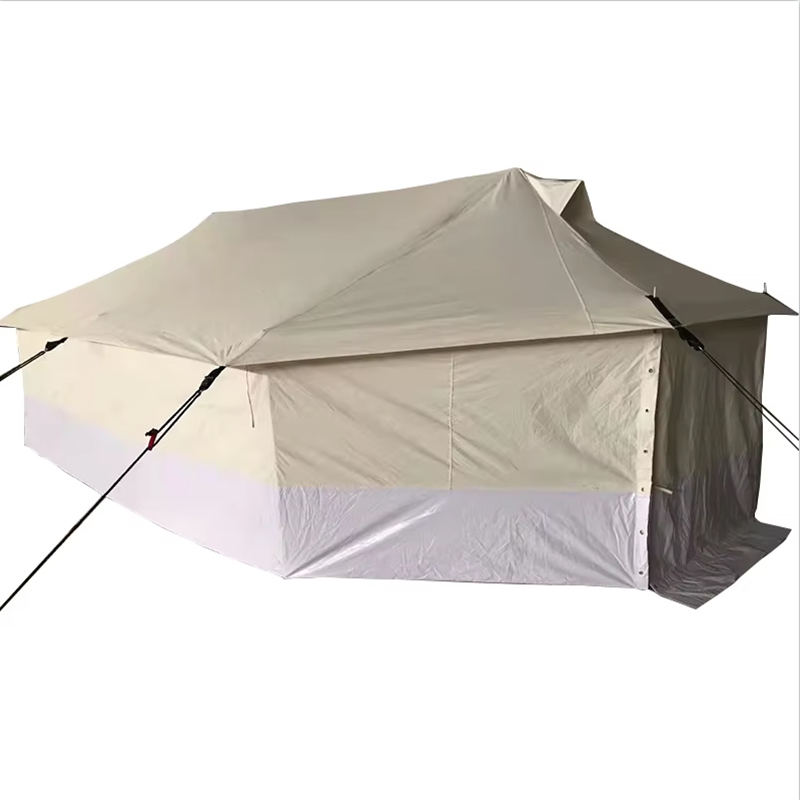



TO SHELTER ALL, TO SMILE ALL.
Our story is about how to uphold the spirit of humanitarianism in the face of disaster, how to find solutions amidst challenges, and how to sow hope in despair.
Content
Friday afternoon, the car is packed with sleeping bags, a camp stove, and three children who have already asked twice whether the tent will be big enough. That question deserves an honest answer before you buy, because the best tent for family camping is not the one with the biggest marketing photo. It is the one that fits your family's sleeping arrangements, survives the weather you actually camp in, and goes up before the kids lose patience.
In practical terms, choosing a family tent means comparing floor area per person, peak height, fabric and frame material, waterproofing level, season rating, and the amount of effort your campsite routine can tolerate. A tent designed around international humanitarian shelter standards, for example, typically allocates about 3.5 square meters per person, while a consumer camping tent is often much tighter. Understanding these numbers helps you compare models from any manufacturer, importer, or wholesale supplier without guessing.
This guide walks through the main tent types, material and pole options, sizing rules, weather protection, setup and portability, maintenance, and what to check when buying from a manufacturer, supplier, or wholesaler. It also includes a visual comparison, practical tables, and a FAQ so you can make a confident decision for your next family trip.
A tent that works for two adults and a dog can feel crowded once you add children, a cooler, and a rainy evening inside. The difference comes down to a handful of measurable features that experienced camping families check before they buy.
With children, usable floor area matters far more than the stated sleeping capacity. A five-person tent with eight square meters gives each person only 1.6 square meters, which is acceptable for sleeping but leaves almost no room for luggage on a rainy day. Many experienced buyers apply a simple rule: take the manufacturer's stated capacity and subtract one person, or even two when the tent will be used for long weekends.
This is why most family tents sold by experienced manufacturers follow the same logic: a model rated for four to five persons usually has a floor between 10 and 14 square meters, a peak height above 180 centimeters, and a full-coverage rainfly. If you want a deeper look at how production lines define these features, our earlier article on the characteristics of family tents describes the design priorities used by tent makers.
Multiply the inner length by the inner width to get the floor area in square meters. Then divide by the number of people who will sleep inside. For a family of four, look for at least 10 square meters of floor area and a peak height above 180 centimeters. If you use camping cots or inflatable mattresses, add another 2 square meters, because the footprint of a cot is larger than a sleeping bag and the space between cots must be kept clear.
The family camping market today offers three structural families: dome and geodesic tents, tunnel and cabin tents, and traditional canvas tents such as bell tents and tipis. Dome and geodesic models rely on crossing poles that create good wind resistance and a self-standing frame, which makes them the most common choice for general family camping. Tunnel and cabin tents trade some wind performance for vertical walls and more generous headroom, which families appreciate when spending long evenings inside. Canvas bell tents and tipis bring a heavy cotton fabric, a warm atmosphere, and a much longer setup time, but they excel for base camps, festival camping, and slow weekends. Inflatable tents have also become a serious option in the last five years, since air beams replace poles and cut pitching time to a few minutes.
The chart below compares typical floor areas for five family tent configurations based on common production specifications. Floor area is the single most important number for a family, because it determines how many mattresses fit, how much space remains for luggage, and whether the children can play on a rainy afternoon.
The chart above compares typical floor areas for five family tent configurations based on common production specifications. The 5-person geodesic dome model, a staple of family camping product ranges, offers roughly 12 square meters, which is enough for four people plus luggage. The 2-4 person inflatable camping tent records around 9 square meters, placing it at the compact end of the family segment. A 4-meter bell tent reaches approximately 12.6 square meters, the same usable space as a typical 5-person dome, but the circular footprint changes how beds fit against the walls. The 8-10 person inflatable tent jumps to about 21 square meters, a level that suits two families camping together or a family that wants separate sleeping zones. The largest model in the comparison, a 5.2 by 5.5 meter scout-style canvas tent, offers around 28.6 square meters and can accommodate up to eight people.
This wide spread explains why floor area, not the stated person capacity, should drive your purchase decision. For car camping, extra space is rarely a problem; for trekking or backpacking, it directly increases weight and pack size. The structural type also influences how efficiently the floor area translates into usable space, because angled walls reduce the usable area near the edges. Dome tents lose less floor area to wall slope than tunnel tents, while cabin-style tents use nearly their entire footprint. Inflatable tents sit between the two, with broadly vertical side walls in the main body and a curved ceiling that preserves headroom. When you consider that children move around inside a tent in the morning and before bed, the 21 to 29 square meter class becomes far more comfortable for a five-person household.
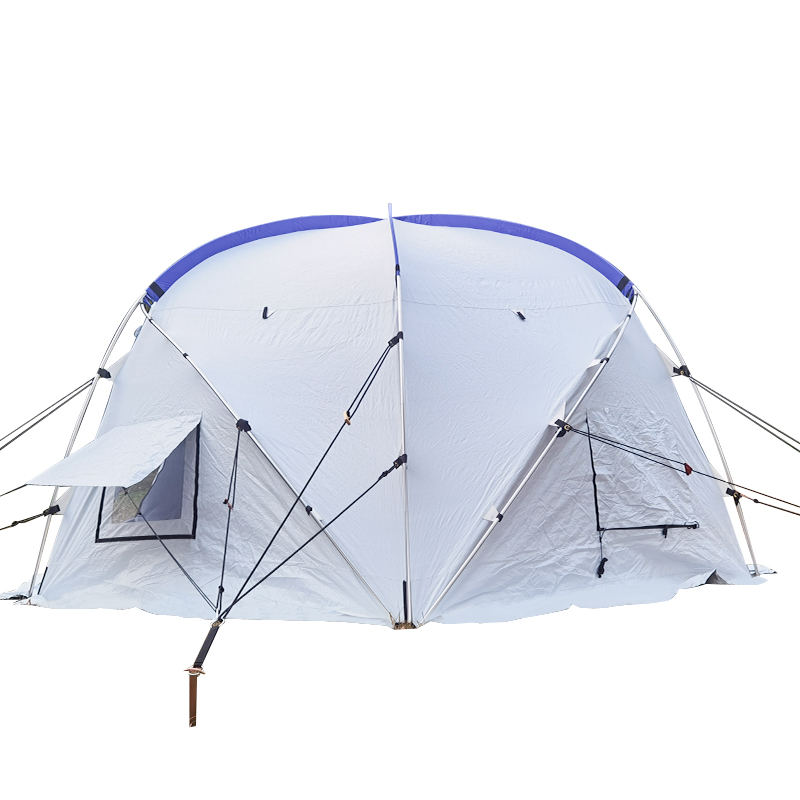
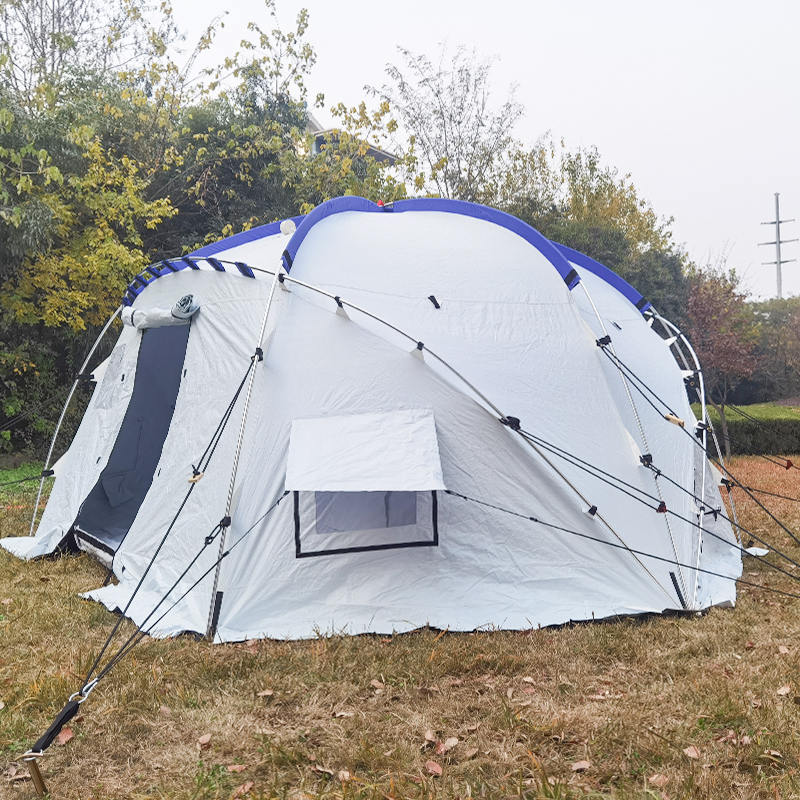 5-Person Self-Standing Geodesic Dome Family TentThis geodesic dome tent offers a balanced floor area and strong wind resistance for family car camping. Its self-standing frame and quick setup make it a practical choice when children move around inside.View Product →
Geodesic dome tents use multiple crossing poles to create a semi-spherical frame with excellent resistance to wind and snow. They are self-standing, which means you can lift and adjust them while they are partially pitched. For families, the main trade-off is headroom at the edges: the walls slope inward, so only the center offers full standing height. A well-built five-person model such as a geodesic dome tent balances floor area, packed weight, and wind stability, which is why this format remains the default choice for weekend family camping.
Air-beam tents replace poles with sewn-in inflatable chambers that are pumped up at the campsite. They reduce setup time dramatically, and when deflated they pack into a relatively flat bag that is easier to carry through a doorway. The price is extra weight and the need to keep the pump and spare valve parts on hand. An 8-10 person four-season waterproof inflatable camping tent shows how this category now extends into true family sizes, with enough floor space for a large household or two families camping together.
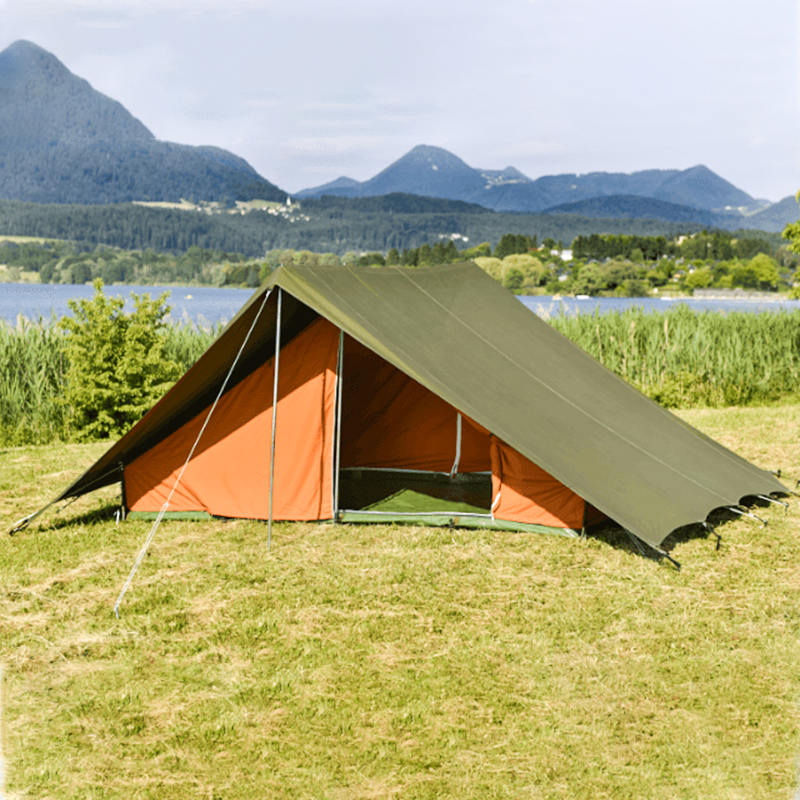 8-Person Traditional Cotton Canvas Scout TentA classic canvas tent with a rectangular 5.2 by 5.5 meter footprint, ideal for cots and double mattresses. Breathable cotton and durable materials suit scout groups, school camps, or large family gatherings.View Product →
Bell tents and tipis made from cotton canvas are the strongest trend in family camping for groups that want a more permanent base camp feel. Canvas breathes well in summer and keeps warmth longer in cool weather, but it is heavier, and it must be dried thoroughly before storage. The 5.2 by 5.5 meter traditional scout canvas tent accommodates eight people with a rectangular footprint that suits cots and double mattresses, making it a favorite for scout groups, school camps, and large family gatherings.
The material choices in a family camping tent determine its weight, comfort, durability, and price. Three fabric families dominate the market: polyester, cotton canvas, and polyethylene. Polyester is the most common for consumer family tents because it is light, fast-drying, and easy to coat with UV-resistant finishes. Cotton canvas is heavier but breathes far better, which reduces condensation in cold weather. Polyethylene is the budget option, usually found in entry-level tents and tarps, and it is highly waterproof but poor at regulating moisture.
| Fabric | Advantages | Disadvantages | Typical use |
|---|---|---|---|
| Polyester | Light, fast-drying, low cost, easy to coat for UV and water resistance | Less breathable, can degrade under long sun exposure | Dome tents, cabin tents, backpacking tents |
| Cotton canvas | Breathable, quiet, warm in winter, less condensation | Heavy, slow drying, must be stored completely dry | Bell tents, tipis, scout tents, glamping |
| Polyethylene (PE) | Very cheap, fully waterproof, rot-resistant | Heavy, poor breathability, stiff in cold weather | Budget family tents, tarps, emergency shelters |
The frame is the second specification that separates a good family tent from a frustrating one. Fiberglass poles are cheap and flexible, but they can splinter under high wind stress and are heavier than aluminum. Aluminum poles, especially 7001 or 7075 grade, offer the best strength-to-weight ratio and are used in most quality family tents. Steel frames appear in large cabin tents and shelter tents where the weight is acceptable because the tent is carried by car. Inflatable air beams have replaced poles in a growing number of family models, offering fast setup and surprising wind resistance when the pressure is maintained correctly.
| Frame type | Weight | Wind resistance | Cost | Notes |
|---|---|---|---|---|
| Fiberglass | Medium | Medium | Lowest | Flexible but can splinter under repeated stress |
| Aluminum 7001/7075 | Low | High | Medium-high | Preferred for lighter tents and windy sites |
| Steel | High | Very high | Medium | Used in large family and shelter tents |
| Air beams | Medium | High | High | Fast setup, inflatable, requires pump and spare valve parts |
Waterproofing is expressed as a hydrostatic head rating in millimeters. A rating of 1,500 mm is considered rainproof for light showers, while 3,000 mm or more is recommended for family camping in wet climates. The rating matters less than the details around it: look for taped or heat-sealed seams, a full-coverage rainfly that reaches near the ground, and a bathtub-style floor in which the floor fabric extends upward at the edges to prevent ground water from seeping in. A tent with a 5,000 mm floor and 3,000 mm fly is a sensible target for a family that camps in varied weather.
The fastest way to ruin a camping trip is to buy a tent rated for the exact number of people in your family. Manufacturers base their ratings on sleeping bags laid side by side, not on the space people actually need with luggage, a cooler, a changing area, and children who refuse to stay still. The practical rule in the camping industry is that a tent's comfortable capacity is the stated capacity minus one person, and for families with small children, minus two.
| Stated capacity | Minimum floor area | Comfortable floor area | Typical dimensions | Recommended for |
|---|---|---|---|---|
| 2-3 persons | 5 m2 | 7-8 m2 | 2.4 x 3 m | Couple with a toddler |
| 4-5 persons | 8 m2 | 10-12 m2 | 3 x 3.5 m | Couple with two children |
| 6-8 persons | 12 m2 | 16-20 m2 | 4 x 4.5 m | Household of five to six |
| 10+ persons | 18 m2 | 24-29 m2 | 5.2 x 5.5 m | Two families or groups |
Two extra factors change how much space you actually need. First, the vestibule or front porch adds waterproof storage outside the sleeping area, which keeps boots and wet gear from stealing interior floor space. Second, a gear loft or interior pockets move small items off the floor entirely. A tent with an adequate vestibule and a large gear loft can feel noticeably roomier than a tent of the same floor area without them.
Choose a compact model when
|
Choose a larger model when
|
A family tent's season rating tells you how much weather it can handle, and it is one of the most misunderstood numbers in outdoor gear. A three-season tent is designed for spring, summer, and fall conditions, meaning warm nights, moderate rain, and wind speeds most campsites see during normal weekends. A four-season tent adds stronger poles, a lower profile, and fabric that resists snow loading, but it usually weighs more and has less mesh for airflow. For most family camping in North America and Europe, a three-season tent with good ventilation is the right choice, because a four-season model becomes uncomfortably hot in summer.
| Rating | Conditions | Best for | Limitations |
|---|---|---|---|
| 3-season | Spring, summer, fall; light wind and rain | Most family camping | Not designed for heavy snow load |
| 4-season | All year, strong wind, moderate snow | Winter base camps, cold-weather use | Heavier, warmer, less mesh ventilation |
| Summer / technical | Warm nights, minimal wind | Festivals, budget trips | High condensation risk, weak in storms |
Ventilation is the detail that separates a comfortable tent from a sticky one. Mesh panels in the ceiling and doors allow moisture from breathing and cooking to escape while keeping insects out. A rainfly that can be rolled up or propped open creates crossflow in warm weather. Without these features, condensation forms on the inner walls, and the tent feels damp by morning even when the weather is dry.
Wind protection comes from the frame geometry and the guying system. A low, domed profile sheds wind better than a tall cabin profile, which is why cabin tents should be pitched in sheltered spots. Most quality family tents include multiple guying points at the corners, the midpoint of the poles, and on the fly itself. Replacing lightweight steel stakes with longer aluminum ones is a simple upgrade that improves performance in soft soil or sand.
Families arrive at campsites late, tired, and sometimes in light rain. The last thing anyone wants is a 45-minute puzzle of poles and sleeves. Setup time is therefore a major decision factor, and it is determined almost entirely by the tent's structure. Pole tents with a clip system are faster than sleeve tents, because each pole can be laid out and clicked into place instead of threaded through fabric. Inflatable tents are faster still: the air beams unroll, the pump runs for a few minutes, and the frame is ready.
| Structure | Setup time | Packed weight | Packed length | Notes |
|---|---|---|---|---|
| Dome with clip poles | 10-15 min | 8-12 kg | 70-80 cm | Self-standing, easy to move |
| Tunnel tent | 15-20 min | 10-15 kg | 75-85 cm | Needs full staking for shape |
| Inflatable air tent | 5-8 min | 12-18 kg | 80-90 cm | Pump required, spare valve recommended |
| Canvas bell tent | 25-40 min | 25-40 kg | 100-110 cm | Very comfortable, heavy to transport |
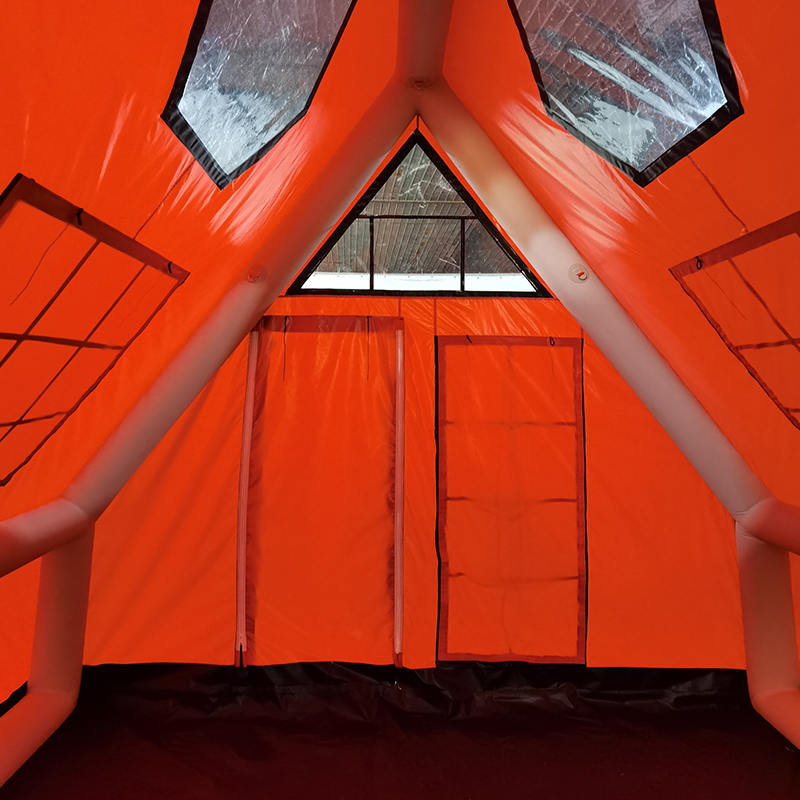 8-10 Person Four-Season Waterproof Inflatable Air TentThis inflatable tent sets up in about 10 minutes with wind resistance up to 80 km/h and full waterproofing. Its air-beam design reduces setup effort, making it a strong investment for frequent family campers.View Product →
For a family camping trip, the practical difference between a 10-minute dome and a 6-minute inflatable is small when the sky is clear. Under rain or with tired children, that difference feels enormous. The same logic applies to packing at the end of the trip: an inflatable tent can be deflated and folded back into its bag while a wet canvas tent must be dried at home, which adds a full day to the routine. If you camp frequently and value a fast routine, an inflatable or clip-pole dome is the better investment.
Pack size matters as much as weight because families rarely travel with an empty car. A large family tent packs to about the size of a duffel bag, which is fine for an SUV or station wagon, but problematic for a compact sedan loaded with a stroller, cooler, and bags. Measure your car's load space before choosing the tent size, and remember that the packed length of a canvas tent can exceed 100 centimeters, which makes it awkward for many vehicles.
Once you know the structure you want, the next step is comparing configurations: how many rooms, whether there is a porch, what the door layout looks like, and how the poles divide the interior. The four configurations below cover most of what families actually buy.
One open sleeping space with a central peak. Best for small families that sleep together and want simplicity. Lightest option and the easiest to pitch.
A bedroom area and a living area under one fly. Good for longer stays where a changing space and a place for gear improve the daily routine.
Air-beam frame with tall, near-vertical walls and a high ceiling. Fast setup plus generous headroom, at the cost of higher weight and price.
A round or conical base with a center pole or frame. Excellent for base camps and glamping, with natural fabric comfort but a long setup routine.
The table below compares these four configurations on the factors that matter most to family campers. Use it as a shortlist, then check the exact floor area and dimensions of each model you are considering.
| Feature | Dome 5p | Tunnel 6p | Inflatable 8-10p | Canvas bell 4-8p |
|---|---|---|---|---|
| Setup time | 10-15 min | 15-20 min | 5-8 min | 25-40 min |
| Headroom | Medium | High | High | High in center |
| Wind resistance | High | Medium | High | Medium |
| Packed weight | 8-12 kg | 10-15 kg | 12-18 kg | 25-40 kg |
| Best for | Weekend trips | Longer stays | Fast arrivals, big groups | Base camps, glamping |
| Typical price | Low-medium | Medium | High | Medium-high |
A quality family tent should survive five to ten years of regular use, but that lifespan depends on how it is treated after each trip. The most common mistake is storing a tent even slightly damp, which leads to mildew and permanent fabric damage. The second most common mistake is leaving it in direct sunlight for days, which degrades the coating and weakens the seams.
| Task | Frequency | Typical time |
|---|---|---|
| Sweep floor and check stakes | After every trip | 5 minutes |
| Clean and dry the tent | After every trip | 30-60 minutes |
| Re-treat seams and floor | Every season or after heavy use | 1 hour |
| Check zippers, poles, and valves | Twice per season | 10 minutes |
| Full waterproofing treatment | Every 2-3 seasons | 2-3 hours |
Canvas tents require special care. Cotton absorbs water, so a canvas tent must be dried thoroughly even if it only saw morning dew. Unlike polyester, canvas can shrink slightly when it dries, which is normal and does not affect performance as long as the frame has some tension adjustability. Polyester and polyethylene tents are easier: they dry faster and resist mildew better, but they still need the same basic routine of cleaning, drying, and loose storage.
For outdoor retailers, online sellers, NGOs, and event companies, the question is not only which tent is best, but who builds it reliably. Working directly with a manufacturer or supplier means you can control specifications, obtain bulk pricing, request custom colors and branding, and coordinate delivery schedules that retail channels cannot match. A factory-based trading company with its own production line can offer both standard products and bespoke configurations in the same catalog.
When you evaluate a family tent manufacturer, supplier, or wholesaler, the practical checks are different from those used when buying a single retail tent. You are investing in a supply relationship, and the tent is only part of the decision. The manufacturer's experience with materials, quality control, and export logistics determines whether your customers receive tents that match the sample. This is why the best family tent suppliers publish detailed specifications for fabric weight, floor dimensions, and standards compliance rather than relying on marketing language.
| Check item | What to ask |
|---|---|
| Capacity and MOQ | Minimum order quantity per model, production lead time, monthly capacity |
| Materials | Fabric weight, denier, hydrostatic head rating, frame material grade |
| Standards | Fire-retardant, UV-resistant, and other certificates for your region |
| Customization | Logo printing, color options, packaging design, manual languages |
| After-sales | Spare parts, defect policy, replacement units, warranty period |
A manufacturer that can supply a full family camping tent program, including dome tents, inflatable tents, and canvas tents, gives buyers the flexibility to build a balanced product range without multiplying warehouse and logistics costs. A supplier that also produces related items such as sleeping mats, tarpaulins, or camp beds can simplify sourcing further for rescue packs and outdoor retail categories. These are the advantages that a direct factory relationship brings to a company's purchasing strategy.
Manufacturer resources on this site
The best tents for family camping are not defined by a single brand or a single model. They are the tents that match your family's size, your camping style, and the weather you actually meet. Go through this checklist before you compare prices or place an order.
Once those boxes are checked, compare the interior layout, vestibule size, and packed dimensions against your car and your family's routines. A tent that passes this checklist will serve you through many seasons, and a trusted manufacturer will stand behind it if anything fails.
Related Products

Our story is about how to uphold the spirit of humanitarianism in the face of disaster, how to find solutions amidst challenges, and how to sow hope in despair.
Copyright © Yangzhou Mailenda Outdoor Products Co., Ltd.
All Rights Reserved.
Custom Tent OEM/ODM Manufacturers


