

 English
 中文简体
中文简体 Español
 日本語
日本語 русский
 عربى
عربى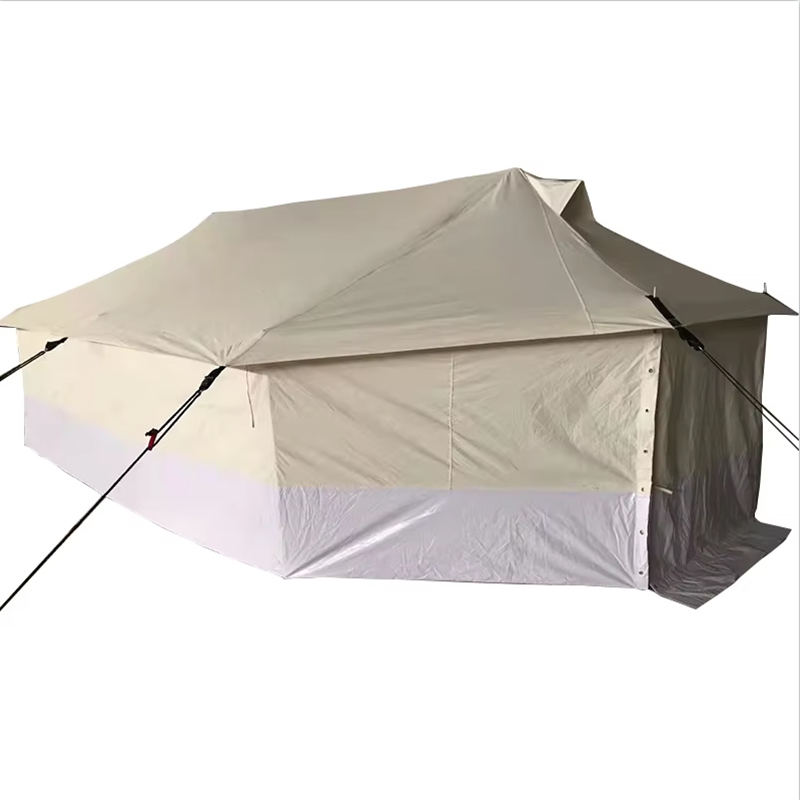

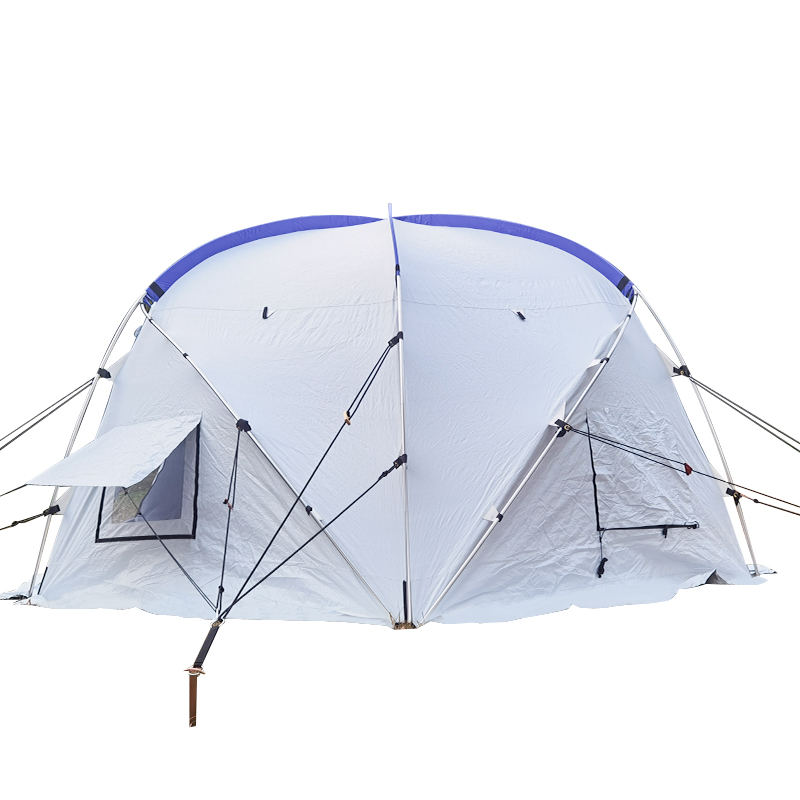


TO SHELTER ALL, TO SMILE ALL.
Our story is about how to uphold the spirit of humanitarianism in the face of disaster, how to find solutions amidst challenges, and how to sow hope in despair.
Content
You arrive at the campsite at dusk, with one hour of daylight left and two children waiting in the car. The tent that seemed clever in the store, with its bundle of separate poles and sleeves, suddenly feels like a time-consuming mistake. This is exactly the situation that makes the best pop up tents so valuable: they convert what used to be a thirty-minute assembly job into a single unfolding motion. But the category is broader, and more varied, than most shoppers realize.
A pop-up tent is any shelter whose frame is pre-attached, pre-bent, or integrated into the fabric, so that the structure can be deployed by expanding, twisting, unlocking, or inflating it, without threading loose poles through sleeves. The design goal is speed, but speed alone does not make a tent good. A tent that pops up in ninety seconds still has to shed rain, withstand wind, stand up to weeks of sun, and fold back to a size that fits in the car. The best pop up tents are therefore not the cheapest or the lightest; they are the models whose frame geometry, fabric specification, and deployment mechanism match the way you actually use them.
Because this guide is written from the perspective of a manufacturer that supplies tents to camping retailers, relief organizations, and wholesale buyers, we will look beyond brand popularity and focus on the engineering and procurement details that make a tent worth buying. You will find the main types explained, a practical evaluation framework, application-specific recommendations, and the questions to ask before you order from any pop up tent manufacturer.
Before comparing products, it helps to understand that pop-up tents are not a single category. Inside the broad label there are five distinct frame mechanisms, each with its own performance profile, failure modes, and ideal use case.
| Mechanism | Setup Time | Packed Size | Weight Range | Primary Use |
|---|---|---|---|---|
| Twist-and-pop dome | 1 - 2 minutes | Small to medium | 3 - 8 kg | Casual camping, festivals |
| Hub-and-pole instant | 3 - 5 minutes | Medium to large | 6 - 15 kg | Family camping, group travel |
| Inflatable air beam | 4 - 8 minutes | Large | 8 - 20 kg | Glamping, family and group camping |
| Pop-up canopy / gazebo | 2 - 3 minutes | Large | 10 - 25 kg | Markets, events, parties |
| Emergency relief frame | 10 - 20 minutes | Very large | 20 - 60 kg | Disaster relief, military, field hospitals |
The packed size of a pop-up tent is often more important than its weight. A twist-and-pop dome that packs into a 70-centimeter disc fits easily across the rear seats of a small hatchback, while a hub tent with a two-meter pole system may require a roof rack. Inflatable tents pack into long duffel bags that are manageable but bulky. Canopies usually come with a wheeled bag because the frame is heavy. Check the packed dimensions against the storage space in your vehicle before you buy, especially if you share the car with other camping gear.
Setup speed is the single most important feature of a pop-up tent, but not all pop-up designs deploy at the same rate. The difference comes from the frame architecture: bending poles store energy, hub mechanisms unfold in stages, and air beams require inflation. When you compare the main categories side by side, the setup-time spread is wide enough to change how you plan a trip. The following chart summarizes typical one-person setup times for the most common pop-up tent types, based on field observations and specification sheets from multiple manufacturers. The numbers are estimates, not lab measurements, and actual times will vary with experience and site conditions.
The setup-time gap between a conventional pole tent and a pop-up model is dramatic. A traditional pole tent with sleeves typically takes 15 to 25 minutes for two people who have set it up before; someone new to the tent may take even longer. A hub-style instant tent reduces that to between three and five minutes, which explains its popularity among families. Twist-and-pop domes are the fastest of all, often deploying in under two minutes, because the entire pole structure is connected as one folded unit. Inflatable tents sit between four and eight minutes, depending on the pump and the number of air chambers. Pop-up canopies for events are in the two-to-three minute range when operated by one person, since the frame unfolds sideways and the roof locks into place. But setup time is only one dimension. The same tent that sets up in two minutes may take five to ten minutes to fold back into its carry bag, and many users find repacking harder than setup. Wind stability also varies widely: twist-and-pop domes are generally solid once staked, while lightweight canopies need heavy anchors or weights. A hub tent with thicker poles and a full rain fly will handle more weather than a cheap instant dome with flimsy fiberglass ribs. The long-term durability of the frame, including hinges, hub joints, and elastic cords, is what separates a tent that lasts ten seasons from one that breaks by the third outing. In short, the quickest setup is rarely the best overall tent; you want the fastest setup that still meets your requirements for space, weather resistance, and structural life.
| Criterion | What to Check | Why It Matters |
|---|---|---|
| Hydrostatic head | Minimum 1000 mm; 3000 mm or higher for heavy rain | Determines waterproofing of the outer fabric |
| Fabric weight and denier | 150D to 300D polyester, or coated canvas | Higher denier resists punctures and abrasion better |
| Frame material | Fiberglass, steel, aluminum, or air beam | Affects strength, weight, and long-term fatigue resistance |
| Hub and joint construction | Reinforced plastic or die-cast metal hubs | Hub failure is the most common cause of instant-tent retirement |
| Seam sealing | Taped, welded, or heat-pressed seams | Unsealed seams leak even when fabric is waterproof |
| Ventilation | Mesh panels, adjustable vents, rain-fly gaps | Reduces internal condensation on cool nights |
| Packed length | Measure against your car or storage space | Many pop-up tents are longer and bulkier than their weight suggests |
If you are buying in volume for a retail store or an event company, add two more criteria: consistency of quality across batches and the availability of spare parts. A supplier that cannot provide replacement poles, hubs, or rain flies will leave your customers or your rental fleet with unusable tents after a single season.
Once you understand the mechanisms and the evaluation criteria, the next step is to choose by application. A pop-up tent that is perfect for a weekend music festival may be useless for a beachside wedding reception, and an emergency shelter that meets UNHCR standards is overkill for a two-night camping trip. The following subsections map the main use cases to the types of pop-up tents that suit them best.
For a family of four or five, the ideal pop-up tent combines generous floor area, adequate headroom, and a frame that can tolerate repeated setup cycles. Hub-style instant tents with center ridge poles provide the best compromise between speed and internal space. When comparing models, verify the floor dimensions against your sleeping pads: a four-person tent from one brand may have a 2.1 by 2.1 meter floor, while a competitor's may be 2.5 by 2.4 meters. The difference matters when you are laying out three sleeping pads side by side. Also check the door height; a tent that forces you to crawl on your knees gets old quickly, especially when children need to be helped in and out during the night.
If you want a self-standing dome that pitches fast in the family setting, look for a geodesic frame design with multiple intersecting pole arcs. Geodesic geometry distributes wind loads across several poles, so the tent can handle gusty conditions as well as a conventional pole tent. The five-person geodesic family tent from our production line, for example, uses a true self-standing dome structure that can be set up by one adult in under five minutes, without requiring a perfect footprint or a perfectly flat site.
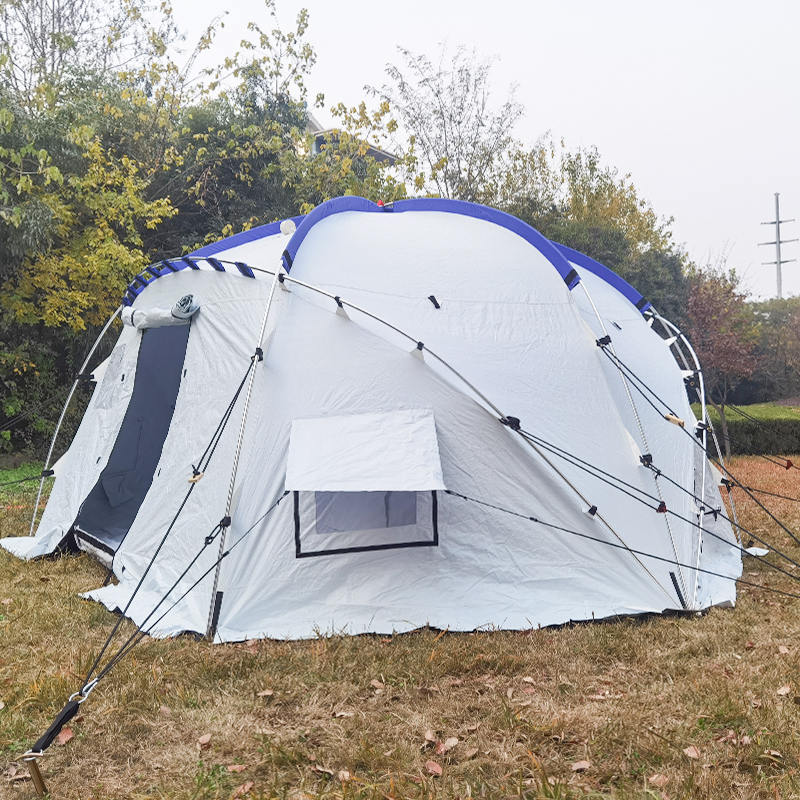 Self-Standing Geodesic Dome Tent for Five-Person Family CampingThis geodesic dome tent offers fast setup, family space for five, and strong wind resistance. Its two-layer design and durable materials suit all-weather outdoor use, making it a practical choice for quick backyard or wilderness camping.View Product →
Event professionals rarely refer to a pop-up canopy as a tent; they call it a marquee, gazebo, or pagoda. But the deployment principle is the same. For market stalls, garden parties, wedding receptions, and brand activations, the frame must unfold quickly and lock securely without tools. The most common sizes range from 3 by 3 meters up to 6 by 6 meters, and the roof is almost always PVC-coated polyester because PVC sheds rain immediately and resists UV degradation better than PE film. A pop-up gazebo with a traditional pagoda roof line looks more upscale than a flat-roof canopy, which is why many wedding venues and catering companies choose the pagoda profile. When purchasing for rental use, look for a frame with welded corner brackets and double stitching on the roof hems; these are the first points to fail on cheap canopies.
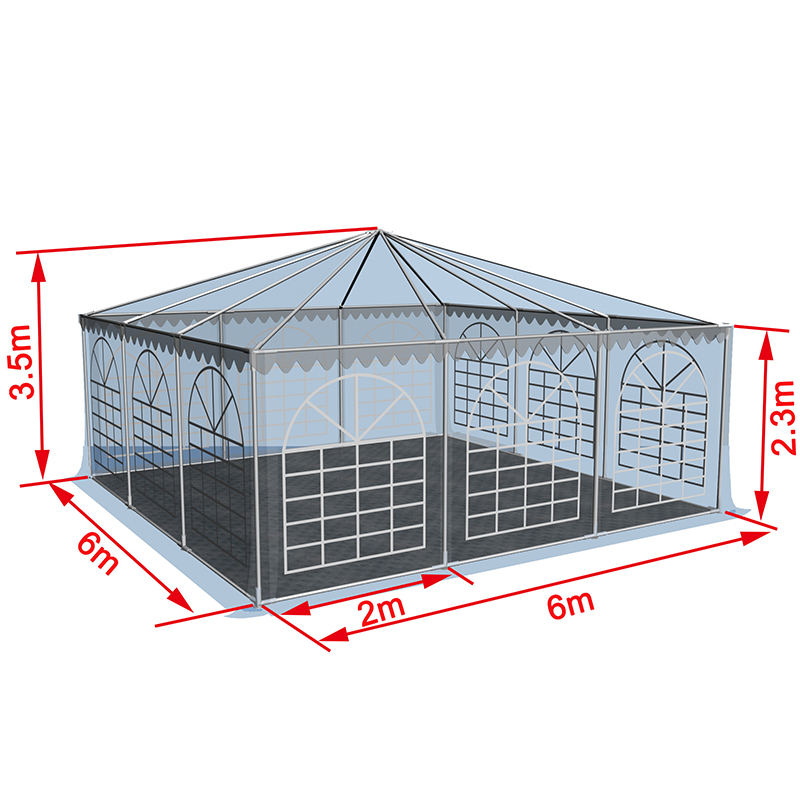 6x6m Pagoda Marquee Pop-Up Canopy Tent with PVC RoofDesigned for events like weddings and markets, this pagoda-style pop-up canopy provides a spacious 6x6m area. The PVC-coated polyester roof sheds rain and blocks UV, while tool-free setup saves time for rental or party use.View Product →
Inflatable pop-up tents have moved from novelty to mainstream because they solve two problems at once: fast setup and resistance to wind. An air beam tent with a 5.6-meter ridge and multiple chambers can be inflated in four to six minutes with a 12-volt pump, and the cylindrical beam shape handles crosswinds surprisingly well when the tent is properly guyed out. For glamping operators, an 8- to 10-person inflatable tent with panoramic windows and a full flysheet offers a premium experience without the heavy steel frame of a cabin tent. Inflatable models also appeal to families with children, as there are no sharp pole ends to worry about. From a supplier's perspective, the key specification to verify on air tents is the quality of the TPU or PVC air chambers and the reliability of the inflation valves; a leak at the valve is the most common reason an otherwise excellent air tent ends up in the scrap bin.
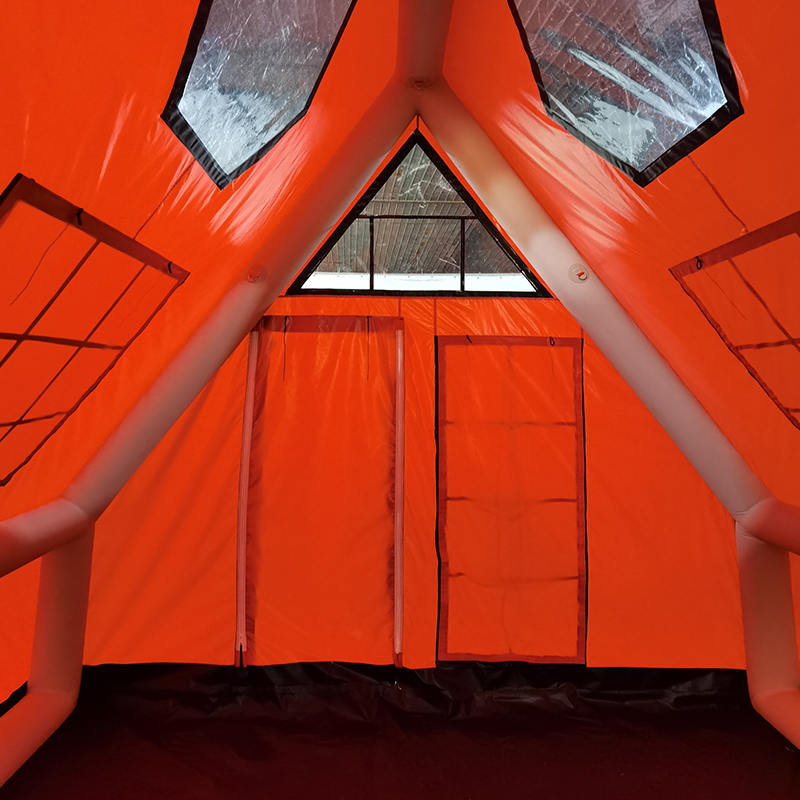 Four-Season 8-10 Person Waterproof Inflatable Air Camping TentThis inflatable tent accommodates up to 10 people, inflates in about ten minutes, and withstands winds up to 80 km/h. Its waterproof, four-season build makes it a reliable choice for group camping and glamping.View Product →
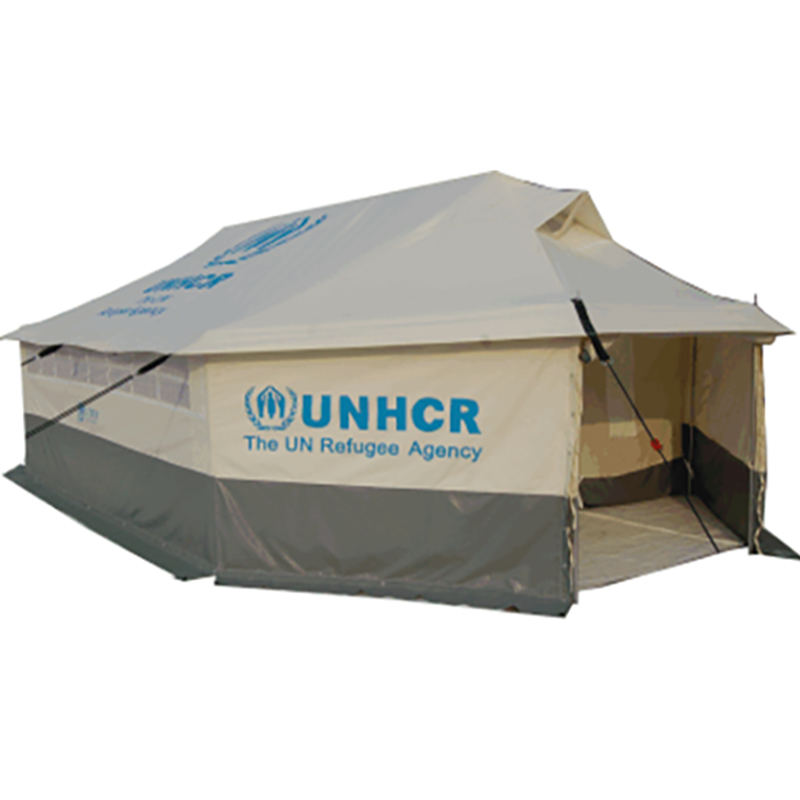
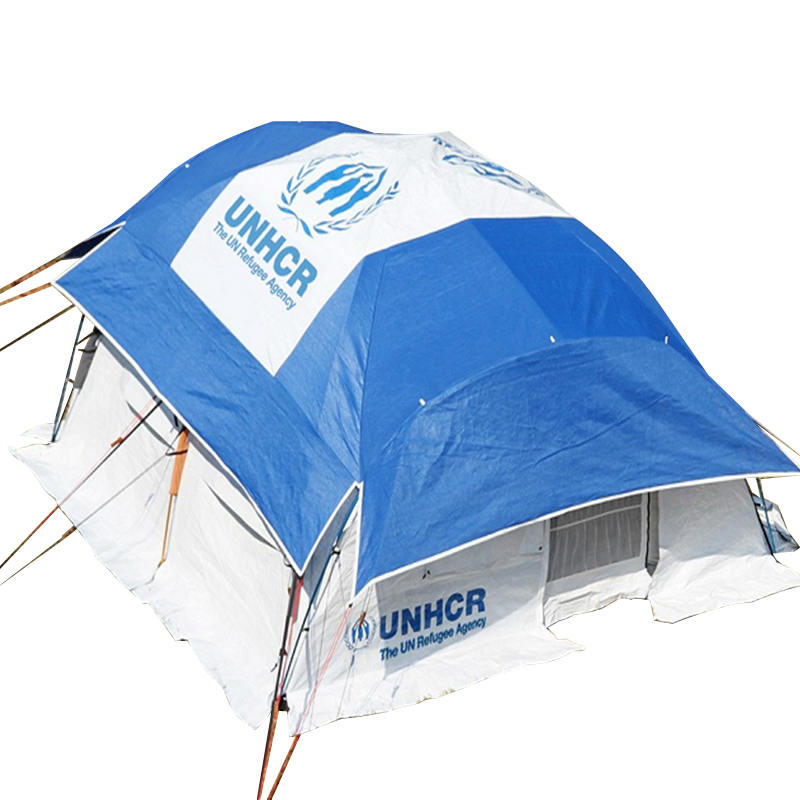
Emergency pop-up tents serve a fundamentally different purpose from consumer models. They are designed to house displaced families, serve as medical triage stations, or act as temporary warehouses, often for weeks or months. The frame is typically a foldable steel or aluminum structure that can be erected by two or three people, and the fabric is flame-retardant, UV-stabilized, and waterproof to a much higher standard than consumer camping tents. Sizing follows international aid standards: a 5-person family tent, a 33-square-meter base tent for a clinic or school, a 45-square-meter multipurpose hub tent, and mobile storage units of 6.5 by 8 meters or larger. If you are a government agency, NGO, or procurement organization looking for emergency pop-up tents, the most important questions are whether the supplier has experience manufacturing to ICRC, IFRC, UNHCR, UNICEF, or MSF specifications, and whether they can provide test certificates for flame retardancy, fabric strength, and seam performance.
| Application | Recommended Type | Key Sizing Guidelines | Critical Features |
|---|---|---|---|
| Family weekend camping | Hub-style instant or geodesic dome | 4 - 6 person capacity | Headroom, easy door, ventilation |
| Festivals and short trips | Twist-and-pop dome | 2 - 4 person capacity | Smallest packed size, quickest fold |
| Market stalls and events | Pop-up canopy / pagoda gazebo | 3 x 3 m up to 6 x 6 m | PVC roof, wind-rated frame |
| Glamping and group stays | Inflatable air beam tent | 4 - 10 person capacity | Air chambers, panoramic windows |
| Disaster relief | Emergency frame tent | 5 - 30 persons or 24 - 72 m2 | Fire retardant, UV stabilized, standard compliant |
The quality of a pop-up tent is written in its material specification. Fabrics, coatings, poles, hubs, webbing, zippers, and stitching all have measurable standards, and knowing those standards will protect you from disappointment. A tent can look identical in a product photo and yet perform completely differently in rain and wind because one uses a 150D polyester with a 1500 mm coating and the other uses a 300D ripstop with a 4000 mm coating. Here is what to look for.
| Fabric | Weight | Waterproofing | UV Resistance | Tear Strength | Typical Use |
|---|---|---|---|---|---|
| 150D polyester | Light | Good with coating | Good | Moderate | Budget consumer camping |
| 300D ripstop polyester | Medium | Excellent | Good | High | Family camping, instant tents |
| Cotton canvas, 6 - 10 oz | Heavy | Swells when wet | Excellent | Very high | Glamping, military tents |
| PVC-coated polyester | Heavy | Excellent | Excellent | Very high | Canopies, marquees, storage tents |
| PE laminated fabric | Medium | Good | Fair | Moderate | Economy canopies and shelters |
Hydrostatic head is the standard measurement for fabric waterproofing. It tells you the height of a water column the fabric can withstand before moisture seeps through. A value of 1000 mm is sufficient for light summer showers; 3000 mm is the minimum recommended for a tent you will sleep in during real rain; and 5000 mm or more is ideal for prolonged storms. Do not assume that a tent branded as waterproof will actually keep you dry. Check the hydrostatic head of the flysheet, the floor fabric, and the bathtub sidewalls separately. The floor typically needs a higher value than the flysheet because it bears the weight of your body and sleeping pad on damp ground.
| Frame Material | Weight | Strength | Relative Cost | Common Failure Mode |
|---|---|---|---|---|
| Fiberglass | Medium | Moderate | Low | Splinters under repeated fatigue |
| Steel | High | High | Low to medium | Bends on impact; rust if scratched |
| Aluminum alloy | Light | High | Medium to high | Dents; can bend under extreme load |
| Air beam (TPU/PVC) | Medium | High when inflated | High | Puncture or valve leakage |
Frame material matters more than fabric in a pop-up tent because the frame stores energy and experiences bending stress every time you deploy and fold it. Fiberglass is cheap and flexible, but it fatigues quickly; after dozens of setups, fiberglass poles can develop splinters that poke through the sleeves and make folding dangerous. Steel is heavy but nearly indestructible, which is why emergency relief tents use steel frames. Aluminum alloy is the best balance between weight and strength, so premium hub-style camping tents use aluminum poles with locking ferrules. For air tents, the thickness and the number of air chambers matter as much as the frame material: a tent with four large chambers will stand up to wind better than one with two, even if the fabric is identical.
Also check the quality of the hardware: zippers, zipper pulls, guyline attachments, and toggles. A broken zipper is the most frequent field complaint across all tent categories, and it is almost always caused by low-quality sliders rather than the fabric itself. Reputable suppliers use YKK or equivalent zippers rated for outdoor use, with larger sliders that do not jam when sand or grit gets into the teeth.
Retail customers buy a single tent and compare prices online. Professional buyers, importers, wholesalers, and institutional procurement teams face a different set of decisions when they evaluate a pop up tent supplier. If you are sourcing pop-up tents for resale, for an event rental business, or for a humanitarian aid program, the product quality standards are the same, but the commercial and logistical factors matter just as much. Here is what to check before you place a wholesale order.
The first question to ask any pop-up tent supplier is whether they own the factory or act as a trading company. A factory-backed supplier can control raw material quality, adjust specifications during production, and provide better pricing for large orders. A trading company may still offer good service, but they add a layer between you and the actual production line, which slows communication and complicates defect resolution. The term manufacturer should mean that the company operates its own cutting, welding, sewing, and quality-inspection equipment. Some suppliers describe themselves as international trade enterprises combined with factory production, which is a useful indicator of vertical integration.
Pop-up tents sold in different markets are subject to different regulations. In the European Union, tents used for consumer camping may need to meet REACH requirements for chemical safety, while flame-retardant claims must be verified with tests such as EN 14115 or CPAL-84. In the United States, canopy tents used in commercial events may need to comply with NFPA 701 for flame propagation. For humanitarian tenders, the relevant standards are usually the technical specifications issued by ICRC, IFRC, UNHCR, UNICEF, or MSF. A reliable pop up tent manufacturer should be able to present certification documents and test reports for the specific standard that applies to your market. Ask about seam strength, hydrostatic head test results, UV stability test reports, and frame loading tests.
Minimum order quantities for pop-up tents vary widely depending on category. A twist-and-pop dome tent may require an MOQ of 300 to 500 pieces per color; a large emergency frame tent may have an MOQ as low as 20 or 50 pieces because the unit value is high. Lead times also differ: off-the-shelf items can ship in two to three weeks, while custom colors and logo printing add four to eight weeks. Always request a pre-production sample and an inspection report before committing to a full order. A reputable supplier will charge a sample fee but deduct it from the first order.
When you buy one tent from a retail store, a hidden defect is an inconvenience. When you buy a container of 500 tents, a hidden defect becomes a customer service disaster. The supplier should have a clear quality-inspection process: incoming fabric inspection, in-process seam checks, frame assembly testing, and final random sampling according to AQL standards. Ask how many times a frame is deployed and folded during testing. A tent that fails after 30 cycles in the factory will fail quickly in the hands of a rental customer.
For retail importer and rental companies, spare parts are a revenue item as well as a service issue. Poles, hubs, rain flies, ground sheets, and carry bags should be available for at least three years after the original order. A manufacturer that controls its own tooling is in a much better position to provide spare parts than one that buys finished goods from an anonymous factory. At Mailenda, spare frames and replacement poles are part of the standard after-sales offering, which is something wholesale buyers should always confirm in writing.
Pop-up tents have more moving parts than conventional tents, so maintenance habits matter more. The frame hinges, shock cords, and locking hubs are all consumable components that will eventually wear out. With proper care, a quality pop-up tent can serve well for five to ten years. Here are the practices that extend the life of any pop-up tent, whether it is a small dome, a large canopy, or an inflatable air tent.
The most common cause of frame damage is forcing a tent to open or close against its natural fold direction. Each pop-up tent has a specific folding pattern. On twist-and-pop domes, the fabric creases indicate how the poles should rotate when you fold them back. On hub tents, the hubs click into place in a specific sequence, and you should reverse the same sequence when collapsing. On canopies, the X-frame requires a precise push-up motion at the center; pulling on the legs from the sides often bends the slider pins. If you are a dealer or rental company, include a short setup-and-fold demonstration with every unit, because customer misuse is the leading cause of warranty claims.
Never store a pop-up tent wet, even for one night. Moisture trapped inside the folded fabric degrades coatings, rusts steel ferrules, and encourages mildew growth that can damage the polyurethane layer of polyester floors. After a rainy trip, set the tent up in a garage and let it dry completely before folding. For cleaning, use lukewarm water and a mild soap solution; do not use detergents with bleach, as bleach attacks the water-repellent coating and can yellow PVC fabric. Zippers should be cleaned with a soft brush to remove sand, then treated with a dry lubricant such as wax, never with an oil-based spray that attracts dirt.
Every pop-up tent should be sold with a basic repair kit. For pole tents, the kit should include a spare pole section and a fiberglass repair sleeve. For hub tents, spare hubs and fasteners are essential. For air tents, a patch kit for TPU chambers and spare valve cores are the most important items. Fabric tears on the canopy can be repaired with seam tape and repair patches, but if the main structural seam splits under load, the tent should be sent to a professional repair shop or replaced. Floor punctures on bathtub floors are worth fixing early because water ingress will find its way through the tiniest hole during a heavy storm.
Ultraviolet radiation is the slow killer of all tent fabrics. Even PVC-coated polyester loses tensile strength after prolonged exposure to tropical sun. When the tent is not in use, keep it in its carry bag out of direct sunlight. For canopies used at outdoor events, consider adding a UV-stabilized flysheet or a shade cover; some manufacturers offer an integrated removable shade cover that bolts onto the roof frame, which extends the life of the main roof panel significantly. In wet climates, also check the webbing and guy lines for rot, and replace them at the first sign of fraying.
Are pop-up tents waterproof enough for real camping?Yes, if the manufacturer states the actual hydrostatic head value and the seams are taped or welded. A good pop-up tent should have at least 3000 mm on the fly and 5000 mm on the floor. Budget pop-up tents with unsealed seams and 1000 mm coatings will leak in sustained rain. Before buying, look for a specification table that lists hydrostatic head, fabric denier, and seam sealing method; if those details are missing, the tent is likely not designed for wet weather. |
How long do pop-up tent frames last?A well-made frame should survive 300 to 500 setup and fold cycles. In practice, this means two to five years of regular family camping or about one to two seasons of heavy commercial rental use. The weakest points are the plastic hub joints on instant tents and the shock cords inside twist-and-pop domes. Frames with aluminum poles and die-cast metal hubs last significantly longer than fiberglass frames, and spare hubs and pole sections in after-sales support make a worn frame repairable rather than a total loss. |
Can one person set up and fold a pop-up tent?Yes, most consumer pop-up tents are designed for one-person operation. Twist-and-pop domes and small hub tents deploy in under five minutes when handled by one adult. Canopies up to 4 by 4 meters are manageable solo, although larger 6 by 6 meter event canopies are much easier with two people. Folding is the harder part for some models; the correct technique can take two or three attempts the first time, but it becomes routine after practice. |
What is the best pop up tent for a family of five?Look for a hub-style instant tent or a geodesic dome with a floor area of at least 4.5 to 5.5 square meters, a center height above 1.8 meters, and two doors for easy entry and exit. The best pop up tents for families also have a full-coverage rain fly and a zippered divider if you need separate sleeping areas. Compare the unfolded footprint with your camping site size, because many family tents need a footprint larger than a standard campsite. |
Are pop-up tents suitable for windy conditions?Pop-up tents with flexible fiberglass frames and a low profile handle moderate wind reasonably well when fully guyed out. Twist-and-pop domes and hub tents in the 4-to-6 person size range can withstand winds up to about 30 to 40 km/h with all guylines and stakes in place. Inflatable air tents are stronger in gusty wind because the air beams absorb and distribute loads; some models are rated for winds up to 50 km/h. The least wind-resistant category is the side-wall canopy; a 3 by 3 meter canopy without weights can lift off in a strong gust. If you plan to use a canopy in exposed areas, buy one with a wind-rated frame and bolt-on base plates or water ballast weights. |
How do I fold a pop-up tent back into its carry bag?First, lay the tent flat on the ground with the poles relaxed. Bring the opposite corners of the frame toward each other following the pre-formed creases in the fabric. For twist-and-pop domes, rotate the pole bundle into a figure-eight shape, and for hub tents, fold the hub arms parallel to each other before rolling the fabric. Never force the zipper on the carry bag; if the tent does not fit, the fold is wrong. Practice once at home before you go camping, so you know the sequence in daylight instead of learning it at the end of a tiring trip. |
Can I buy pop-up tents wholesale directly from a manufacturer?Yes. Many pop-up tent manufacturers, especially those based in China with in-house factories, accept wholesale orders from importers, distributors, event rental companies, supermarkets, and aid organizations. When buying wholesale, request a spec sheet with fabric weight, hydrostatic head, frame material, packed dimensions, and carton dimensions. Ask about private label packaging, printed logos, custom colors, and whether the manufacturer can supply spare parts. A factory supplier will typically provide a pre-production sample before you commit to a full container order. |
The best pop up tents are not defined by a single rank or a famous logo. They are defined by how well they match the user's real constraints: available storage space, expected weather, number of occupants, frequency of setup, and budget. For family campers who want a balance of speed and habitability, a hub-style instant tent or a self-standing geodesic dome with a full rain fly is the safest recommendation. For event professionals, a PVC-roofed pop-up canopy with a reinforced X-frame gives the best value per square meter. For glamping operators and group campers, an inflatable air tent with multiple chambers offers speed, comfort, and improved wind resistance. And for humanitarian buyers, the only acceptable option is a tent that meets the relevant international standard, backed by test certificates and a supplier that can ship consistently large volumes.
When you are ready to compare options beyond this article, the following resources on our site provide deeper technical and practical guidance.
| Professional Guide: Practical Technical Manual for Camping Tents A detailed reference covering tent anatomy, material selection, pitching methods, and common failure modes. Useful for retailers and buyers who want to verify product quality before purchasing. Read the camping tent technical manual |
Inflatable Tents: A Camping Favorite, or All Style and No Substance? An honest look at air-beam tent advantages and limitations, including inflation time, valve reliability, and what to expect when a chamber punctures. Helpful if you are weighing an inflatable pop-up tent against a pole-frame model. Read the inflatable tent review |
If you are sourcing pop-up tents for retail, rental, events, or humanitarian programs, we recommend requesting a technical datasheet from the manufacturer before making a final decision. Check the values against the criteria in this guide, order a sample, and test it in the field. The extra time spent verifying quality at the start pays back many times over in fewer returns, fewer complaints, and tents that keep working season after season.
Related Products

Our story is about how to uphold the spirit of humanitarianism in the face of disaster, how to find solutions amidst challenges, and how to sow hope in despair.
Copyright © Yangzhou Mailenda Outdoor Products Co., Ltd.
All Rights Reserved.
Custom Tent OEM/ODM Manufacturers


