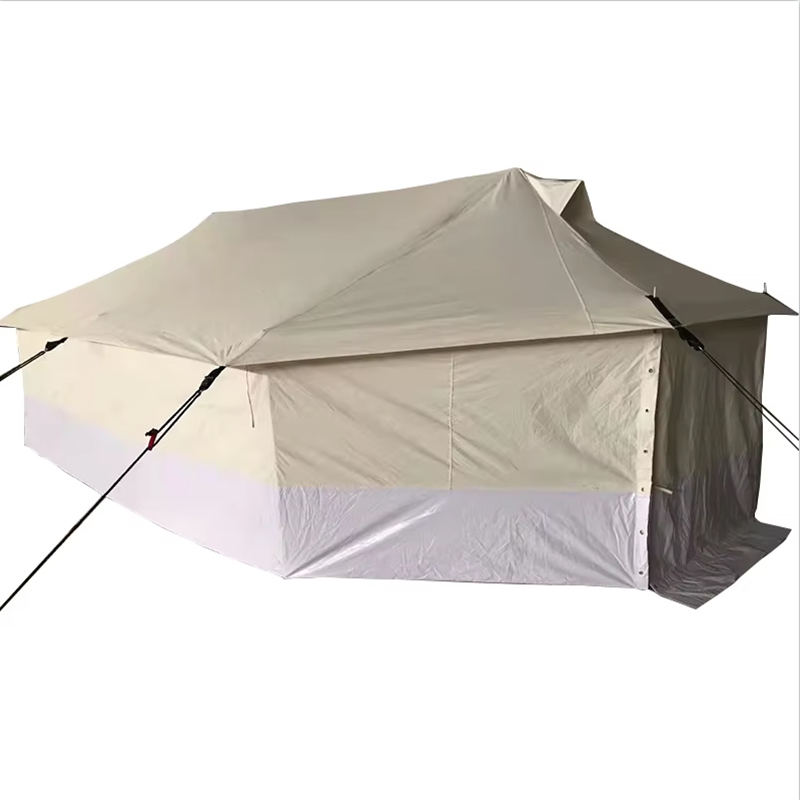
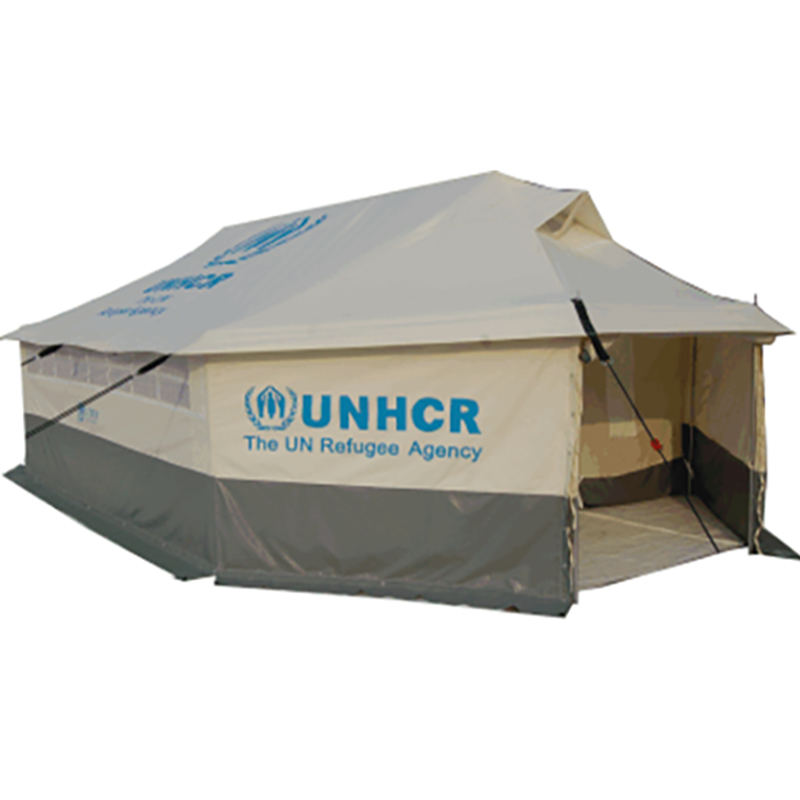
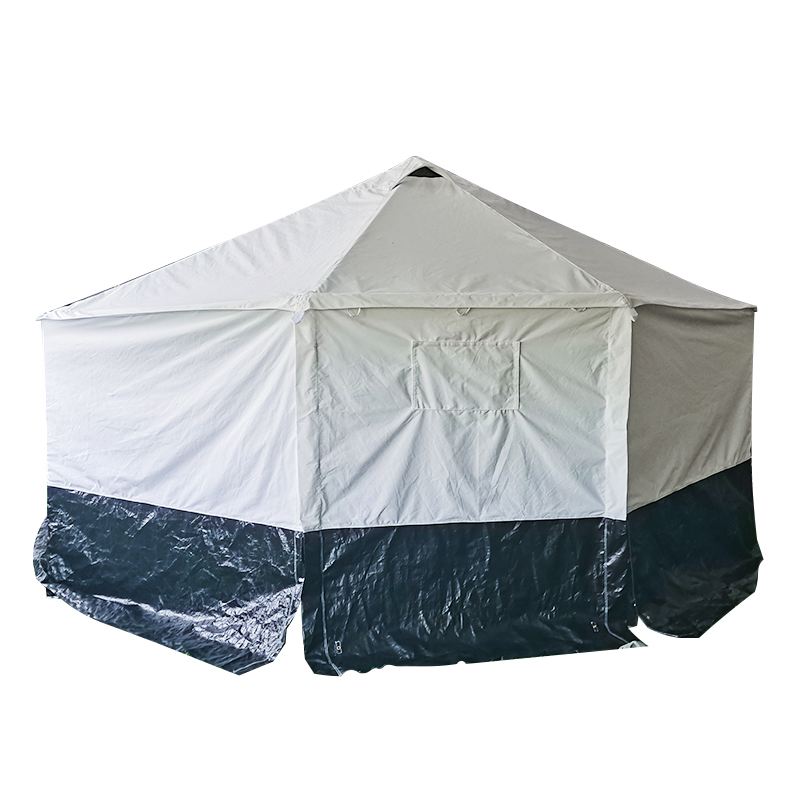
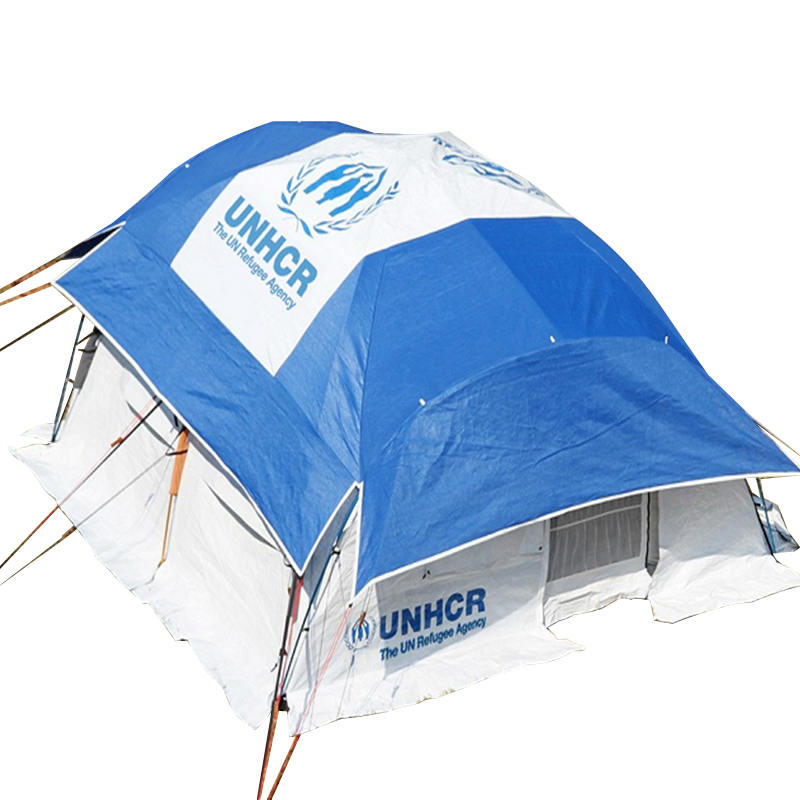
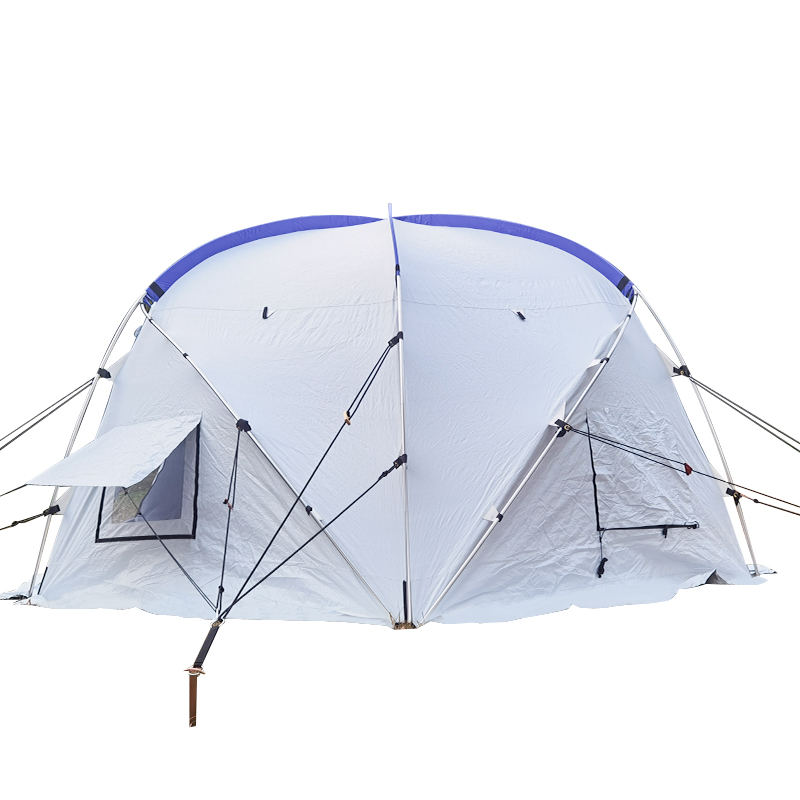
When relief organizations like MSF, ICRC, and IFRC deploy to crisis zones, the choice of shelter infrastructure is mission-critical. The MSF/ICRC/IFRC Standard 45m² Multipurpose Base Tent (Item No. MPBT45) stands out as a leading solution for field clinics, temporary schools, emergency offices, and refugee camp setups — combining durability, compliance, and modularity in a single deployable structure. This article explores why this tent design is widely trusted across humanitarian operations globally, and how it compares to other emergency shelter tent categories.
As a certified relief tent producer and refugee tent manufacturer, Yangzhou Mailenda Outdoor Products Co., Ltd. manufactures this tent to meet the world's most stringent humanitarian standards — making it a dependable choice for NGOs, UN agencies, and disaster response teams. Whether you need a dispensary tent, hospital tent, field office, or temporary school, understanding the performance specifications of this 45m² base tent will help procurement officers make confident decisions.
Product Specifications at a Glance
The MPBT45 is designed to accommodate 20 to 40 persons within a 45m² footprint, supported by a robust aluminum pipe structure. Below are the full technical specifications as referenced from the product datasheet:
Table 1: MPBT45 Multipurpose Tent Full Specification
Aluminum Pipe Dia 40/2 MM, Iron Hammer, Iron Pegs, Ground Pins, Guy Ropes
Packed Weight (w/ pallet)
700 kg
Loading (20' / 40' / 40' HCL)
36 / 72 / 72 Units
Why This Tent Meets Humanitarian Standards
Compliance with MSF, ICRC, and IFRC standards is not a marketing claim — it is a procurement requirement. These standards define minimum performance thresholds for fabric weight, structural stability, UV resistance, and interior usable area for humanitarian operations. The MPBT45 satisfies these benchmarks across all categories.
A 440 GSM roof fabric combined with water, rot, and UV resistance ensures the tent performs reliably in tropical rain, desert heat, and prolonged field exposure. The 540 GSM PVC-coated mud flap provides ground-level sealing essential in flood-prone or muddy environments — a common condition in disaster tent deployments. The aluminum pipe structure (Dia 40/2 MM) balances strength with light portability, enabling faster deployment by smaller teams.
Primary Use Cases: From Field Clinic to Refugee Camp
The MPBT45 earns the label "multipurpose" because it genuinely serves across a wide spectrum of humanitarian and emergency functions. Below are the primary use scenarios:
Field Clinic and Dispensary Tent
With a 3.00 m central height and 45m² floor area, this tent is well-suited as a dispensary tent or hospital tent. Inner partition sheets (accessory Z7162631) allow the space to be divided into consultation rooms, storage areas, and waiting zones without requiring additional structures. The wall height of 2.11 m ensures sufficient standing clearance for medical staff throughout the entire perimeter — a critical ergonomic requirement in clinical environments.
Emergency School and Office Tent
As a temporary school tent or field office tent, the MPBT45 accommodates up to 40 seated individuals — equivalent to a standard classroom. Modular expansion is possible by connecting multiple units end-to-end, making it practical for larger-scale NGO relief tent deployments where multiple classes or departments must be housed.
Storage Tent and Warehouse Tent
Logistic units operating in disaster zones frequently require protected storage for MSU Relief Items including shelter kits, plastic tarpaulins, plastic sheeting, water containers, jerry buckets, thermal blankets, sleeping mats, folding beds, and field cots. The MPBT45's weatherproof construction and generous floor space make it an effective interim storage tent or warehouse tent until permanent logistics infrastructure is established.
How It Compares: Tent Types for Emergency Deployment
Relief organizations choose from a range of shelter types depending on deployment urgency, climate conditions, and mission duration. Understanding where the MPBT45 sits within this landscape is helpful for procurement planning.
Table 2: Comparison of Common Emergency Tent Types
Tent Type
Setup Time
Durability
Best For
Standard
MPBT45 Base Tent
3–6 hours
Very High
Clinics, schools, offices, storage
MSF/ICRC/IFRC
Inflatable Rapid Deployment Tent
15–30 min
Medium
Rapid first-response operations
Varies
Military / Army Tent (MGPT)
2–4 hours
High
Military field operations
Military spec
Frame Tent / Western Frame Tent
4–8 hours
High
Semi-permanent camps
Commercial
Family Shelter Tent (5–10 person)
1–2 hours
Medium
Household refugee sheltering
UNHCR / IFRC
Modular Configuration and Accessory Ecosystem
One of the MPBT45's key procurement advantages is its modular accessory system. Unlike single-use shelter kits, the base tent supports a range of add-on configurations that expand its operational versatility without requiring entirely new structures.
Z7161401 Ground Sheet — Essential for medical and food-storage environments requiring a clean, moisture-proof floor.
Z7162630 Inner Tent + Ground Sheet — Adds an insulating inner layer, improving thermal regulation in both cold and hot climates — useful for protecting sleeping mats, thermal blankets, or patients.
Z7162631 Inner Partition Sheet — Subdivides the 45m² space into functional zones: exam room, waiting area, storage or teaching and administrative sections.
Z7162539 Shade Net Fly Sheet — Recommended in high solar radiation environments (Sub-Saharan Africa, South Asia), reducing interior temperature by up to 8°C during peak hours.
Winterization Kit (optional) — Provides additional insulation layer and sealing for cold-climate operations — critical for deployments in mountain or northern regions.
Multiple MPBT45 units can be linked end-to-end to form longer structures, effectively creating a modular general purpose tent (MGPT) corridor suitable for multi-ward field hospitals, extended classroom layouts, or large-scale warehouse tent applications.
Fabric Performance: Material Science Behind Field Reliability
The fabric selection across this tent's components reflects over two decades of field feedback. Polyester-cotton blends at 440 GSM and 320 GSM achieve a critical balance: they are heavier and more rot-resistant than basic PE shelter tarps, while remaining lighter and more breathable than full PVC canvas — important for extended field residence.
The 540 GSM PVC-coated mud flap is particularly relevant in flood disaster scenarios, where ground seepage and mud intrusion are primary threats to hygiene and structural integrity. This specification exceeds most commercial tent categories, including many canvas tent, bell tent, and safari tent products not designed for humanitarian field use.
Packing and Logistics Efficiency
Logistics costs represent a significant portion of humanitarian supply chains. The MPBT45 is engineered with container efficiency in mind: 36 units fit in a standard 20' container, and 72 units in a 40' or 40' HCL container. The 2 PVC bundle packing system (packed weight 208 kg per unit without pallet) allows ground-level handling by small teams, and standard pallet dimensions of 225×95×112.5 cm ensure compatibility with most warehouse racking systems.
Compared to bulkier frame tent, western frame tent, or warehouse tent alternatives, the MPBT45's density per container represents meaningful cost savings on freight — an important factor for organizations responding to large-scale disaster tent requirements in remote regions.
Mailenda's Manufacturing Capabilities and Global Track Record
Yangzhou Mailenda Outdoor Products Co., Ltd. is an international trade enterprise combined with factory, specializing in the manufacturing of all kinds of relief tent, inflatable tent, party tent, carport and warehouse tent, among others. The company operates advanced machinery including automatic cutting machines, laser machines, automatic cutting tables, automatic welding machines, high frequency machines, hot air machines, and hot air seam sealing machines.
Mailenda is recognized as one of the earliest factories in China to engage in PVC party tent products, with a company team active in the industry for more than 20 years. This experience spans PE, PVC, TPU, polyester-cotton fabric, steel, and aluminum materials — enabling the company to produce a full spectrum from inflatable camping tent and inflatable family tent designs to high-specification military tent and emergency tent structures.
Products are exported to dozens of countries including Germany, the United States, Japan, the United Kingdom, Spain, Italy, Canada, and Chile. Customers include United Nations agencies, humanitarian organizations, and well-known supermarket chains. The company also holds significant experience in international bidding processes, making it a reliable partner for large-scale procurement in humanitarian and governmental contexts.
Frequently Asked Questions
Q1: Does the MPBT45 comply with MSF, ICRC, and IFRC procurement standards?
Yes. The tent is manufactured to meet MSF/ICRC/IFRC standard specifications including fabric weight, UV and water resistance requirements, structural dimensions, and accessory compatibility. Organizations can request relevant test certificates and compliance documentation at the inquiry stage.
Q2: Can multiple tents be connected to form a larger structure?
Yes. Multiple MPBT45 units can be linked end-to-end to create extended shelter corridors. This is commonly used for multi-ward field hospitals, large classroom layouts, or extended storage and warehouse tent configurations in refugee camp settings.
Q3: What optional accessories are available for different climates?
Available options include a shade net fly sheet (for hot/sunny climates), inner tent with ground sheet (for improved insulation), inner partition sheet (for space division), and a winterization kit (for cold environments). Each accessory is available separately and is compatible with the standard MPBT45 structure.
Q4: How many persons does the tent accommodate, and what is the floor area?
The tent provides 45m² of usable floor space and is designed to accommodate 20 to 40 persons, depending on the layout and application (clinic, school, dormitory, or storage). The 3.00 m central height allows for comfortable standing and movement throughout the structure.
Q5: What is the typical container loading efficiency?
A standard 20' container loads 36 units, while a 40' or 40' HCL container holds 72 units. Packing dimensions without pallet are 230×95×35 cm per unit (208 kg), and with pallet 225×95×112.5 cm (700 kg). Custom marking is available on request.
Q6: Is a customized marking or branding option available for NGOs and UN agencies?
Yes. Custom marking (such as organizational logos or regional identifiers) is available upon request and can be applied during production. This is commonly requested by humanitarian organizations, UN agencies, and NGO relief tent procurement departments.