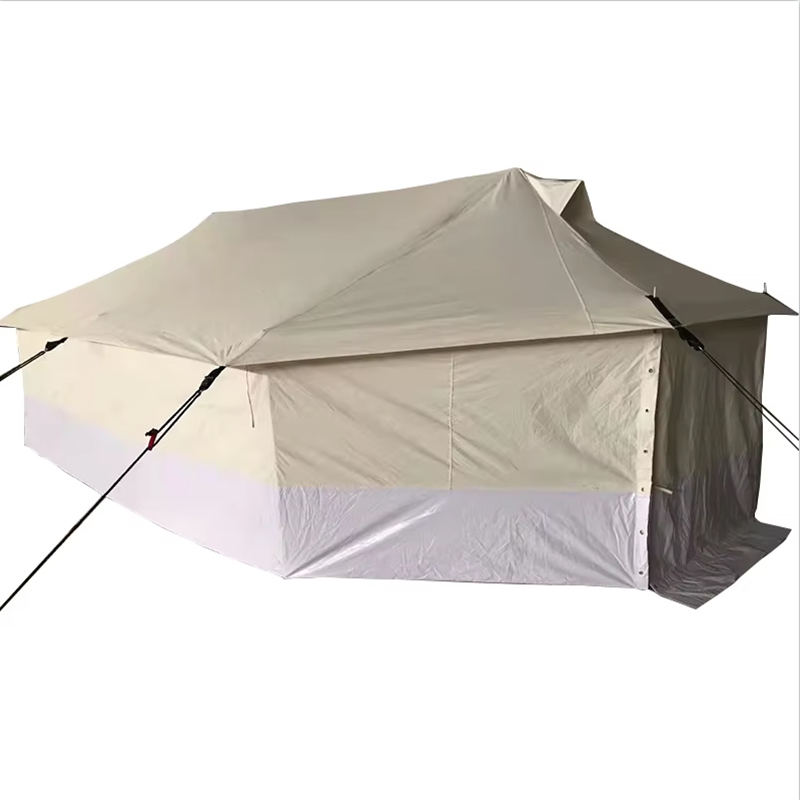
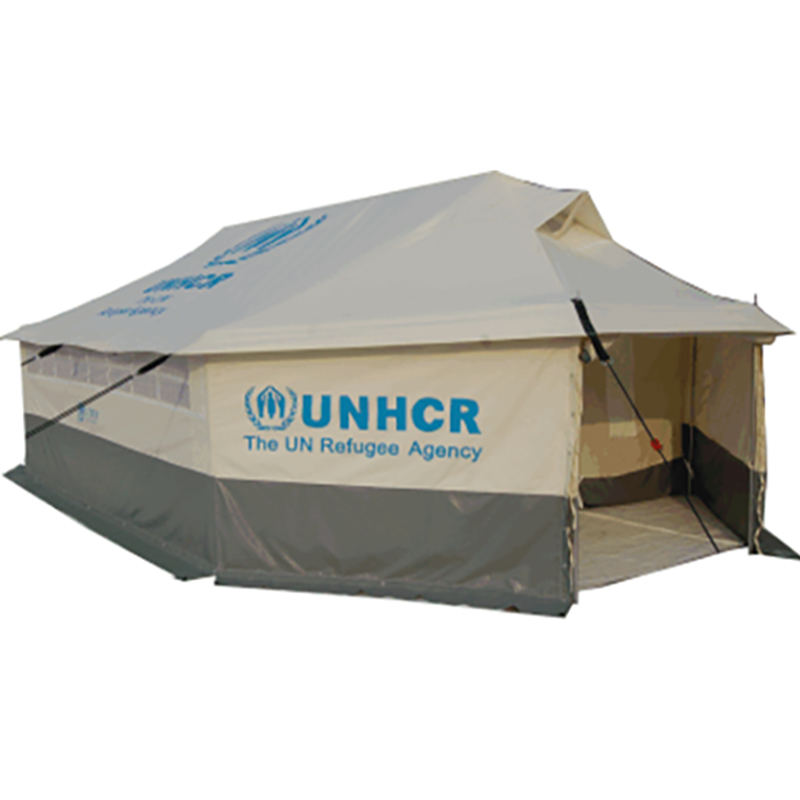
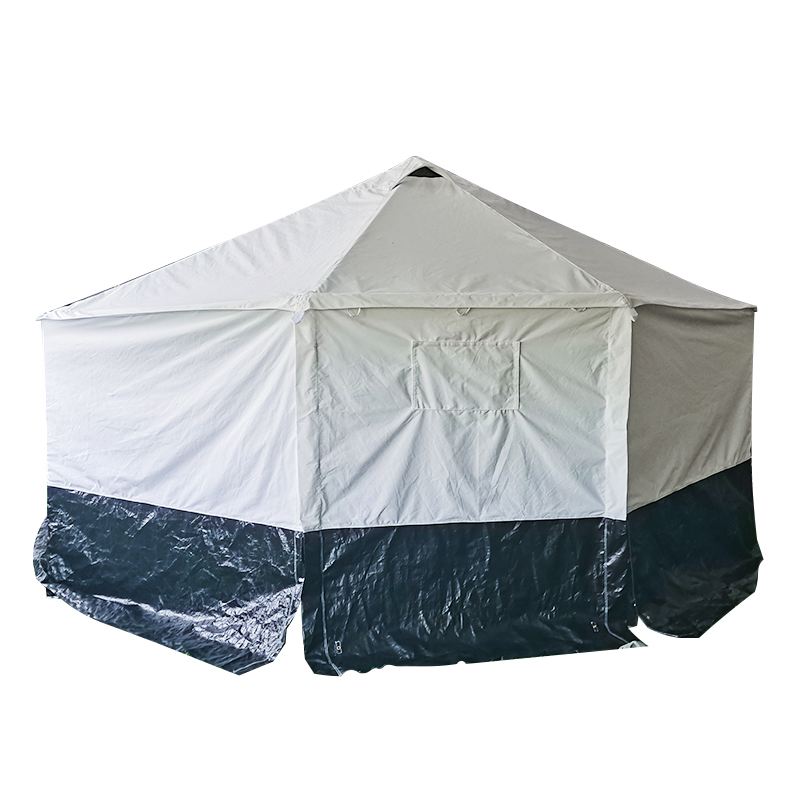
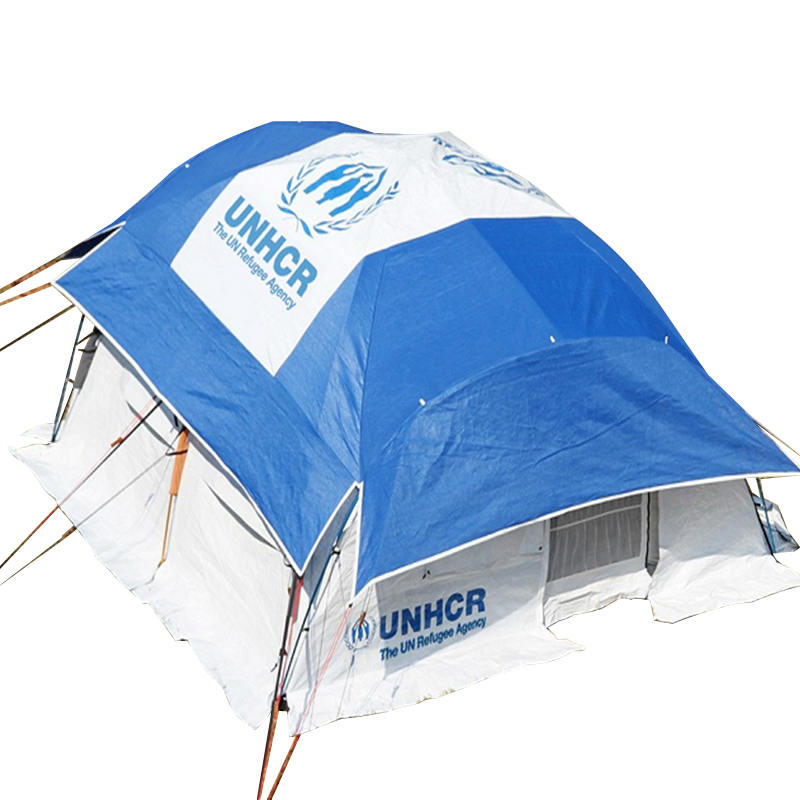
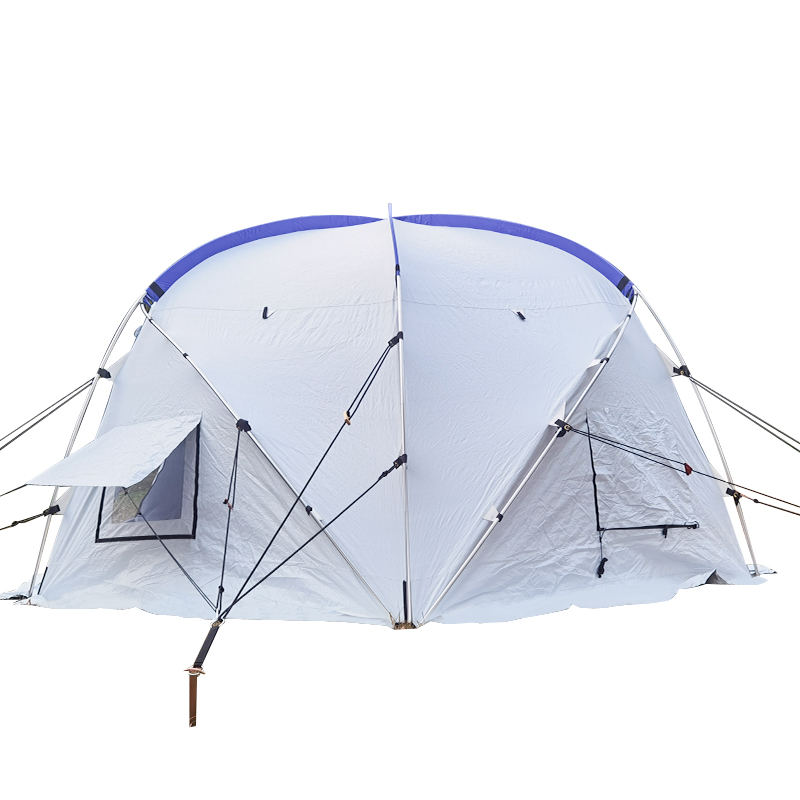
The IFRC/ICRC Standard 5-Person Family Tent with Inner Lineris widely recognized as one of the most field-tested emergency shelters in humanitarian operations. Its durability comes from a multi-layered material system, reinforced structural components, and weather-resistant coatings designed to perform under demanding real-world conditions. This article breaks down exactly what makes it a reliable choice for disaster relief, refugee resettlement, and prolonged field deployment.
Below, we explore the construction details, performance benchmarks, setup advantages, and long-term suitability of this durable field tent for families — backed by data and practical comparison.
Material Engineering: The Core of Its Durability
The outer shell of this waterproof humanitarian tent is typically constructed from high-density polyethylene (HDPE) or coated polyester fabric with a minimum weight of 180–200 g/m². These materials are engineered to resist tearing, UV degradation, and water penetration simultaneously.
Key material specifications include:
Outer fabric tensile strength: typically ≥1,500 N/5 cm (warp and weft direction)
Waterproof rating: hydrostatic head pressure of ≥2,000 mm (many versions tested to 3,000+ mm)
UV resistance: tested to withstand 500+ hours of UV exposure without significant degradation
Inner liner fabric: lightweight cotton-polyester blend (≥120 g/m²) for thermal insulation and condensation management
The double-layer design — combining the outer waterproof shell and the inner liner — creates an air gap that significantly improves thermal regulation, reducing interior temperature swings by an estimated 6–10°C in field tests.
The Role of the Inner Liner in Long-Term Performance
The inner liner is not a cosmetic feature — it is a structural contributor to the tent's durability and livability. In a family tent with inner liner design, the liner provides three critical functions:
Condensation separation: Moisture that forms on the cold outer shell drips between the two layers rather than soaking the living area.
Thermal buffering: The air gap between outer fly and inner liner acts as insulation, reducing heat loss in cold climates and blocking heat gain in hot regions.
Privacy and structural integrity: The inner liner adds rigidity to the tent shape and provides privacy for families — a documented factor in humanitarian shelter standards.
Field data collected from UNHCR operations shows that tents with inner liners have a 30–40% longer effective service life compared to single-layer alternatives under identical conditions, largely because interior moisture damage is the leading cause of early structural failure in emergency tents.
Structural Frame: Steel, Aluminum, and Load Distribution
The ICRC 5-person disaster tent uses a rigid tubular frame — typically galvanized steel or anodized aluminum — that distributes structural loads evenly across the tent footprint. This matters particularly for the all-weather 5-person tent standard, which requires wind resistance of at least 80 km/h and snow load tolerance of ≥30 kg/m².
Frame Component Comparison
Table 1: Comparison of common frame materials used in emergency relief shelter tents
Material
Weight (per pole)
Corrosion Resistance
Load Capacity
Typical Lifespan
Galvanized Steel
~1.8–2.4 kg
High
Very High
5–8 years
Anodized Aluminum
~0.9–1.3 kg
Very High
High
5–10 years
Fiberglass
~0.6–1.0 kg
Medium
Medium
3–5 years
For most IFRC emergency family tent specifications, galvanized steel poles remain the standard due to their predictable strength under combined wind and snow loads, which is critical in post-disaster environments where conditions may deteriorate rapidly.
Weather Resistance Across Climate Zones
The portable disaster shelter tent is deployed across a wide range of climates — from sub-Saharan heat to mountain-adjacent cold zones. The design accounts for this variability through seam sealing, floor anchoring systems, and ventilation management.
Hot-air seam sealing — a process using thermally bonded tape over stitched seams — is one of the most important durability factors. Seams are the primary point of water infiltration in field tents, and hot-air sealed seams are tested to withstand pressure equivalent to a sustained rainfall of 100 mm/hour.
The line chart above illustrates how the inner liner moderates extreme temperature swings throughout the year, keeping interior conditions more stable than the ambient environment — a key benefit for families in refugee relief family tent settings where heating and cooling resources are limited.
Setup Efficiency and Deployment Logistics
An easy setup emergency tent is not merely a convenience — it is a life-saving specification. In disaster response, delays in shelter deployment directly impact health outcomes. The ICRC family tent is designed for a two-person setup time of approximately 45–60 minutes without specialized tools, using color-coded poles and numbered anchor points.
Logistical specifications relevant to field deployment:
Packed dimensions: approximately 130 × 30 × 30 cm per unit
Total packed weight: 40–50 kg per unit (including all poles, pegs, and guy ropes)
Packing units per standard pallet: typically 12–15 tents
Assembly personnel required: 2–3 adults (no heavy equipment needed)
IFRC/ICRC Compliance Standards and Testing Protocols
The IFRC emergency family tent standard is one of the most rigorous in the humanitarian sector. Compliance involves passing a battery of standardized tests before a product is approved for procurement by UN agencies and NGOs. These include:
Rain simulation test: continuous exposure to 40 mm/hour rainfall for 2 hours with zero interior penetration
Wind resistance: structural integrity maintained at simulated 80 km/h wind for 30 minutes
Flame retardancy: fabric must meet EN ISO 6940 or equivalent, with self-extinguishing behavior
Cycle durability: zipper and door systems tested to 1,000+ open/close cycles
Service life target: minimum 2 years with regular use; extended to 5+ years under optimal maintenance
These standards ensure that the emergency relief shelter tent can be trusted in acute crisis scenarios where failure of shelter has serious humanitarian consequences.
Anchor System and Ground Stability
A tent's durability is only as good as its anchoring system. The ICRC 5-person disaster tent includes heavy-gauge steel pegs (typically 300 mm length, ≥3 mm wall thickness) and nylon guy ropes with pre-threaded tensioners. The tent is designed for a minimum of 12 anchor points, distributing lateral wind loads across a wide footprint.
In sandy or loose soils — common in refugee camp environments — additional deadman anchors or screw pegs are recommended. The tent's ground sheet (if included) is typically 200 μm reinforced polyethylene, providing a moisture barrier that extends the life of interior furnishings and reduces floor-level damp penetration.
Estimated Service Life Under Different Conditions
Service life varies considerably based on UV exposure, frequency of setup/takedown cycles, and maintenance practices. The following data reflects estimates based on IFRC field reports and manufacturer testing:
Regular maintenance — including annual UV-protective coating reapplication, seam inspection, and pole joint lubrication — can extend the effective service life of a refugee relief family tent by 20–40% beyond baseline estimates.
About Yangzhou Mailenda Outdoor Products Co., Ltd.
Yangzhou Mailenda Outdoor Products Co., Ltd. is an international trade enterprise combined with factory, specializing in the manufacturing of all kinds of relief tent, inflatable tent, party tent, carport and warehouse tent. The company operates advanced production equipment, including automatic cutting machines, laser machines, automatic cutting tables, automatic welding machines, high-frequency machines, hot air machines, and hot air seam sealing machines.
As one of the earliest factories in China to produce PVC party tent products, the company team has accumulated over 20 years of industry experience across PE, PVC, TPU, polyester-cotton fabric, steel, aluminum, and other materials. With extensive experience in international bidding and supermarket cooperation, products are exported to dozens of countries and regions including Germany, the United States, Japan, the United Kingdom, Spain, Italy, Canada, Chile, and more. Customers include United Nations agencies, humanitarian organizations, and many well-known supermarkets.
Frequently Asked Questions
Q1: What is the floor area of the IFRC/ICRC Standard 5-Person Family Tent?
A1: The standard ICRC family tent provides a floor area of approximately 17.5 m² (e.g., 5 m × 3.5 m), which meets the SPHERE standard minimum of 3.5 m² per person for five occupants.
Q2: Can the family tent with inner liner be used in both hot and cold climates?
A2: Yes. The double-layer design with inner liner provides thermal buffering in both directions — retaining warmth in cold environments and limiting heat gain in hot climates. It is designed for deployment across a wide range of geographic zones.
Q3: How do I maintain an emergency relief shelter tent to maximize its lifespan?
A3: Key maintenance steps include storing the tent dry before packing, inspecting seams and pole joints annually, reapplying UV-protective spray on the outer fabric, and replacing worn pegs or frayed guy ropes as needed. Avoid prolonged storage in compressed form, which can weaken fabric coatings over time.
Q4: What certifications should a waterproof humanitarian tent meet for UN or NGO procurement?
A4: For international humanitarian procurement, tents are generally expected to comply with IFRC/ICRC shelter specifications, pass hydrostatic head testing (≥2,000 mm), meet EN ISO 6940 for flame retardancy, and demonstrate wind resistance at 80 km/h. Specific UN agency procurement may require additional factory audits and quality assurance documentation.
Q5: Is the portable disaster shelter tent suitable for long-term settlement use?
A5: The tent is primarily engineered for emergency and transitional use. With proper maintenance, it can function reliably for 2–5 years in semi-permanent settlement conditions. For longer-term needs, transitional shelter upgrades (such as adding insulated floor platforms or shade structures) are generally recommended.