

 English
 中文简体
中文简体 Español
 日本語
日本語 русский
 عربى
عربى

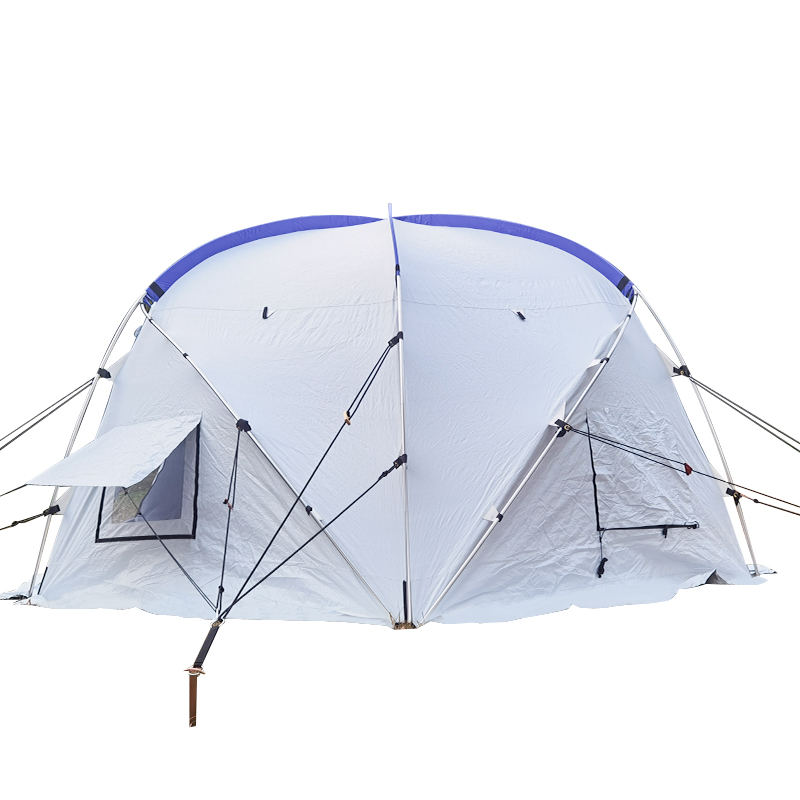


TO SHELTER ALL, TO SMILE ALL.
Our story is about how to uphold the spirit of humanitarianism in the face of disaster, how to find solutions amidst challenges, and how to sow hope in despair.
Content
Two shipments can leave the same port in the same week: 500 family tents for a relief programme, and the pallets of groundsheets, guy lines and peg sets that go with them. When the second shipment slips, the first one quietly stops working. Within days, tents pitched directly on wet ground lose heat through the floor, guy lines rub against improvised anchors, and the first strong wind finds every shortcut. The tents themselves are rarely the problem; the missing tent accessories are.
The conclusion comes first: tent accessories are not optional extras that improve a tent, they are components the tent already depends on. Anchoring, ground separation, ventilation, interior equipment and spare parts decide whether a shelter that passed inspection in the warehouse still performs after a week of rain and wind. This guide explains how the main accessory categories work, how to match them to camping, relief, event and storage scenarios, what buyers should compare before ordering, and how to maintain the whole kit so the shelter reaches its expected service life. As a tent manufacturer and supplier with more than 20 years of factory experience across relief, party, storage and camping tents, Mailenda treats accessories as part of the shelter system rather than as loose add-ons, and the sections below reflect how those decisions are actually made on the procurement and deployment side.
Key point: judge a tent by its complete kit. A technically correct tent with the wrong groundsheet, anchors and interior equipment will underperform a modest tent with the right ones.
Tent accessories are every component that attaches to, supports or equips the main tent body without being the body itself. In practice they fall into two tiers. Structural accessories, such as pegs, guy lines, tensioners and groundsheets, determine whether the tent stands, sheds water and survives wind. Live-in accessories, such as sleeping mats, field cots, blankets, liners and organizers, determine whether the covered space is actually usable for the people inside. Both tiers appear on serious purchase orders, and both belong in the same quality conversation.
The table below groups the most common camping tent accessories and relief tent accessories into six working categories. The grouping matters because buyers rarely fail by forgetting accessories altogether; they fail by buying them category by category from different sources, ending up with pegs that do not match the soil, liners that do not fit the frame, and tarps without the reinforcement their application needs.
| Table 1: The six working categories of tent accessories, what each category does, and where it matters most. | |||
| Accessory category | Typical items | Primary function | Most critical for |
| Anchoring and guying | Pegs, stakes, screw anchors, guy lines, tensioners, ballast weights | Transfers wind load from the tent into the ground or into weights | Every scenario; decisive in wind-exposed sites |
| Ground system | Groundsheets, PE and PVC tarpaulins, footprints, flooring panels | Blocks ground moisture, protects the base fabric, adds a thermal break | Camping, relief camps and events on grass or mud |
| Weather and climate | Inner liners, mesh panels, roof vents, stove jacks, shade covers | Controls temperature, condensation, insects and privacy | Cold seasons, hot climates, medical and school tents |
| Interior and sleep | Sleeping mats, field cots, blankets, hanging organizers | Turns covered space into usable, healthy living space | Relief distributions, family camping, glamping sites |
| Repair and spares | Patch kits, adhesives, seam tape, spare poles, spare pegs | Restores full performance without replacing the tent | Remote sites, rental fleets, long missions |
| Event specific | Sidewalls, gutters, linings, flooring, weight plates | Extends function, weather protection and appearance | Weddings, exhibitions, rental companies |
When you review a quotation from a tent accessories manufacturer or supplier, check that the offer names the category, the material and the quantity per tent for every line. Vague lines such as "peg set" or "tarpaulin" are where kits lose their engineering logic.
Key point: accessories come in two tiers, structural and live-in, and both must be specified with the same discipline as the tent itself.
A tent is a tension structure. Wind pressure pushes against the cover, the curved or peaked shape converts that pressure into tension in the fabric, and the load has to leave the system somewhere. In a correctly equipped tent it leaves through the guy lines and anchors, into the soil. Remove any link in that chain and the load finds the weakest remaining part: a zipper tears out, a pole bends, or a peg pulls free with a plug of earth attached. This is why anchoring accessories are engineering components sized to the soil and the wind exposure, not decoration sold at the checkout.
The load path of a pitched tent reads like this:
Moisture attacks from two directions at once. From below, water vapor moves upward through soil by capillary action even days after rain, which is why a dry-looking pitch can still leave bedding damp by morning; the groundsheet and tarpaulin layer is the barrier. From inside, occupants release liters of moisture overnight through breath and perspiration. When warm humid air meets a cold cover, condensation forms and runs or drips. Ventilation accessories, mesh panels, roof vents and correctly shaped door flies manage that air, and inner liners keep the coldest surface away from the sleepers. In relief and medical tents, ventilation is not a comfort feature; it is part of the health design of the shelter.
Once you read the tent this way, the purpose of every accessory category becomes clear: manage the load, manage the ground water, manage the air.
Key point: a tent stays dry, stable and healthy because its accessories manage three things continuously: load, ground moisture and indoor air.
The ground system does four jobs at once. It blocks capillary moisture from below, protects the sewn or welded floor panel from stones and abrasion, adds a thermal break between sleepers and soil, and keeps the interior clean enough for mats, cots and bedding to do their work. Buyers who treat this layer as an afterthought usually pay for it twice: once in comfort complaints and again in premature floor replacement.
Material choice drives everything. Woven PE tarpaulin is the economical workhorse, light and waterproof when new, with a UV service life of one to a few seasons depending on treatment. PVC coated polyester is the heavy-duty option: weldable, available with flame-retardant finishes, and stable through years of outdoor exposure, which is why it dominates relief, event and warehouse applications. Cotton and poly-cotton canvas breathes and stays quiet in wind, which suits liners and glamping interiors, but it demands careful drying before storage. Weights are specified in grams per square meter, and the ranges are wide, so a "tarpaulin" at 100 gsm and a tarpaulin at 600 gsm are different products that happen to share a name.
Sizing follows two rules. A groundsheet cut for the floor of a specific tent should sit slightly inside the edges of that floor, so rain cannot channel between the sheet and the fabric and pool underneath. A multi-purpose relief tarpaulin works the opposite way: it is deliberately oversized, with reinforced edges and fixing points, so one sheet can serve as groundsheet, roof patch, windbreak or partition depending on the day. In humanitarian supply, a reinforced flexible plastic tarpaulin in the 4 by 5 meter class is one of the most requested line items for exactly that reason.
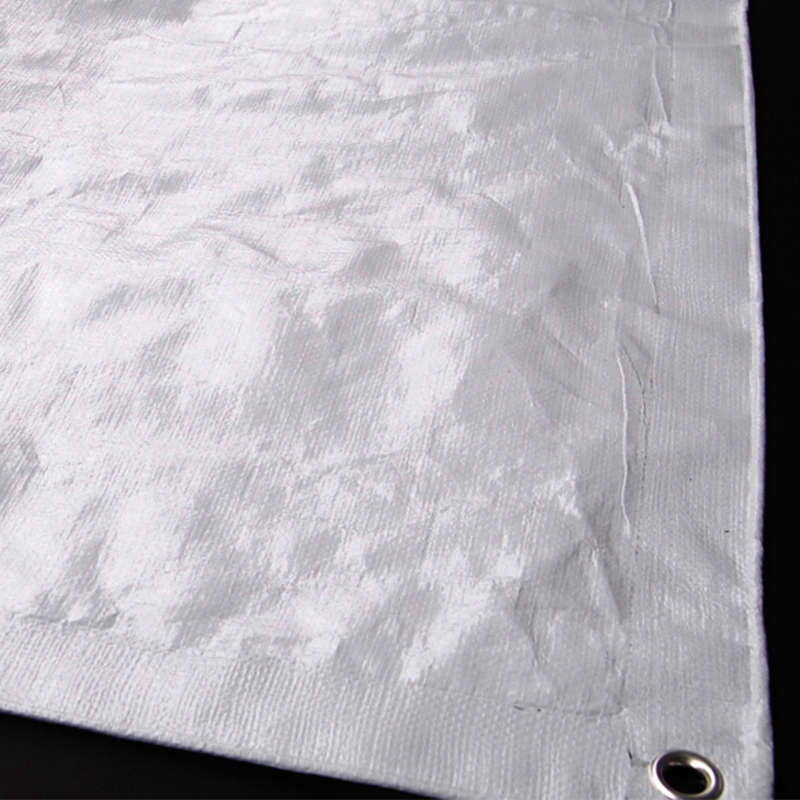 4x5m Reinforced Flexible Plastic Tarpaulin for ShelterA 20 m² HDPE tarpaulin with heat-sealed reinforced edges and galvanized eyelets, used as groundsheet, roof patch, windbreak or partition. Oversized multi-purpose sizing makes it a standard humanitarian line item.View Product →
For wholesale buyers, the ground system is also one of the easiest categories to consolidate. Tarps and sheets are light, compressible and flat-packed, so they fill container voids around tent bales efficiently and rarely change the freight calculation.
Key point: buy the ground system for the worst ground you will pitch on, not the average one, and size it to defeat capillary moisture and channeling rain, not just visible mud.
Anchoring is where soil type becomes a purchase decision. Round steel pegs are heavy, hard to bend and at home in firm ground and semi-permanent camps. Aluminum Y and V profile pegs bite well in loam and compacted soil while keeping the kit light enough for backpacking and family use. Screw and auger anchors hold in sand and loose volcanic soil where straight pegs pull out with the first gust. On concrete, asphalt and event plazas, none of these work, and the industry switches to ballast: weight plates, water ballast and concrete blocks sized to the wind exposure of the site. Rental and event companies that operate across mixed venues carry all of these families in the same truck.
Guy lines deserve equal attention. Low-stretch polyester holds tension through wet-dry cycles far better than basic nylon, which absorbs water and slackens. Tensioners, whether simple sliders, wooden adjusters or ratchet mechanisms, are what keep a tent taut on day three, not just day one. As a rule of thumb used across the tent trade, guy lines run at roughly 45 degrees from the tent, and every anchor point supplied with the tent should be used, not only the two that look convenient. After any significant wind event, a two-minute perimeter walk to re-tension and re-seat pegs prevents the majority of field failures.
The cards below summarize the six fixing options that cover most sites a buyer will encounter:
When comparing quotations, ask how many anchor points the tent is engineered for and whether the peg count in the kit matches that number. A mismatch here is one of the most common silent downgrades in bulk supply.
Key point: anchoring accessories are chosen by soil type first and weight second, and a kit that works on grass will fail on sand or concrete without a different fixing family.
An inner liner is the single most effective climate accessory in most climates. Hung from the frame or ridge inside the tent, it creates an air gap that slows heat loss, shields sleepers from condensation forming on the outer cover, brightens the interior with a lighter surface and adds privacy between compartments. Humanitarian family tent specifications commonly call for a liner for precisely these reasons, and the difference in perceived quality between an identical tent with and without one is large enough that experienced distribution teams will not run a cold-season programme without it.
Ventilation accessories do the opposite job and are equally non-negotiable. High-level vents let warm, humid air escape at the point where it collects; mesh panels keep insects out of the airflow; and door geometry that allows the fly and inner door to open independently creates cross-flow even in light wind. Multi-purpose relief tents used as clinics, schools and offices are designed around this principle, and some UNICEF-standard hub tents are specifically configured with ventilation systems because the tents will hold people all day rather than all night. For buyers, the practical check is simple: count the ventilation openings, confirm they have mesh and adjustable covers, and make sure they can be closed in driving rain without shutting off the airflow entirely.
Cold-weather and glamping use adds two more accessory families. Stove jacks, the flame-resistant ports that let a flue pass through canvas or fabric, turn a bell tent or cabin tent into a four-season structure, provided the fabric around the port is genuinely flame-retardant and users respect carbon monoxide discipline. Removable shade covers, increasingly common on hub-style tents, cut interior temperatures sharply in hot seasons and can be taken down before wind season. Both families extend the usable calendar of the same tent, which is one of the cheapest ways to raise the value of a fleet.
Key point: liners and ventilation accessories protect people and fabric at the same time, clearing the moisture that would otherwise chill sleepers and rot seams from the inside.
The ground steals body heat by conduction far faster than the air does, which is why a sleeper on bare floor feels cold even inside a technically waterproof tent. Sleeping mats interrupt that conduction with closed-cell foam or structured air, and their thickness and density, not their color, decide how well they work. In institutional supply, a UNHCR-standard single-person synthetic sleep mat exists as its own specification precisely because a cold, wet sleeper in a cold climate becomes a medical case within days. Relief tent accessories are designed around that reality.
Field cots go one step further and lift the sleeper into the air. The gap under a cot allows convection, keeps bedding clear of ground moisture during rain events and flooding, doubles as storage space in crowded shelters, and keeps occupants away from insects at floor level. A folding aluminum field cot is the usual choice for deployment work because aluminum resists corrosion through wet handling and keeps the unit light enough for one person to move. For campgrounds and glamping operators, cots do the same job commercially: they raise the comfort ceiling of a tent that cannot be enlarged.
Blankets complete the sleep system, and here the layering principle applies. Medium thermal fleece blankets handle mild conditions and daily use, while high-thermal polyfill blankets are the cold-season and high-altitude item; institutional buyers order both against their climate maps rather than choosing one for everything. Around the sleep system, small interior accessories earn their place quietly: hanging loops keep bags off the floor, mesh organizers divide shared space, and spare peg bags keep the tent usable after the first losses.
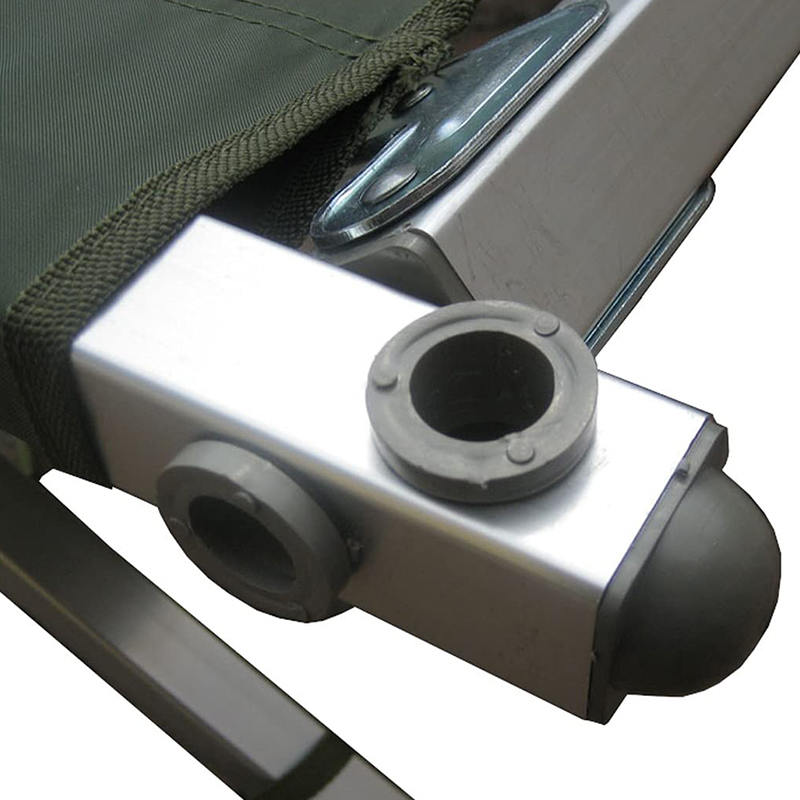 Folding Aluminum Field Cot for One PersonA single-person folding cot made of 1.1 mm reinforced aluminum, easy to assemble and clean, supplied with a transport bag. A practical standalone item that rounds out the tent sleep system for retail buyers.View Product →
For wholesalers, the sleep system is also the most retail-friendly part of the accessory range, because mats, cots and blankets sell as standalone products while still reinforcing tent sales.
Key point: mats, cots and blankets are the accessories that convert a covered space into a healthy place to sleep, and they should be budgeted per occupant, not per tent.
In humanitarian and government buying, tent accessories are specification items, not gifts thrown into a container. Tenders list them line by line: tarpaulin sizes and weights, sleeping mat types, blanket thermal levels, field bed counts per tent. Each line carries its own standard, and inspection teams check deliveries against those lines exactly as they check the tents. A missing or non-conforming accessory line can disqualify an otherwise correct offer, which is why experienced suppliers treat the accessory schedule as part of the engineering package.
The standards landscape is easy to follow once you know the logic. Family tents produced to ICRC, IFRC and UNHCR documents are designed together with their groundsheet, liner and fixing expectations, so the accessories are not generic but dimensionally and functionally matched. Core relief items, the category that covers plastic tarpaulins, sleeping mats, thermal blankets and metal field beds, carry their own ICRC, IFRC and UNHCR specifications and circulate as standalone stock that pairs with any conforming tent. Multi-purpose tents built to UNICEF, MSF and UNSOS documents add accessories such as removable shade covers, partition walls and ventilation configurations that reflect their use as clinics, schools and offices rather than sleeping shelters.
For a manufacturer, the commercial consequence is that accessories must be produced under the same roof and the same quality discipline as the tents they support. Welding temperature, coating weight, thread type and hardware finish all have to match across the kit, because a tent assembled from mixed sources shows the mismatch at the first inspection. This is also the argument institutional buyers should make to their own boards: sourcing the tent and its accessories from one tent accessories manufacturer keeps documentation, flame-retardant evidence and spare-part compatibility aligned.
 UNHCR Standard Single-Person Synthetic Sleep MatA waterproof, tear-resistant synthetic sleeping mat sized for one adult or two children, with twill-tape edge reinforcement. Suits both relief distributions and camping channels, giving wholesalers a second market.View Product →
Relief-derived accessories also travel into retail successfully. The same UNHCR-style sleep mat or reinforced tarpaulin that serves a distribution site sells into camping and garden channels, which gives wholesalers a second market for the same factory lines.
Key point: in institutional procurement, accessories are audited specification line items, so confirm that the factory produces them to the cited standard rather than offering lookalike compatibility.
Party and event tents earn their revenue through accessories. A clear-span or pole tent in its bare form is a roof; sidewalls turn it into a weatherproof room. The sidewall family is worth knowing in detail: plain PVC walls for full enclosure, window walls that keep daylight, mesh walls for airflow at summer events, and clear PVC walls that preserve views on scenic sites. Walls attach by zip, lace or Velcro-style strip, and rental companies standardize on one attachment system across their fleet so any wall fits any tent on a wet afternoon.
Flooring is the second revenue driver. Interlocking plastic or coextruded floor panels handle grass and soft venues, cassette and aluminum subfloor systems handle slopes and mud, and simple ground cover plus carpet handles dry, level sites. Gutters and linking valleys join two tents into one continuous structure, which is how a stock of 6 by 12 meter tents becomes a 200-guest banquet without buying a larger tent. Interior accessories, including linings, leg curtain covers and lighting rigging, move a tent from functional to event-grade appearance and are the items clients actually notice.
On hard standing, weighting systems replace stakes entirely, and they must be planned against wind exposure, not guessed. Storage and logistics accessories complete the fleet: wheeled transport bags, labeled hardware boxes and spare wall-and-pole kits keep turnaround between events measured in hours. For rental businesses, the accessory inventory is the moat; tents are increasingly similar across suppliers, while the completeness of the accessory package decides who gets the booking.
Key point: in the event segment, sidewalls, flooring, gutters and weighting are the products that generate revenue; the tent is only the platform they attach to.
Most accessory disputes between buyers and suppliers trace back to one question: which fabric family, for which job? The three families that dominate groundsheets, tarpaulins and liners behave very differently under UV, abrasion and fire requirements, and comparing them on price alone produces expensive mistakes. The table below puts them side by side on the properties that decide real-world service life.
| Table 2: Head-to-head comparison of the three fabric families most used for tent groundsheets, tarpaulins and liners. | |||
| Property | PE tarpaulin | PVC coated polyester | Cotton or poly-cotton canvas |
| Typical weight | Light, commonly 80 to 200 gsm | Heavy, commonly 450 to 650 gsm | Medium to heavy, roughly 200 to 400 gsm |
| Waterproofness | Waterproof when new; overlaps and fixings need care | Fully waterproof with welded seams | Water-resistant; needs re-proofing over time |
| Outdoor UV life | Limited; typically one to a few seasons | Long; tolerates several seasons of exposure | Moderate; degrades fastest with damp storage |
| Flame behavior | Only if treated | Available with flame-retardant finish | Chars rather than melts; still needs assessment |
| Repair method | Adhesive tape and spare sheet patches | Hot air welding or compatible patch kits | Needle, thread and fabric patch |
| Relative cost | Lowest | Highest | Middle |
| Best suited use | Short-term relief covers and temporary groundsheets | Long-term groundsheets, event floors and warehouse use | Liners, glamping interiors and breathable tops |
Read the last row as the summary of the whole table. PE wins on cost per covered square meter for short deployments and retail giveaways. PVC wins wherever the sheet stays outside for seasons, must weld, or must carry flame-retardant documentation. Canvas wins where comfort, breathability and interior atmosphere matter more than pack weight. A mixed programme usually needs all three, in clearly labeled quantities, rather than one compromise fabric for everything.
Key point: choose the fabric family by deployment length, fire documentation and repair method first, and let price follow the specification instead of leading it.
Before a shelter package is approved, someone has to decide how the budget splits between the tent shell and everything that supports it. The chart below shows an indicative split for a family-style relief tent programme that is procured with a complete accessory kit. It is a planning model rather than a survey result, so actual shares will move with climate, standards and supplier pricing. Even so, the pattern repeats across camping retail and institutional buying alike. The tent shell takes the largest share, while the smaller bars decide most of the day-to-day performance in the field.
| Indicative share of a complete shelter-system budget by component, modeled on a full-kit family tent programme; actual shares vary with climate, standard and supplier terms. | |
| Component | Indicative budget share |
| Tent shell, frame and cover | 55% |
| Sleep system (mats, cots, blankets) | 18% |
| Ground system (tarps, groundsheets) | 12% |
| Anchoring and guying | 8% |
| Repair and spares | 4% |
| Climate add-ons (liners, vents, shade) | 3% |
The bar for the tent shell is expected to dominate, because fabric weight, frame geometry and welding quality are the most engineering-intensive parts of the system. What surprises first-time buyers is the second bar: the sleep system. Mats, cots and blankets are individually inexpensive, but multiplied across every occupant in every tent, they become one of the largest line items in the entire package. The ground system bar looks modest, yet it has an outsized effect on results, because a failed groundsheet quietly cancels the insulation and dryness of everything above it.
Anchoring and guying is the cheapest category on the chart and the most dangerous to underfund, since a tent that loses its anchors in a storm does not fail gradually but in a single night. The repair and spares share is small by design, yet it exists so that a torn cover or a bent peg never puts an entire shelter out of service. Climate add-ons vary the most between programmes: cold regions push liners and ground insulation upward, while hot regions raise the share of shade covers and mesh. Because accessories are light and compressible, adding them to a tent container usually improves freight efficiency instead of hurting it, since tarpaulins, mats and blankets fill carton voids that would otherwise ship as air. Bundling accessories with the tent order also keeps materials, welding quality and flame-retardant documentation consistent, which matters when inspections are carried out line by line. Finally, treat the chart as a starting conversation with your supplier rather than a fixed rule, because a tent accessories manufacturer that understands your deployment scenario can shift these shares intelligently, for example trading a heavier shell for a better ground system on wet sites.
Key point: plan the accessory budget as deliberately as the tent budget, because the small bars on the chart control most of the field performance.
Whether you are a wholesaler building a camping range or a procurement officer assembling relief stock, the same checklist disciplines the buy. The sequence matters: specification before material, material before documentation, documentation before price negotiation. Working through the list in order prevents the most common bulk-buying failure, which is discovering at inspection that the accessories were never really specified.
The same categories are weighted differently by the two main buyer groups, and the comparison below shows where each side should spend its negotiating time.
| Table 3: How retail and institutional buyers weigh the same tent accessory categories differently. | |
| Retail and wholesale channel | Institutional and relief channel |
| Packaging quality and shelf presentation | Standard compliance and tender line matching |
| Barcode, labeling and language requirements | Documentation for inspection and handover |
| Margin structure across mixed SKUs | Spare-part ratios and field repairability |
| Seasonal timing and assortment breadth | Palletization, batching and delivery windows |
| Display-ready and e-commerce-ready packing | Traceability from production batch to distribution site |
For camping-channel buyers who need the underlying technical grounding in one document, the practical and technical manual for camping tents on our industry news page pairs well with this checklist, covering the tent-side terminology that accessory specifications reference.
Key point: specify accessories in writing, line by line, before negotiating price, and make spare-part ratios and documentation contractual rather than verbal.
Inventory every kit against its packing list before the tent ever meets the field, because missing pegs and guy lines are cheapest to fix in the warehouse. Pitch the tent once in controlled conditions to confirm the groundsheet fits inside the floor edges, the liner hangs clear of the cover, and every guy point has a matched line and tensioner. Pre-stretch new guy lines by hand or under light load, since new rope elongates most in its first week.
Re-tension all guy lines about half an hour after the initial pitch, again after the first rain, and after any strong temperature swing, because fabric and rope move more than most users expect. Walk the perimeter after significant wind: check that pegs are still seated at their original angle, that tensioners have not slipped, and that wear at guy attachment points has not started. Wash mud off with plain water, never with solvents or pressure washers, and keep drip lines and ventilation openings clear so moisture keeps moving out of the tent.
Everything packs away dry or it does not pack away at all; fabric stored damp grows mildew and its coatings age chemically even in the dark. Store bags off concrete floors, in cool ventilated space, with steel pegs lightly oiled and repair kits bagged inside each tent bag rather than in a shared cupboard nobody checks. Repair small tears immediately from the inside with compatible patch material, splint a cracked pole the same day, and replace a failed guy line rather than re-knotting a shortened one, because knots concentrate stress exactly where the line already failed.
A simple schedule keeps the whole system honest, whether it runs a rental fleet or a relief warehouse:
| Table 4: A maintenance schedule that works for rental fleets, campgrounds and relief stock alike. | ||
| Interval | Task | Why it matters |
| Every pitch | Count pegs and guy lines against the kit list; re-tension 30 minutes after pitching | Most field failures start with loose or missing anchors, not with fabric |
| Weekly in deployment | Walk the perimeter, re-seat pegs, clear drip lines and vents, check guy attachment wear | Catches small issues before the next wind finds them |
| Monthly | Inspect stitching, welds and coatings; rotate mats, cots and blankets in stock | UV and moisture damage accumulate quietly and unevenly |
| End of season or mission | Clean, dry completely, repair, then store with spares bagged inside each tent bag | Packed moisture destroys more fabric than actual use does |
| Every 6 months in storage | Air the stock, check for rodent damage, test zips, pumps and tensioners | Long storage hides problems that surface exactly at handover |
Key point: accessories fail in storage more often than in the field, so dry-before-packing and a scheduled air-out protect the kit as much as any field habit.
The questions below come up repeatedly in wholesale, retail and relief procurement conversations, and the answers reflect how a factory-side supplier actually evaluates these products.
| Common buyer questions about tent accessories, answered from factory and field experience. |
| What are the most important tent accessories to buy first? |
| Start with the ground system and anchoring: a correctly sized groundsheet or tarpaulin, a full peg set matched to your soil, and complete guy lines with tensioners. Add the sleep system next, meaning mats and blankets or cots, because it controls comfort and health for every occupant. Repair kits and spare parts come third, and they cost little while deciding outcomes in remote locations. |
| Can a wholesaler order tent accessories without buying complete tents? |
| Yes. As a combined factory and trading company, Mailenda supplies categories such as plastic tarpaulins, sleeping mats, thermal blankets and field beds as standalone order lines subject to minimum order quantities. Many wholesale buyers mix accessory lines with tent bales in one container to balance volume, assortment and freight cost in a single shipment. |
| Do relief accessories have to meet the same standards as relief tents? |
| Institutional buyers specify them line by line. Core relief items such as tarpaulins, sleeping mats and blankets carry their own ICRC, IFRC and UNHCR specifications and are inspected with the same rigor as the tents. If your programme cites a standard, confirm that the manufacturer produces the accessories to that document rather than offering unspecified lookalikes. |
| How do I reduce condensation inside a tent? |
| Combine three measures: ventilation openings placed high and low for cross-flow, an inner liner that shields sleepers from the cold outer cover, and sensible siting away from water and dense vegetation. Sealing a tent tightly to keep warmth in usually makes condensation worse, not better, because the moisture occupants release overnight has to leave the tent somehow. |
| What tent accessories does an event tent need on hard ground? |
| Hard standing rules out staking, so plan ballast or weight systems sized to the wind exposure of the venue. Add sidewalls for weather and privacy, flooring for comfort and appearance, and gutters wherever two tents link into one structure. Rental operators should also carry spare hardware and wall kits to guarantee fast turnaround between events. |
| How long do groundsheets, pegs and guy lines actually last? |
| Lifetime depends more on UV exposure, soil abrasion and storage discipline than on the calendar. PE tarps age fastest in sunlight, PVC and canvas serve for several seasons when dried and stored correctly, and pegs fail through corrosion or bending, which is why both belong in the spare ratio. Most experienced procurement teams replace a fixed percentage of consumable accessories every season instead of waiting for failures to force the issue. |
Key point: if a question about accessories can only be answered with "it depends," push the supplier to name the soil, the climate and the standard, because those three factors resolve almost every accessory decision.
The guide is long because the topic is genuinely systematic, but the practical conclusions compress cleanly. If you keep only five lines from this article, keep these:
Every one of these points becomes easier to execute when the tent and its accessories come from the same production floor, which is the working model this guide has assumed throughout.
Key point: a tent is a system sold in several boxes, and the accessories are the boxes that make it work.
Each accessory category described in this guide maps to a product family in the Mailenda range, manufactured in-house and exported to distributors, retail chains and relief programmes worldwide. The module below collects the most relevant starting points for buyers who want to move from specification to quotation.
Key point: sourcing the tent and its accessories from one tent accessories manufacturer and supplier keeps materials, welding, documentation and spare parts aligned across the whole shelter system.
Related Products

Our story is about how to uphold the spirit of humanitarianism in the face of disaster, how to find solutions amidst challenges, and how to sow hope in despair.
Copyright © Yangzhou Mailenda Outdoor Products Co., Ltd.
All Rights Reserved.
Custom Tent OEM/ODM Manufacturers


