

 English
 中文简体
 Español
 日本語
 русский
 عربى

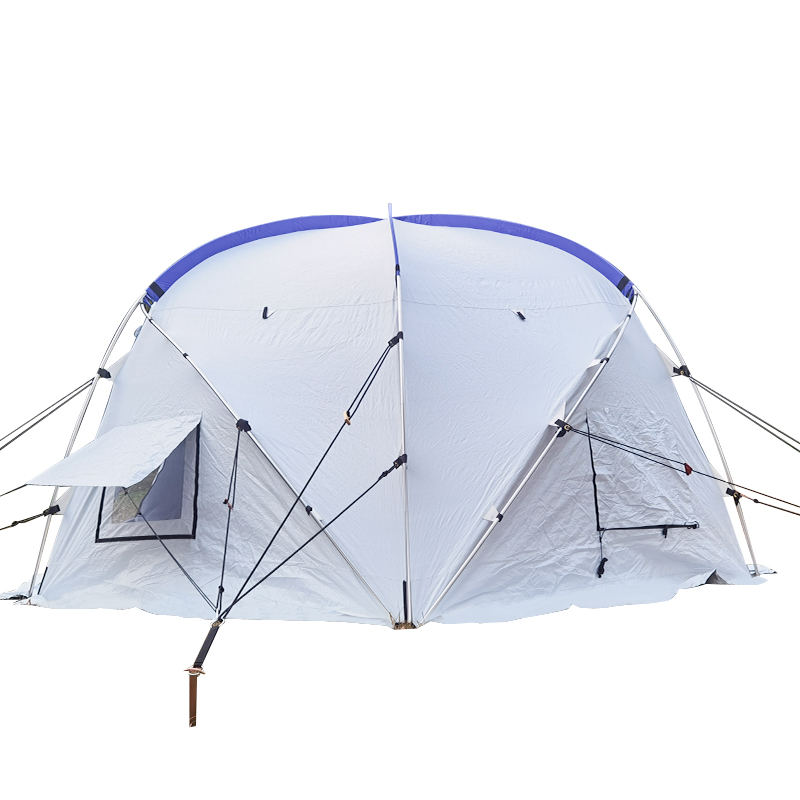


TO SHELTER ALL, TO SMILE ALL.
Our story is about how to uphold the spirit of humanitarianism in the face of disaster, how to find solutions amidst challenges, and how to sow hope in despair.
Content
If you are sourcing outdoors tents for a retail program, a rental fleet, a relief shipment, or a temporary site, the first decision is not the brand name on the valance. It is the fit between material, frame, floor plan, and packing format. A tent that looks good in a catalog photo can still fail in the first wind event or the second season if the specification is vague.
The short answer is to start with the job. Define where the tent will stand, who will set it up, how often it will move, and what has to stay dry inside. Then compare candidates on those points before you compare price. That order keeps a low-cost quote from becoming an expensive replacement cycle.
For buyers working with a manufacturer or supplier, the practical checklist is simple: confirm the fabric and coating, confirm the frame and fixing method, confirm the packed size and crew requirement, and confirm the batch consistency you can expect across repeat orders. Those four points matter more than a long list of vague performance claims.
The phrase outdoors tents covers a very wide field. It can mean a two-person backpacking tent that weighs less than a bag of rice, or a 10 x 24 m mobile storage unit that is moved by truck and assembled by a crew. Both are tents, but they are bought for different reasons and judged by different standards.
When a buyer asks for a quotation, the supplier needs more than a size. The supplier needs the duty cycle: how many times per year the tent is pitched, how long it stays up, whether it will be stored wet, and whether the end user is a family, a rental company, or an institutional procurement team. Without that context, two quotes can look comparable on paper while being completely different in service life.
Retail and wholesale buyers usually care about sellable features, packaging, and repeatability. A camping tent may need a clear capacity label, a simple setup story, and a compact carry bag. A wholesaler or importer will also ask about carton dimensions, container loading, and whether the color and trim can be kept consistent across seasons. For this group, the supplier relationship is often about stable specifications and predictable lead times.
Rental companies judge tents by turnaround time and repair cost. A party tent may be erected and struck dozens of times in a season, so the frame joints, base plates, and roof tensioning matter as much as the fabric. Event operators also need clean panels, replaceable parts, and a structure that can be installed by a trained crew without custom fabrication on site.
Relief and institutional buyers tend to work from standards, batch consistency, and documentation. A family tent may be specified by floor area, fire performance, and packing format so that it can be stored and dispatched quickly. In this segment, a manufacturer that can produce to a defined specification and keep repeat batches aligned is more useful than a supplier that only offers a generic outdoor tent.
Industrial and agricultural users often need weather protection rather than sleeping space. A storage tent, carport, or livestock shelter may be judged by clear span, side height, ventilation, and resistance to UV and wind. These buyers are less interested in camping features and more interested in how the structure performs on a site with vehicles, equipment, or animals.
The practical lesson is that a long list of outdoors tents is not a product range until it is sorted by use case. Once the buyer type is clear, the specification becomes much easier to write and much harder for a weak supplier to blur.
Material is the first cost driver and the first performance driver. Two tents can share the same footprint and still behave very differently because one uses a lightweight coated polyester and the other uses a heavy PVC-coated fabric. The right choice depends on how the tent will be used, not on which material sounds more advanced.
| Material | Typical use | Water resistance | Handling notes | What to verify |
|---|---|---|---|---|
| PVC-coated fabric | Event marquees, warehouse tents, long-life outdoor covers | High when seams are welded or sealed | Heavier, stiffer in cold weather, good for large panels | Coating adhesion, weld strength, plasticizer behavior, and repair method |
| PE fabric | Economical party tents, temporary covers, relief tarpaulins | Moderate; depends on coating and seam construction | Light and low cost, but less durable under long UV exposure | UV stabilization, seam strength, and color fastness |
| Canvas or poly-cotton | Glamping bell tents, family camping, scout tents | Good with treatment; breathable in dry conditions | Heavy when wet, needs proper drying before storage | Mildew treatment, shrinkage, and weatherproofing renewal |
| Coated polyester or ripstop | Backpacking tents, dome tents, lightweight family tents | Good with coating; performance depends on hydrostatic rating | Light and packable, but coating can wear with abrasion | Coating thickness, seam tape, pole stress points, and UV resistance |
| TPU or air-beam material | Inflatable tents, airtight structures, quick-deploy shelters | High when heat-sealed correctly | Fast to pitch, but repair needs the right patch and technique | Heat-seal quality, valve reliability, and puncture resistance |
For a wholesale or import program, the material decision should be tied to the end user's behavior. A family camping tent that is packed away wet every second weekend needs different treatment from a warehouse tent that stays in one place for years. A PVC event marquee can justify a heavier fabric because it is reused and repaired, while a low-cost PE party tent may be designed for shorter use cycles and tighter budgets.
It also helps to ask how the supplier controls material batches. Color variation, coating weight, and fabric width can change from roll to roll. A manufacturer that tracks incoming material and keeps production records is easier to work with than a supplier that only quotes a generic description such as "waterproof fabric." For outdoor tents, vague material language is a procurement risk, not a marketing detail.
Fabric gets the most attention, but the frame often decides whether a tent survives its first busy season. A weak frame shows up as bent poles, loose joints, cracked base plates, or a roof that will not tension properly. For buyers, the frame is also where a supplier's manufacturing discipline becomes visible.
Steel is common in storage tents, carports, warehouse structures, and larger relief tents. It offers stiffness and cost efficiency, but the finish matters. Galvanized steel is usually preferred for outdoor use because it resists corrosion better than painted mild steel. Buyers should ask about tube thickness, welding quality, and whether the frame is designed for the wind and ground conditions of the target market.
Aluminum is often used in event marquees and high-peak tents where weight and corrosion resistance matter. It is easier to handle on rental sites and can look cleaner for commercial events. The trade-off is cost and joint design. A well-made aluminum frame with proper connectors can be excellent; a thin frame with poor wall thickness can still fail under load.
Inflatable tents trade poles for air beams. They can be very fast to deploy, which is useful for emergency response, military command posts, and glamping sites. The key questions are valve quality, beam pressure, and repair access. An inflatable tent is only as good as its seams and valves, so the manufacturer's heat-sealing and testing process matters more than the headline setup time.
Traditional pole tents and hybrid frames remain popular because they are familiar to crews and easy to repair. For rental operators, a pole tent with standard fittings may be more practical than a proprietary system that requires special spare parts. For camping tents, hybrid pole systems can balance weight and stability, especially in family models that need headroom and ventilation.
When comparing quotes, ask for the frame drawing, the fixing method, and the expected crew size. A tent that requires six people and a forklift may be fine for a warehouse project but wrong for a mobile rental fleet. The structure should match the installation reality, not just the floor plan.
Size is not just square meters. A tent with a large footprint can still be uncomfortable if the walls slope inward, the peak is low, or the sleeping area is interrupted by poles. For family tents, the usable floor area and headroom often matter more than the maximum capacity printed on the box. For event tents, clear span and side height decide how the space can be used.
Setup time is one of the least visible costs in a tent program. It affects labor, rental turnaround, and how quickly a relief site can become usable. The chart below shows planning ranges, not guaranteed times, because crew skill and site access can change the result.
The chart is a reminder that "easy setup" is relative. A backpacking tent may pitch in minutes, while a large warehouse structure can take a crew half a day. Mailenda's quick-deploy inflatable tents are designed to shorten the deployment window for relief and field use, while family tents and canvas bell tents are built around a different balance of comfort, packing size, and simple pole assembly.
For buyers, the useful exercise is to map the tent layout against the actual use. A family tent needs a clean sleeping zone, a place for bags, and enough ventilation to reduce condensation. An event tent needs a clear span for tables, staging, or circulation. A storage tent needs drive-in access, side height, and a frame that does not obstruct loading. These are layout questions before they are price questions.
Also check the packed dimensions. A tent that is comfortable on site but too long for a standard pallet or container can create hidden logistics costs. If the product is going through a wholesaler or retailer, the carton size and carry bag design may matter as much as the floor plan.
Family camping tents are judged at the end of a long day. The tent has to go up without an argument, keep the sleeping area dry, and let moist air escape. A simple dome tent can do this well if the ventilation is designed properly; a larger cabin tent can be more comfortable but heavier and more sensitive to wind.
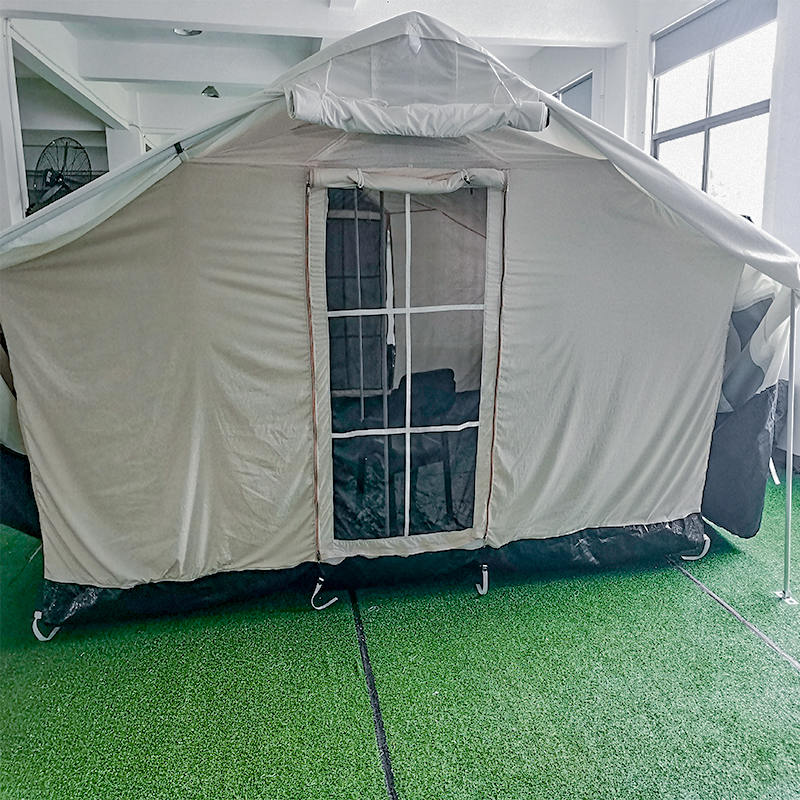 ICRC/IFRC/UNHCR Standard 5-Person All-Weather Family TentA connectable five-person humanitarian tent with waterproof, rot-proof and UV-stabilised construction, intended for emergency and institutional family tent sourcing.View Product →
For buyers sourcing family tents for retail or institutional use, the specification should include the sleeping capacity, the peak height, the number of doors, the ventilation openings, and the packed weight. It also helps to know whether the tent is intended for occasional weekend use or for longer occupancy. A relief-family tent and a consumer camping tent may look similar, but the former often needs a more defined packing format and batch consistency.
Most families check the door layout, the headroom, and whether the tent looks easy to pitch. A large D-shaped door and a visible color-coded pole set can reduce setup frustration. Inside, a removable divider or a rectangular floor plan can make a five-person tent feel more organized. These details are not decorative; they affect how the tent is used and how often it is returned.
Condensation is a common complaint in camping tents. It happens when warm, moist air meets a cooler surface and cannot escape. Mesh panels, low vents, and a flysheet with a gap can help, but the design has to work with the weather. A tent that is all mesh may be cool in summer but less protective in wind-driven rain. A tent with no vents may feel stuffy after one night.
The carry bag is part of the product. If the bag is too small, the user will struggle to pack the tent after a wet trip. A slightly larger bag with a compression strap is often more practical than a tight bag that looks neat in a showroom. For wholesale buyers, the bag also affects carton size and retail presentation.
Mailenda's family tent range includes models built around defined standards and practical packing needs. That matters for buyers who need a repeatable specification rather than a one-off sample. When the tent is part of a program, the manufacturer's ability to keep fabric, poles, and packaging consistent is part of the value.
Canvas tents occupy a different part of the outdoors tents market. They are heavier, need more care in storage, and often cost more than a basic polyester dome. In return, they offer a distinctive look, breathability in dry conditions, and a sense of space that suits glamping sites, family camps, and retreat-style rentals.
 4m Four-Person Canvas Bell Tent for Family CampingA spacious canvas bell tent with 250 cm centre pole, zippered PVC groundsheet and roll-up walls, suited to family camps and glamping-style seasonal use.View Product →
A canvas bell tent is a good example. The round footprint creates a social center, the central pole gives headroom, and the walls can be rolled up for airflow. For a glamping operator, the tent is part of the guest experience, so the fabric finish, seam quality, and door design matter as much as the technical waterproof rating. For a family buyer, the same tent may be attractive for a seasonal campsite where it stays up for weeks rather than being moved every weekend.
Buyers should ask about the canvas weight, the treatment, and the drying instructions. Canvas can be weatherproof when properly treated, but it needs to dry before storage to avoid mildew. A supplier that understands this will often include clear care guidance and design the tent with accessible ventilation. That is more useful than a vague claim that the tent is "breathable."
Another consideration is the groundsheet and the wall-to-ground connection. A bathtub floor helps keep water out, but it also affects the internal height and the way the tent sits on uneven ground. For rental sites, a design that is easy to sweep, clean, and repair is often more valuable than a long list of luxury features.
Mailenda's canvas tent range includes bell tents and family models that can be positioned for glamping, camping, and outdoor hospitality. The right choice depends on how the operator will use the tent: a short-season rental may prioritize packability and repair speed, while a permanent glamping site may prioritize appearance and long-stay comfort.
Event tents are among the most demanding outdoors tents in commercial use. They are erected quickly, dressed for guests, and struck after the event. A rental company may use the same frame dozens of times per year, so the tent has to tolerate handling as well as weather. The visible white roof is only one part of the purchase decision.
 20×30 ft Fire-Retardant PVC Wedding Party Pole TentA 6×9 m pole tent with galvanized steel frame, heat-sealed PVC roof and added side walls, aimed at weddings and rental event use.View Product →
For rental buyers, the key questions are clear span, side height, frame fitting, and repair cost. A 6 x 9 m pole tent can work for weddings and community events, but the operator needs to know how many crew members are required, how the guy ropes are laid out, and whether the panels can be replaced individually. A cheap tent with sealed panels may be difficult to repair after a small tear.
Wind load is another practical issue. Event tents are often installed on open ground, and the anchoring method matters as much as the frame. Buyers should ask about base plates, stake options, and ballast requirements for hard surfaces. A supplier that only quotes the tent size without discussing anchoring is leaving a serious gap in the specification.
Fire performance also comes up in public events. A PVC or PE fabric may be available with flame-retardant treatment, but the buyer should confirm what the documentation actually covers. It is not enough to say "fire retardant" on a quote; the supplier should be able to explain the test standard and the conditions under which the claim applies.
Mailenda's party tent range includes pole tents, high-peak structures, pagoda gazebos, and marquee-style units that can be matched to different event formats. For a rental operator, the most valuable supplier is one that can provide consistent frame fittings and replacement panels over time, not just a low initial price.
Storage and utility tents are bought for a different reason: they protect equipment, vehicles, feed, or materials from rain, sun, and dust. The buyer is often a farm, a construction site, a logistics operator, or a small business that needs covered space without a permanent building. These structures sit closer to industrial equipment than to camping gear.
The specification should start with the asset. A carport needs drive-through clearance and a frame that can handle vehicle movement. A warehouse tent needs side height, a wide entrance, and a roof that does not sag under rain. A livestock shelter needs ventilation and a layout that allows animals to move without injury. These are not interchangeable even if they share a similar fabric roof.
Ground conditions matter as much as the frame. A temporary warehouse on soft ground may need a different anchoring plan from one on concrete. A carport exposed to open wind may need a heavier base and more frequent tie-down points. Buyers should share site photos and wind exposure details with the supplier; a good manufacturer will use that information to recommend a frame and fixing method rather than sending a generic quotation.
For outdoor storage, UV resistance is a common concern. A tent that stays in direct sun for months will age differently from one used for a short event. The fabric coating, thread, and frame finish all contribute to service life. It is worth asking how the supplier tests or sources UV-stabilized materials, especially if the tent is going to a hot climate.
Mailenda's storage range includes warehouse tents, portable garages, greenhouse tunnels, and livestock shelters. These products share a practical logic: use a simple structure to create protected space where a permanent building would be too slow or too expensive. The buyer's job is to make sure the simple structure is specified for the actual load, access, and weather conditions.
Relief tents are procured under pressure. The buyer may be responding to a displacement event, a public health emergency, or a seasonal preparedness program. The tent has to be specified quickly, packed consistently, and shipped without surprises. In this context, a familiar-looking sample is not enough; the manufacturer needs to show that it can repeat the same specification across a batch.
Standards are often used as a common language. A family tent may be described by floor area, fire performance, and packing format. A multipurpose tent may be specified for use as a clinic, school, or office. A mobile storage unit may be defined by dimensions and durability requirements. Buyers should ask how the supplier interprets those standards and whether the production batch will be checked against the agreed specification.
Lead time is another critical factor. Relief procurement often has a fixed delivery window, and a delay can make the tent useless for the intended response. A manufacturer with in-house cutting, welding, and sewing capacity has more control over the schedule than a trading company that depends on multiple subcontractors. That does not guarantee speed, but it reduces the number of handoffs where delays can occur.
Batch consistency also affects deployment. If the poles, connectors, and packing bags are not consistent, crews may struggle to combine tents or replace parts. For large programs, it helps to keep a sealed reference sample and a packing list that matches the production run. These are simple controls, but they make a real difference when the tents are dispatched to different sites.
Mailenda's relief range includes family tents, multipurpose tents, military-style tents, and core relief items such as field beds, tarpaulins, sleeping mats, and blankets. That combination can reduce the number of suppliers a procurement team has to manage, but the buyer should still verify the exact specification, documentation, and delivery plan for each item.
Most outdoor tent problems are visible before the tent leaves the factory if the buyer knows where to look. The fabric may look fine on a roll, but the seam may be weak. The frame may fit in the workshop, but the joint may loosen after repeated setup. The packing list may be correct, but the carton may be too light for export handling.
A practical pre-shipment check should cover fabric appearance, seam sealing, frame fit, accessory count, and packing. For welded or heat-sealed products, the seam should be inspected for gaps, wrinkles, and uneven pressure. For pole tents, the frame should be assembled once and checked for missing parts or difficult joints. For family tents, the carry bag and pole set should match the approved sample.
The most common failure points are seams, base plates, zippers, valves, and guy rope attachment points. A seam that is not sealed can leak even if the fabric is waterproof. A base plate that is too thin can bend under load. A zipper that is not protected from rain can seize. These are not abstract quality issues; they are the exact points that generate returns and complaints.
For wholesale and institutional buyers, documentation matters. The product label should match the specification, and the packing list should match the carton contents. If the tent is supplied with repair patches, stakes, or a carry bag, those accessories should be counted and checked. A missing stake set can delay an entire shipment, especially when the tent is part of a program with a fixed deployment date.
It also helps to discuss the inspection plan before production. A buyer may ask for an inline check during cutting and sewing, or a final check before packing. The exact plan can be simple, but it should be agreed in writing. That reduces the risk of a last-minute dispute over what "normal" quality looks like.
For a buyer, the difference between a manufacturer and a trading-only supplier is not just price. A manufacturer controls cutting, welding, sewing, and packing, which can make specification changes easier to manage. A trading company may offer a wider catalog, but it may also have less visibility into the production line when something goes wrong.
That does not mean every manufacturer is a better partner. The buyer still needs to check capacity, quality controls, and communication. A factory that takes on too many product types may struggle with consistency. A trading supplier with strong factory relationships may be very effective for a narrow range. The right choice depends on the product and the level of customization.
For outdoor tents, the manufacturing process matters because the product is assembled from several material systems: fabric, frame, fittings, and packaging. A supplier that understands how those systems interact can catch problems earlier. For example, a heavier fabric may require a different seam technique, and a larger frame may require a different packing sequence. These are production details that a trading-only supplier may not control directly.
Mailenda describes itself as an international trade enterprise combined with a factory, with experience in PVC, PE, TPU, canvas, steel, and aluminum. For buyers, that positioning is useful only if it is backed by clear specifications and inspection. The practical next step is to ask for a sample, a material list, a frame drawing, and a packing plan. The answers will reveal more than a catalog page.
If you are building a specification for outdoors tents, the next step is to turn the use case into a short technical brief. That brief should include the intended use, the site conditions, the required floor area, the material preference, the frame type, the packing format, and the expected order quantity. With that information, a manufacturer can quote a realistic product instead of a generic tent.
Useful references for your tent program:
For wholesale buyers, it also helps to discuss packaging and container loading early. A tent that fits a retail shelf may need a different carton from one that goes to a rental depot or a relief warehouse. Those details are easier to solve before production than after the purchase order is issued.
Confirm the use case and duty cycle first. A tent for a weekend family camp, a rental fleet, and a relief warehouse will need different materials, frames, and packing. Once the use case is clear, the material and structure choices become much easier to compare.
No. PVC is often more durable and easier to weld for large panels, but it is heavier and may cost more. PE can be a practical choice for economical party tents, temporary covers, and relief tarpaulins where weight and budget matter. The right choice depends on how long the tent will stay up and how often it will be moved.
Compare usable floor area, peak height, and the number of sleeping positions rather than the maximum capacity number alone. A tent labeled for five people may be comfortable for three if the occupants carry gear. Ask for a floor plan and a side profile so you can see how the walls slope and where the poles sit.
Check the air beams, valves, and heat-sealed seams. Inflate the tent to the recommended pressure and leave it for a period to see whether the pressure holds. Look for wrinkles or gaps at the seams and confirm that the repair kit is appropriate for the material. A fast setup time is useful only if the tent stays inflated.
Customization is possible when the request is specific: fabric color, door position, logo label, packaging, or a frame size. The buyer should provide a clear brief and expect a sample before production. Custom work adds time, so it should be planned into the order schedule rather than requested after the purchase order is confirmed.
Keep an approved sample, agree on a material list, and ask for a pre-shipment inspection. For repeat orders, reference the same specification and check that the fabric, frame fittings, and packaging have not changed. A manufacturer that keeps production records is easier to work with over multiple seasons.
Rental companies usually need a structure that can be set up and struck repeatedly, with replaceable panels and standard fittings. A pole tent or frame tent with clear repair access is often more practical than a sealed unit that cannot be serviced. The anchoring method and crew requirement should be part of the decision.
These questions are a starting point, not a complete procurement manual. The more specific the buyer can be about the site, the user, and the storage conditions, the more useful the supplier's answer will be.
Outdoors tents are easy to describe and surprisingly easy to mis-specify. The same size can be built for a weekend, a season, or a multi-year program. The same fabric name can hide different coating weights and seam methods. The same frame drawing can be produced with different wall thicknesses and finishes.
The practical way to buy is to start with the job, write a short technical brief, and compare samples against that brief. Check the material, frame, layout, packing, and inspection plan. If you are working with a manufacturer or supplier, ask for the details that affect service life rather than the claims that sound good in a brochure. That approach will not remove every risk, but it will make the quote more comparable and the product more predictable.
Related Products

Our story is about how to uphold the spirit of humanitarianism in the face of disaster, how to find solutions amidst challenges, and how to sow hope in despair.
Copyright © Yangzhou Mailenda Outdoor Products Co., Ltd.
All Rights Reserved.
Custom Tent OEM/ODM Manufacturers


