

 English
 中文简体
 Español
 日本語
 русский
 عربى

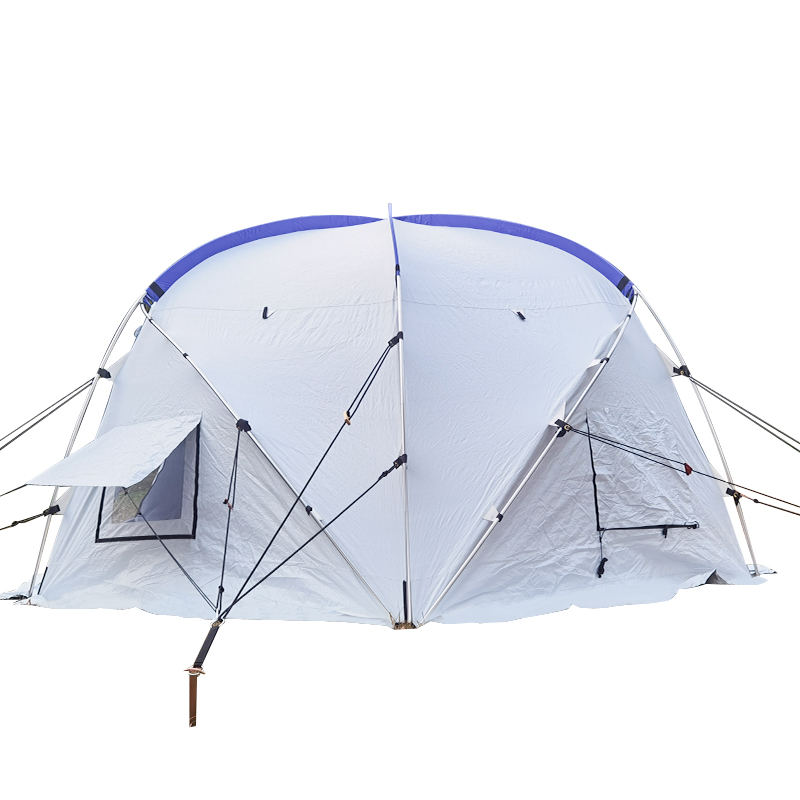


TO SHELTER ALL, TO SMILE ALL.
Our story is about how to uphold the spirit of humanitarianism in the face of disaster, how to find solutions amidst challenges, and how to sow hope in despair.
Content
A tender for a five-person family tent often runs to several pages on frame diameter, flysheet weight and packing volume, then sums up the inner tent and floor in a single line. That single line is usually where the after-sales conversation starts. The inner tent and floor are the two components a resident touches every single day: the liner is what they look at, breathe against and hang a towel on, and the floor is what they walk on, drag bedding across, spill water on and sweep out. When either one is underspecified, the shelter still looks perfect in a showroom sample and starts failing in the third month of real use.
The conclusion first: treat the inner tent and floor as a primary performance item, not as a trimmings detail attached to the outer shell. Once liner geometry, mesh aperture, floor coating, upstand height and seam treatment are written into the purchase order with numbers and test methods attached, most of the complaints that reach a manufacturer after delivery simply do not occur. The rest of this guide explains what each part does, which values are worth arguing about, and how to keep a specification honest across repeat orders.
An outer flysheet meets weather. An inner tent and floor meet people. That difference in contact hours is what makes the two components so decisive for perceived quality, and it is easy to see in the wear pattern of any shelter that has been in service for a season.
There is also an inspection effect. A procurement officer or a shelter officer walking into a tent for the first time judges it by the inner tent and the floor, because those are the surfaces at eye level and underfoot. A well-built frame that nobody can see does not rescue a liner that hangs skewed or a floor that feels like a plastic bag.
In everyday language "inner tent" covers at least three different constructions, and mixing them up in a specification is a common source of disputes. The useful split is between the liner, the inner room and the mesh elements that serve both.
An inner liner is a suspended fabric layer hung inside the flysheet, usually from the frame or from dedicated loops. It creates a still air gap that reduces condensation drip, softens radiant heat, adds a privacy layer and gives occupants something dry to lean against. An inner room is a separate sleeping compartment with its own doors, its own mesh panels and often its own floor and groundsheet. Humanitarian family tents typically use the liner approach because it can be hung, removed for cleaning and replaced independently of the flysheet, while camping tents lean towards the inner room because campers want a sealed sleeping pod.
Both constructions are worth pricing separately. When a liner is quoted inside a lump-sum tent price, replacements become expensive later, and a buyer cannot tell whether the liner fabric is the same quality as the shell or a lighter grade used to protect the margin.
Mesh panels are the weakest mechanical element of any inner tent and the most important comfort element at the same time. Aperture size drives the trade-off: around 1 mm keeps out most biting insects and sand flies but restricts airflow noticeably in still air, while 1.5 to 2 mm improves ventilation but lets smaller insects through and reduces privacy.
In hot, humid deployment the inner tent usually wants large mesh panels high on the walls plus a solid panel low down for privacy, with the door opening in two stages. In cold or high-altitude use, the balance flips: small high vents, more solid fabric, and an optional second liner for insulation. Whichever route is chosen, specify the mesh as a fabric with a stated yarn and aperture, not just as "insect mesh", and ask for a tear strength figure so that a child pushing on a panel does not open a hole.
A liner that lines up on sample day and hangs badly after twenty pitching cycles is almost always a tolerance problem rather than a stitching problem. Polycotton and heavily coated fabrics shrink and relax by roughly 1 to 3 percent depending on weave and finishing, and a liner cut to the nominal frame size will pull the seams as soon as the shell relaxes.
Ask for an explicit dimensional tolerance, typically plus or minus 20 mm on main panel dimensions, with the liner cut slightly generous and adjustable through toggles or elastic loops. Zip alignment between the inner door and the outer door should be checked on a pitched sample, not on a flat table, and hardware such as hooks, rings and toggles should be specified by type and load rather than by appearance. Small details like a reinforced loop at the ridge, a hanging point for a lamp and a pocket for documents cost very little and are remembered for years.
Floors fail from the inside out as often as from the outside in. Ground water and rain splash attack the underside, while grit, boot soles, cot legs and chair feet attack the coating from above. A floor that resists both is a combination of fabric weight, coating type, seam construction and geometry, and each of those can be written down.
A sewn-in floor gives a sealed interior: no gaps for insects or snakes, no separate item to lose, and faster pitching in wind. A loose groundsheet or footprint is easier to replace, easier to clean, and protects the tent floor from abrasion at the cost of an extra item in the stores list. Field practice often uses both, with the loose sheet taking the abuse and the sewn floor staying intact.
For institutional use the deciding question is repair strategy. If a single damaged floor means the whole tent is written off, a sewn-in floor is a liability unless repair patches and spare material are supplied. If the tent is expected to be moved between sites, a heavy loose groundsheet that can be swapped out is usually the better economics.
The upstand, sometimes called a bathtub floor, is the section of floor that turns up the wall before the seam. At 100 mm it handles light splash; at 150 mm it handles wind-driven rain and minor pooling; at 200 mm or more it survives standing water but adds weight and makes the wall feel stiff. For family tents in rainy regions, 150 mm is a sensible working minimum, and the seam that joins the upstand to the wall should be the strongest seam in the tent, not the cheapest one to sew.
Polyethylene is inexpensive, light and fully waterproof as a sheet, but it creases permanently and offers limited abrasion resistance. PVC is heavier and tougher, welds cleanly, and suits floors that will be swept and loaded, which is why it dominates in relief and multipurpose tents. TPU sits in between: lighter than PVC for the same waterproofing, more flexible in cold, and easier to weld without solvents, at a higher material cost.
Seam treatment matters as much as the sheet itself. Hot air taping and high-frequency welding both produce a continuous waterproof join; simple stitching with a coating stripe relies on the operator and the weather. If a tender asks for a hydrostatic head on the fabric but says nothing about the seams, the weakest line of the floor has not been specified at all.
| Component | Common materials | What it controls | What to verify |
|---|---|---|---|
| Inner liner | Polycotton, polyester, breathable polyamide | Condensation drip, radiant heat, privacy, interior finish | Hanging system, shrinkage allowance, removable for laundering |
| Inner room | Ripstop polyester, mesh panels, light floor fabric | Sleeping comfort, insect separation, warmth | Door and zip alignment, mesh aperture, floor tub depth |
| Mesh panels and vents | Polyester or polyamide no-see-um mesh | Airflow, insect exclusion, condensation control | Aperture in millimetres, tear strength, edge binding |
| Sewn-in floor | PVC-coated polyester, PE laminate, TPU laminate | Waterproofing, abrasion resistance, sealed interior | Hydrostatic head, coating weight, upstand height |
| Loose groundsheet | HDPE woven tarpaulin, reinforced PE sheet | Sacrificial protection, quick replacement, dry base | Weight per square metre, grommet spacing, edge reinforcement |
| Seams and joints | Hot air tape, welded lap join, coated thread | Actual leak path of the finished floor | Tape width, weld consistency, water column test on the seam |
Complaint patterns across family, multipurpose and camping tents are remarkably consistent from one programme to the next. When a shelter is flagged at inspection, the issue usually sits in one of five places, and only one of those five is a genuine material defect rather than a specification gap.
The figures above are an indicative pattern drawn from common inspection findings and tender feedback, not the result of a formal statistical survey, so they should be read as a priority order rather than a dataset.
Two of the five items are pure specification issues. Water ingress at the floor seam disappears when the seam is taped or welded and the upstand is tall enough. A zip mismatch disappears when the inner and outer doors are aligned on a pitched sample and a tolerance is written into the drawing. The liner hook failure is usually a hardware and reinforcement issue rather than a fabric issue: a stronger loop, a doubled patch at the ridge and a hook rated for the liner weight solve it at negligible cost.
The abrasion item is the one that responds best to a simple accessory. A reinforced loose groundsheet under a sewn-in floor takes the grit and the boot pressure, and the family tent above it stays intact for far longer. That is exactly the logic behind supplying tarpaulins alongside family tents rather than leaving site teams to source them locally.
Condensation deserves a note of its own, because it is the issue buyers misdiagnose most often. A liner hanging too close to the flysheet, or a tent pitched with the vents closed, will drip even when no fabric has failed. Sizing the air gap and explaining vent use in the user instructions prevents more returns than any coating upgrade.
A specification that says "waterproof floor, breathable inner" is not a specification. The table below lists the parameters worth writing down, with the ranges that commonly appear on family, multipurpose and camping tents, and the reason each one earns its place in the document.
| Parameter | Typical range | Why it matters | How to verify |
|---|---|---|---|
| Floor hydrostatic head | 2,000 to 5,000 mm and above | Resistance to ground water and pooling | Water column test on fabric and on seam |
| Floor upstand height | 100 mm light use, 150 to 200 mm exposed sites | Wind-driven rain and splash protection | Measurement on pitched tent, not flat panel |
| Groundsheet weight | 120 to 250 g/m² woven HDPE | Abrasion life and handling weight | Weigh a cut sample, check grommet pull-out |
| Mesh aperture | 1 mm insect control, 1.5 to 2 mm ventilation | Balance of airflow, privacy and insect exclusion | Optical measurement, tear strength test |
| Coating or lamination weight | PVC 350 to 650 g/m² total, TPU lighter | Abrasion resistance and cold flexibility | Lab report plus flex fold check at low temperature |
| Sewn seam treatment | Hot air tape, welded lap, or coated stitch | The actual leak path of the finished floor | Visual weld inspection and seam water test |
| Panel dimensional tolerance | Plus or minus 20 mm on main panels | Liner alignment after repeated pitching | Pitch test on sample after simulated cycles |
| Hardware and reinforcement | Rated hooks, doubled patches at hanging points | Prevents the most common liner failure | Load pull test on a stitched sample |
Two practical notes on using this list. First, numbers need a test method beside them, otherwise every supplier reads them differently; a hydrostatic figure without a standard is close to meaningless. Second, keep the values stable across repeat orders and change them deliberately. The most common cause of a "quality drop" in a second shipment is a specification that quietly drifted because the buyer and the factory each remembered a slightly different number.
The same floor specification is sensible in one shelter and wasteful in another. Matching the inner tent and floor to the actual use case is where a manufacturer's experience shows, because the differences are rarely visible in a catalogue photo.
In family tents, the inner liner is what separates a usable shelter from a condensation trap, and the floor has to survive being swept and loaded with cots. Multiuser multipurpose tents used as clinics, schools or offices put a different demand on the floor: it must be smooth enough to wipe, tough enough for chairs, and free of ridges where dirt collects. A welded or taped floor with a clean internal surface and a modest upstand works better there than a heavy textured coating.
For buyers sourcing standard family shelters, a proven configuration is a double-foldable all-weather family tent with a hanging liner and a raised floor that can be inspected and replaced. A representative example of that construction is the  IFRC/ICRC Standard 5-Person Family Tent with Inner LinerA relief-standard five-person family tent with inner liner, double fly and sewn-in bathtub groundsheet, suited to standard family shelter procurement.View Product →, which pairs an inner liner with a family-sized floor and is built around the standards normally referenced in relief procurement.
In leisure tents the floor is part of the comfort promise. Canvas bell tents and tipi styles usually carry a sewn-in or zipped-in groundsheet, because campers want a sealed interior with no gaps at the wall. The trade-off is drying: a wet floor folded into a bag is the fastest route to mildew, so the floor should unclip or unzip for drying on any tent that sees more than occasional use.
Heavy canvas floors benefit from a sacrificial sheet underneath, and the specification should say whether one is supplied. A four-metre canvas bell tent with a sewn-in groundsheet, such as the  4m Four-Person Canvas Bell Tent for Family CampingA four-person canvas bell tent with zippered PVC groundsheet and roll-up sides, offering a flood-proof bathtub floor for family and glamping use.View Product →, is a good reference point for the domestic and glamping market where the floor is judged by feel as much as by waterproofing.
There are deployments where no sewn floor is appropriate at all: mass shelter in halls, temporary storage, or a family tent pitched on rough ground where a protective sheet is needed. In those cases the floor is a separate reinforced tarpaulin, and its specification is its own short list of weight, grommet spacing, edge reinforcement and UV stabilisation.
A reinforced sheet in the 4 by 5 metre range is a practical companion size for a five-person family tent, large enough to extend under the entrance and still be folded double at the doorway. Products such as the 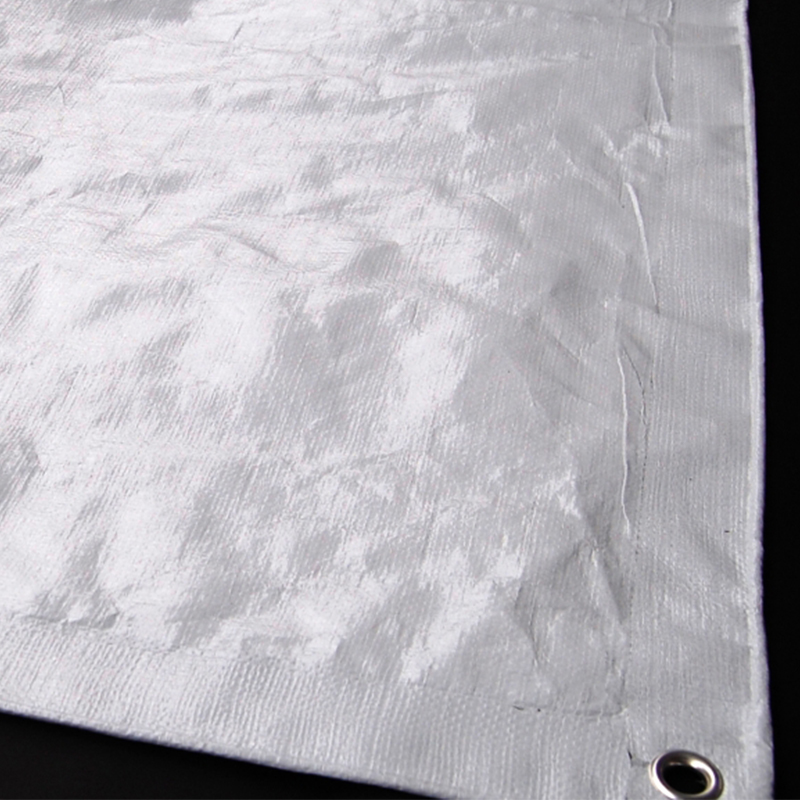 4x5m Reinforced Flexible Tarpaulin for Temporary ShelterA reinforced 4×5 m HDPE tarpaulin for emergency shelter, rain protection or ground moisture barrier, sized as a practical companion sheet for family tents.View Product → are commonly supplied alongside tent orders for exactly that role, which also keeps the groundsheet specification under the same quality conversation as the tent itself.
Mailenda operates as a trade enterprise combined with a factory in Yangzhou, and its product range runs from humanitarian relief shelters to party marquees and camping tents. That breadth matters for inner tent and floor work, because liner and floor construction draws on the same material and machinery base across all of those product lines.
On the material side, the company works routinely with PE, PVC, TPU, polycotton, polyester, galvanised steel and aluminium, which covers the realistic options for floors and liners in both institutional and consumer tents. On the equipment side, the production line includes automatic cutting machines, laser cutting, automatic cutting tables, automatic welding machines, high-frequency welders, hot air blowers and hot air taping machines. Those last items are the ones that decide whether a floor seam is genuinely sealed or merely stitched with a coating stripe over it.
The product catalogue also reflects how inner tent and floor requirements are handled in practice. Family tents are offered with and without inner liners, all-weather double-foldable versions are built for repeated pitching, and the core relief items list includes tarpaulins, sleeping mats, field cots and blankets so that a shelter package can be assembled from one supply chain. Products named against widely referenced humanitarian standards are produced to those specification frameworks, which is what makes the tolerance and seam details in the earlier sections worth discussing at quotation stage rather than after delivery.
On delivery, the company describes long experience in international bidding and supply to institutional buyers as well as cooperation with supermarket chains, with exports to markets including Germany, the United States, Japan, the United Kingdom, Spain, Italy, Canada and Chile. For a buyer, the useful question is not whether a factory can sew a liner, but whether it can hold the same liner dimensions, mesh specification and floor seam method across a repeat order placed eighteen months later.
Two pages worth opening before you finalise a tent specification
Practical technical manual for camping tents: a working reference on fabric, seam and pitching details that sits well beside the floor and liner parameters discussed above.
Mailenda outdoor shelter range: the full product overview covering relief tents, inflatable shelters, party marquees, storage tents and camping tents, including inner liner and groundsheet options.
An inner liner is a fabric layer suspended inside the flysheet to control condensation, heat and privacy, and it can usually be removed and refitted. An inner tent, or inner room, is a separate compartment with its own doors, mesh and often its own floor. Family and relief tents tend to use liners; camping tents tend to use inner rooms. State which one you mean in the purchase order, because the price and the pitching sequence differ.
Neither is universally better. A sewn-in floor seals the interior against insects, water and wind and speeds up pitching, but it is harder to dry and a damaged floor can retire the whole tent. A separate groundsheet is cheap to replace and takes abrasion away from the tent floor, but it can be lost and it adds an item to the stores list. Many programmes use both, with the loose sheet as the sacrificial layer.
Around 100 mm suits dry sites and short deployments, 150 mm is a sensible working minimum for rainy regions, and 200 mm or more helps where standing water is likely but adds weight and stiffens the wall. Whatever height is chosen, the seam joining the upstand to the wall should be welded or taped, since that is the line water reaches first.
Near 1 mm is the right choice where biting insects and sand flies are a serious health risk, accepting reduced airflow. Around 1.5 to 2 mm improves ventilation and is common in hot, dry regions with less vector pressure, at some cost in privacy and insect exclusion. Specify the aperture in millimetres with a tear strength figure, and check that panel edges are bound rather than cut raw.
Test the finished seam, not only the fabric. A water column test on a seam sample, combined with a visual check of weld width and tape coverage, catches most problems before shipment. A simple practical check is to pitch a sample, pour a shallow pool inside the upstand and leave it for an hour; any darkening along the seam line indicates a join that will fail in service.
Yes, and it is worth asking at quotation stage rather than after the first repair request. Liners with toggles and hooks, complete inner rooms and floor panels cut to the original pattern can all be supplied separately, and spare patches of the floor material should be included in the consignment. Repair-friendly supply is usually cheaper than replacing a full tent because one floor corner wore through.
Plus or minus 20 mm on main panel dimensions is a realistic working figure for coated fabrics and polycotton, given shrinkage and relaxation of roughly 1 to 3 percent. Cut the liner slightly generous and make the final fit adjustable through toggles or elastic loops, then verify alignment by pitching a production sample rather than measuring a flat panel.
The pattern running through all of this is simple. The inner tent and floor are not accessories to a tent, they are the surfaces that decide whether the shelter is comfortable, cleanable and still intact after a season of use. A specification that names the liner type, the mesh aperture, the floor coating, the upstand height, the seam method and the dimensional tolerance will produce a consistent product from any competent factory, and will make the second and third orders match the first.
For buyers, the practical next step is to take the two tables in this guide into the next quotation round, agree the values that match the deployment climate, and ask for a pitched sample to be inspected rather than a flat fabric swatch. That single change in process removes most of the surprises that otherwise appear only when the tent is already in the field.
Related Products

Our story is about how to uphold the spirit of humanitarianism in the face of disaster, how to find solutions amidst challenges, and how to sow hope in despair.
Copyright © Yangzhou Mailenda Outdoor Products Co., Ltd.
All Rights Reserved.
Custom Tent OEM/ODM Manufacturers


