Our story is about how to uphold the spirit of humanitarianism in the face of disaster, how to find solutions amidst challenges, and how to sow hope in despair.
Content
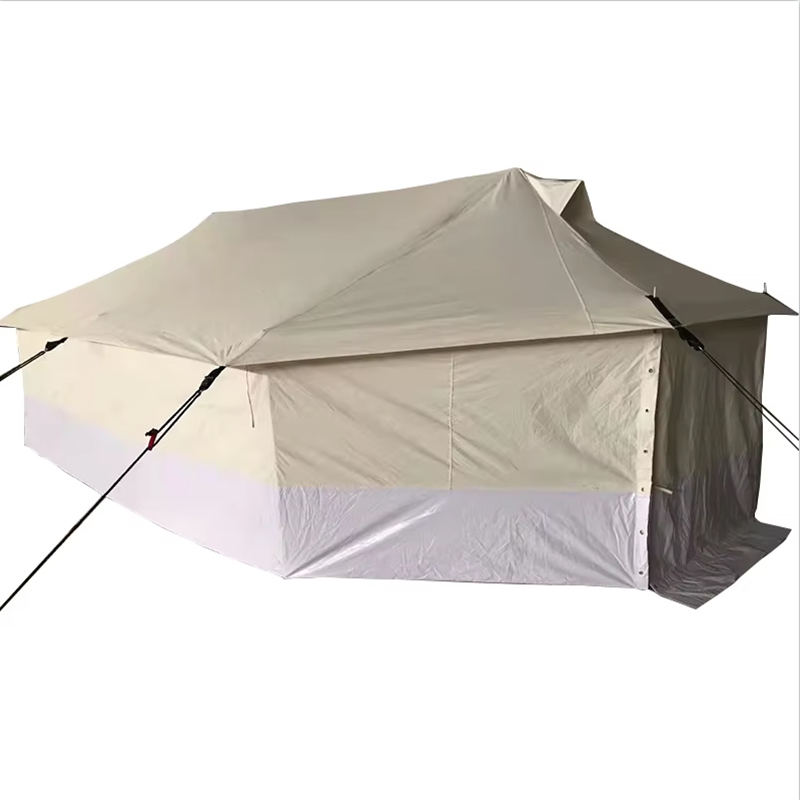
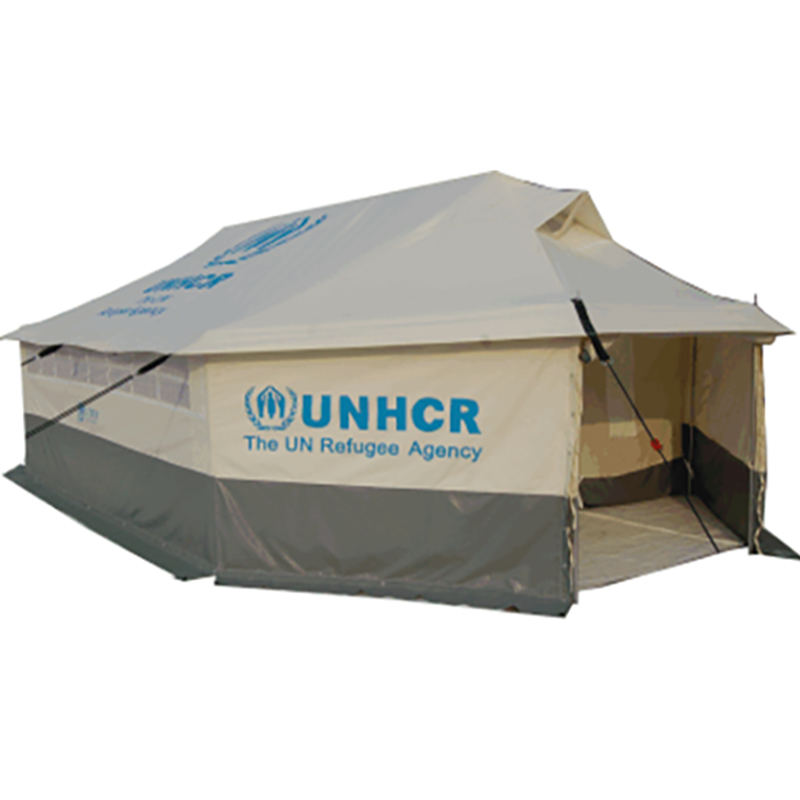
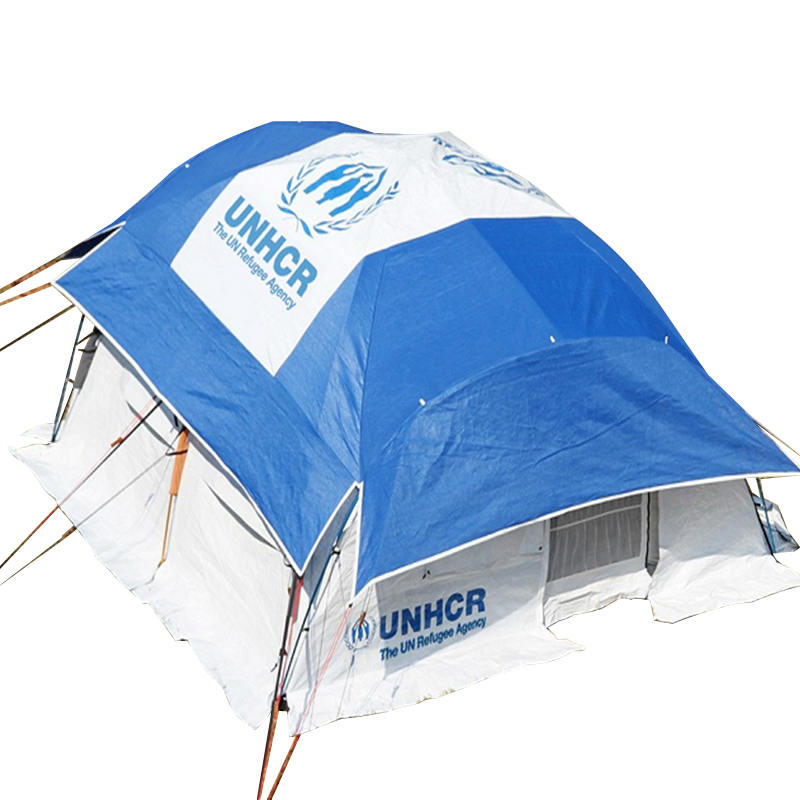
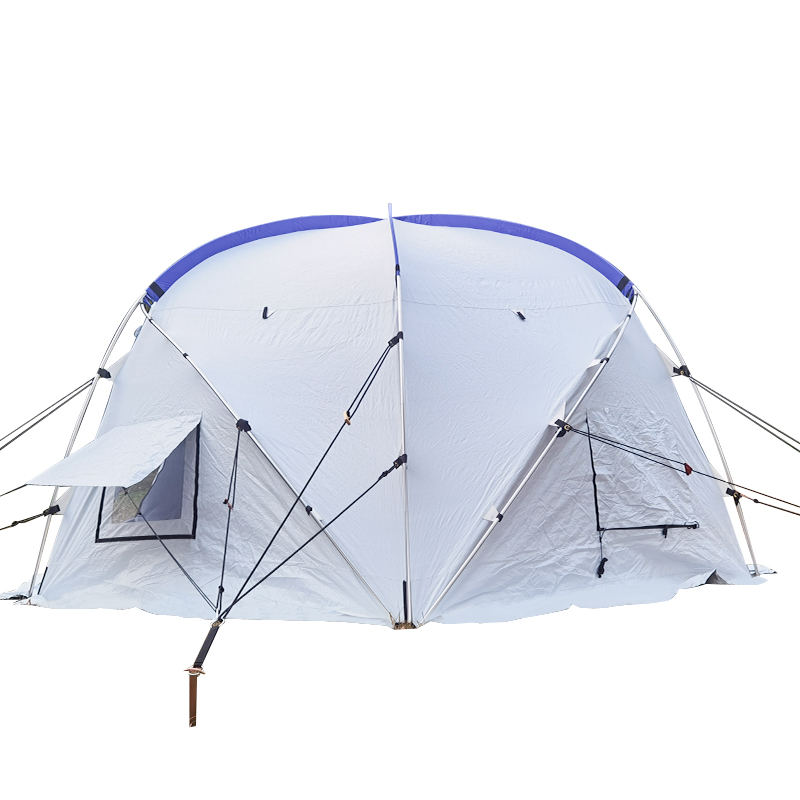
A UNHCR standard 5-person double foldable all-weather family tent can be set up by two people in under 20 minutes using a peg-and-pole system, requiring no specialized tools. The double-fold design compresses the tent into a compact carry bag, while a pre-attached color-coded pole system guides assembly even in low-light or emergency field conditions. This article covers the complete setup process, key features, ICRC/IFRC/UNHCR compliance requirements, and selection guidance for humanitarian organizations, disaster relief agencies, and families seeking a durable, high-performance emergency shelter tent.
The double fold tent design used in UNHCR-approved emergency shelter systems is engineered for rapid deployment. The following sequence reflects the standard field procedure used by humanitarian organizations including ICRC and IFRC partner agencies.
With practice, a trained two-person team can complete setup in 15–20 minutes. UNHCR field testing data indicates that first-time users with illustrated instructions average 35 minutes for full setup of a standard 5-person family tent.
UNHCR approved emergency shelter products must meet a comprehensive set of technical specifications that cover material performance, structural integrity, thermal comfort, and longevity. These standards are jointly referenced by ICRC, IFRC, and UNHCR procurement teams worldwide and form the basis of the ICRC IFRC tent standards used in international humanitarian tenders.
| Parameter | UNHCR Minimum Requirement | Typical High-Performance Value |
|---|---|---|
| Floor Area (5-person) | 17.5 m² | 20–24 m² |
| Outer Fabric Weight | ≥ 190 g/m² | 220–280 g/m² |
| Water Column Resistance | ≥ 1,500 mm | 3,000–5,000 mm |
| UV Resistance | ≥ 500 hours (Xenon arc) | 1,000–2,000 hours |
| Wind Load Resistance | ≥ 80 km/h | 100–120 km/h |
| Temperature Range | -20°C to +50°C | -30°C to +60°C |
| Flame Retardancy | ISO 6941 / CPAI-84 | EN 13501 Class C or better |
| Service Life (Field) | 12 months | 24–36 months |
Relief tent producers supplying to UN agencies must also provide full MSU Relief Items compatibility documentation — confirming that the shelter kit includes all required accessories: plastic tarpaulin, plastic sheeting, water container or jerry bucket, thermal blanket, sleeping mat, and folding bed or field cot as specified in the procurement lot.
The term High Performance Tent (HPT) is used by humanitarian procurement agencies to describe emergency shelter products that exceed baseline UNHCR specifications. A foldable military grade tent suitable for disaster relief operations shares most structural characteristics with civilian all-weather designs but is manufactured to stricter tolerances for fabric weight, seam strength, and UV degradation resistance.
The outer flysheet of a quality disaster relief tent is typically constructed from 190T or 210D polyester with a polyurethane (PU) or silicone coating, achieving a water column rating of 3,000–5,000mm. Seams are heat-taped or seam-sealed to prevent water infiltration at stitch points — the most common failure location in field shelters. The inner tent uses breathable ripstop nylon or cotton-polyester blends to manage condensation.
The structural frame is the most critical component differentiating tent types. The Modular General Purpose Tent (MGPT) and military tent formats use galvanized steel or aircraft-grade aluminum frames, while civilian family camping tent models favor fiberglass or lightweight aluminum alloy. Key frame types in humanitarian and commercial applications include:
A professional refugee tent manufacturer and relief tent producer must supply far more than basic sleeping shelters. Humanitarian operations require a complete ecosystem of tent structures, from small 5 men tent units for individual families to large warehouse tent and storage tent structures for logistics staging. Below is a categorized overview of the main tent types used in disaster relief, military, and commercial outdoor markets.
The inflatable tent category has grown substantially in humanitarian and military procurement over the past decade. Low pressure inflatable shelter systems using air-beam technology replace rigid poles entirely with inflatable tubes that reach operational pressure (0.5–0.8 bar) in 3–8 minutes using a standard foot pump or electric blower. The result is a structurally rigid shelter that is faster to erect, more resistant to wind-induced vibration, and entirely free of sharp structural components that could injure occupants during deployment.
The inflatable relief tent, inflatable family tent, and inflatable outdoor tent formats are now standard in the catalogs of major relief tent producers. The Inflatable Rapid Deployment Tent format — designed to ICRC/IFRC rapid-response specifications — can be deployed by a single person in under 8 minutes and packed into a bag weighing under 25 kg, making it suitable for air-dropped or vehicle-transported emergency response.
Beyond humanitarian use, the same air-beam technology powers the inflatable camping tent market, with recreational designs available in 2–8 person capacities. These are increasingly popular with family camping tent buyers who prioritize setup speed over ultralight weight.
Material selection is the single most consequential decision in tent specification. The choice of fabric determines weight, waterproofing, UV resistance, cold-weather performance, and service life. The table below compares the primary fabric types used across the full range of tent products — from humanitarian tents to glamping tent and party tent applications.
| Material | Weight | Waterproof Rating | UV Resistance | Best For |
|---|---|---|---|---|
| PE (Polyethylene) | Light–Medium | 1,500–3,000 mm | Moderate | Relief tents, plastic tarpaulin, carport |
| PVC | Heavy | Fully waterproof | High | Party tent, marquee, warehouse tent |
| TPU | Medium | Fully waterproof | Very High | Inflatable tent, stretch tent, military |
| Polyester (coated) | Light–Medium | 2,000–5,000 mm | High | Family tent, dome tent, camping tent |
| Canvas (Cotton/Poly) | Heavy | Self-sealing when wet | Moderate | Bell tent, safari tent, glamping tent |
Yangzhou Mailenda Outdoor Products Co., Ltd. is an international trade enterprise integrated with its own manufacturing facility, specializing in the production of relief tents, inflatable tents, party tents, carports, and warehouse tents. The company operates advanced manufacturing equipment including automatic cutting machines, laser machines, automatic cutting tables, automatic welding machines, high-frequency machines, hot-air machines, and hot-air seam sealing machines — enabling precise, repeatable production across all fabric and structural tent categories.
Recognized as one of the earliest factories in China to engage in PVC party tent products, the Mailenda team brings over 20 years of industry experience across PE, PVC, TPU, polyester-cotton fabric, steel, and aluminum material systems. The company has extensive experience in international humanitarian bidding and supermarket supply chain cooperation, with products exported to dozens of countries including Germany, the United States, Japan, the United Kingdom, Spain, Italy, Canada, Chile, and beyond.
Customers include United Nations agencies, international humanitarian organizations, and many globally recognized supermarket chains. Mailenda's production capacity and compliance infrastructure make it a trusted refugee tent manufacturer and emergency tent supplier for ICRC, IFRC, UNHCR, and NGO procurement programs worldwide.
Q1: What makes a tent UNHCR-approved for emergency shelter use?
A UNHCR approved emergency shelter must meet published specifications covering minimum floor area (17.5 m² for a 5-person unit), fabric weight, waterproof rating (minimum 1,500mm water column), UV resistance, flame retardancy to ISO 6941, wind load resistance above 80 km/h, and a minimum field service life of 12 months. Products must pass independent third-party laboratory testing and be listed on the UNHCR qualified supplier roster before being accepted in emergency tenders.
Q2: How long does it take to set up a 5-person double foldable family tent?
A trained two-person team can complete setup of a standard ICRC/IFRC double foldable family tent in 15–20 minutes. First-time users following illustrated instructions average 35 minutes. The inflatable rapid deployment variant reduces setup time to under 8 minutes with a single operator and an electric pump.
Q3: What is the difference between a relief tent and a military tent?
A relief tent is designed for civilian humanitarian shelter, prioritizing thermal comfort, ease of deployment, and compliance with UNHCR or ICRC specifications. A military tent — including formats such as the Modular General Purpose Tent (MGPT), army tent, or 10 men tent — is engineered for operational field use, emphasizing camouflage, ballistic resistance, and rapid modular expansion. Both types share requirements for weather resistance and durability, but military specifications add additional structural and operational criteria.
Q4: Can an inflatable tent withstand strong winds and heavy rain?
Quality inflatable tents using TPU air-beam technology are tested to withstand winds up to 80–100 km/h when properly pegged out. The air-beam structure flexes under wind load rather than rigid failure, giving it advantages over aluminum-pole tents in gusting conditions. In heavy rain, seam-sealed TPU fabric panels perform to a fully waterproof standard. For sustained high-wind environments, supplementary ground anchoring with extended guy lines is recommended.
Q5: What relief items are typically included in a UNHCR shelter kit?
A standard UNHCR shelter kit accompanying the family tent includes plastic sheeting or plastic tarpaulin for ground covering and supplementary weatherproofing, a water container or jerry bucket for household water storage, a thermal blanket for cold weather protection, a sleeping mat, and in some procurement lots, a folding bed or field cot. The exact contents vary by lot specification and the operational context of the emergency response.
Q6: What tent types are suitable for both humanitarian and commercial outdoor use?
Several tent designs bridge humanitarian and commercial applications. The frame tent and western frame tent are used as hospital tents and dispensary tents in relief operations, and as event tents, wedding tents, and marquee structures commercially. The inflatable family tent serves both as an inflatable relief tent and as an inflatable camping tent for recreational users. The geodesic dome and bell tent are used in glamping and safari hospitality as well as for field research stations.
Related Products
Our story is about how to uphold the spirit of humanitarianism in the face of disaster, how to find solutions amidst challenges, and how to sow hope in despair.
Copyright © Yangzhou Mailenda Outdoor Products Co., Ltd.
All Rights Reserved.
Custom Tent OEM/ODM Manufacturers