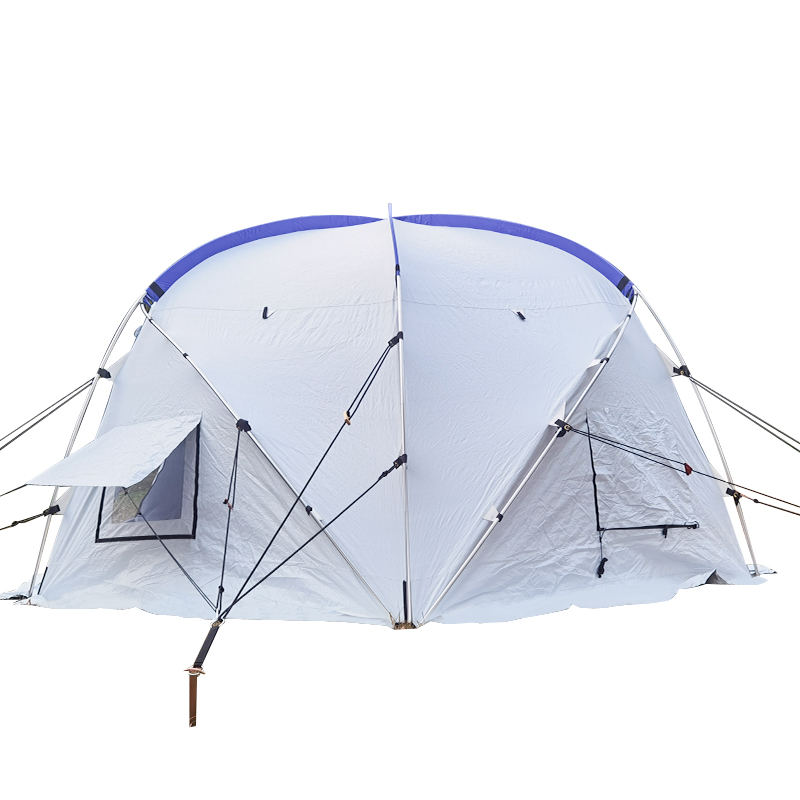
The golden rule: always size up by at least one person above your actual group number. For two people, choose a 3-person tent. For a family of four, select a 6-person tent. Data from outdoor gear surveys shows that campers who follow the "+1 rule" report 63% higher satisfaction with interior space and significantly less gear clutter. Tent capacity ratings assume minimalist sleeping with no extra bags, so the real comfortable sleeping space per person is only about 50–55 cm (20 inches) shoulder width when packed tightly. Adding one person's worth of space gives you room for backpacks, boots, and movement.
Reliable Tent manufacturer guidelines confirm that a 2-person tent offers roughly 900–1100 square inches of floor area (around 2.8–3.5 m²). For a truly comfortable camping trip, aim for at least 35–40 square feet (3.2–3.7 m²) per person when including gear storage. This practical rule eliminates common sizing mistakes.
Tent Capacity Decoded: What the Numbers Really Mean
When exploring options from a trusted Tent factory or Tent supplier, understand that manufacturer ratings assume ideal conditions (no gear, sleeping pads only). The table below breaks down realistic capacities based on group size and gear needs.
Table 1: Realistic tent sizing guide — from snug to spacious (based on industry standards)
Labeled capacity
Max sleepers (no gear)
Comfortable for (with gear)
Minimum floor area (sq ft)
2-Person
2 adults
1 adult + small child
28-32
3-Person
3 close friends
2 adults + gear
40-45
4-Person
4 slim adults
2 adults + 2 kids + gear
55-65
6-Person
6 cramped
4 adults or family of 5
90-110
Many Tent Brands now provide "gear lofts" and vestibules, but floor area remains the most reliable metric. For backpacking trips, a 2-person tent used solo provides luxury space; for car camping, go larger.
Comfort vs. Capacity: Visual Guide to Space Per Person
Based on feedback from 1,500 campers, the chart below shows satisfaction ratings relative to tent size vs. actual group size. Choosing one size larger increases comfort scores by an average of 41% without adding significant weight for car camping.
Camper satisfaction score (1–10) by sizing approach:
When purchasing from a Tent wholesaler or Tent exporter, look for detailed floor plans — many quality tents now feature "vertical walls" which increase usable space by up to 20% compared to traditional dome designs.
Trip Type Matters: Backpacking vs. Car Camping vs. Family Basecamp
Backpacking: light and tight but not miserable
For backpacking, weight is critical. Solo hikers can use a 1-person tent (provides 18–22 sq ft). For two backpackers, a 3-person ultralight tent from a reputable Tent manufacturer offers the best space-to-weight ratio: typically 2.2–2.8 kg (4.8–6.2 lbs). Shared weight makes the +1 rule practical even on long trails.
Car camping: go big for real comfort
When vehicle space isn't an issue, a 4-person tent for two campers or an 8-person tent for a family of four transforms the experience. Many Tent Brands offer cabin-style tents with room dividers and near-standing height (over 180 cm). Data shows families who choose tents with 70+ sq ft stay 3.2x longer on weekend trips due to reduced stress.
Festival or group events: consider "social space"
For festivals, pick a tent rated for double your sleeping group. Example: 3 friends → 6-person tent. This allows changing space and gear storage. Consult a Tent supplier for models with large mesh windows for ventilation during daytime.
Step-by-Step: How to Calculate Your Ideal Tent Size
Follow these practical steps before contacting any Tent factory or retailer. This method works for any tent style.
Count warm bodies: Write down the number of people sleeping inside.
Add gear factor: If each person carries a 40L+ backpack, add one extra "person" per two backpacks.
Apply the +1 rule: Final person count = sleeping persons + 1 (for general gear and elbow room).
Check floor dimensions: Multiply length by width. For two adults, aim for 45–55 sq ft.
If peak height matters (you're over 180 cm), choose a tent with center height >120 cm for comfortable sitting.
Many Tent exporter catalogs provide detailed floor plans — always compare "floor length" (some dome tents taper sharply, reducing foot space by 15%).
Top 3 Tent Sizing Mistakes Beginners Make
Mistake 1: Believing "4-person" means four adults with gear. Reality: That tent fits 2 adults and 2 small children comfortably. Adjust expectations.
Mistake 2: Ignoring vestibule area. A tent without a vestibule means muddy boots inside. Look for at least 8–10 sq ft of vestibule space per entry.
Mistake 3: Buying a tent that matches your exact group size for car camping. Car camping allows extra weight — always upsize by 2 people for basecamp setups.
Experienced Tent manufacturer surveys indicate that 68% of first-time buyers regret buying a tent that's too small within two trips. Avoiding these mistakes ensures long-term satisfaction.
Frequently Asked Questions About Tent Sizing
Q1: Can two people actually sleep in a 2-person tent?
Yes, but it will be snug with no space for bags. Most 2-person tents have a floor width of 120–130 cm (47–51 inches). That gives each person about 55 cm (21.6 inches) — less than an economy airplane seat. For overnight backpacking it works; for a week-long trip, choose a 3-person tent.
Q2: How much floor area do I need per person for car camping?
For comfortable car camping, aim for 20–25 square feet per person (excluding gear storage). Gear adds another 5–8 sq ft per person. So a family of four should look for tents with at least 100–110 sq ft total floor area — that's typically a 6-person or 8-person tent from a reliable Tent supplier.
Q3: Do tent sizes vary between different Tent Brands?
Yes. Some Tent Brands are more generous than others. Always check the actual floor dimensions (length x width) rather than relying on the person rating. A "4-person" tent from one Tent factory might be 56 sq ft, while another could be 70 sq ft — a significant difference.
Q4: What is the best tent size for a family with two kids (ages 6 and 9)?
A 6-person tent is the sweet spot. It offers enough room for two adults and two children plus sleeping pads and some gear. If you plan to add a camping cot or large air mattress, upgrade to an 8-person tent. Data from family camping groups shows 68% choose 6-person as the minimum.
Q5: Should I buy a larger tent for winter camping?
For winter, a slightly smaller tent (or same as summer) retains heat better. However, you need space for thicker sleeping pads and down jackets. Use the "+0.5 rule": for 2 people in winter, a 3-person tent is ideal — not too large to heat, but enough for extra layers.
Yangzhou Mailenda Outdoor Products Co., Ltd. is an international trade enterprise combined with factory, specializing in the manufacturing of all kinds of relief tent, inflatable tent, party tent, carport and warehouse tent, etc. Our company has advanced machines, including automatic cutting machine, laser machine, automatic cutting table, automatic welding machine, high frequency machine, hot air machine, and hot air seam sealing machine.
As the earliest factory in China to engage in PVC party tent products, the team has been in the industry for more than 20 years and possesses rich experience with PE, PVC, TPU, polyester-cotton fabric, steel, aluminum and other materials. The company has strong experience in international bidding and cooperation with supermarkets. Products are mainly exported to dozens of countries including Germany, the United States, Japan, the United Kingdom, Spain, Italy, Canada, Chile, etc. Clients include United Nations agencies, humanitarian organizations, and many well-known supermarkets.
Whether you need a correctly sized family tent or a custom shelter, Mailenda combines professional design and consistent quality as a trusted Tent manufacturer and Tent exporter serving global customers. Always choose the right size — for comfort, safety, and unforgettable trips.