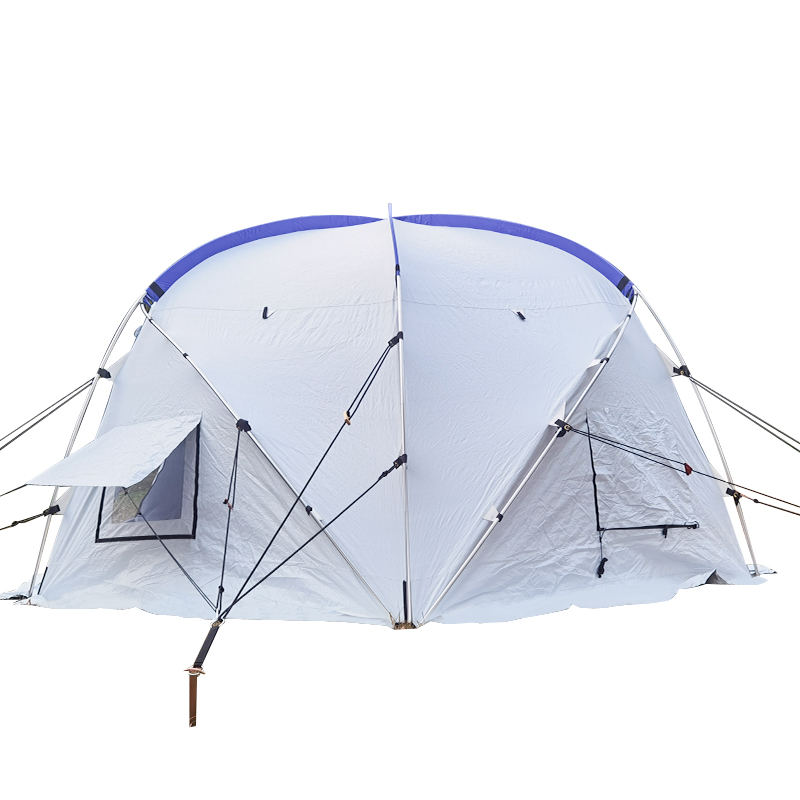
Structural Compatibility: The frame design of storage tents usually leaves enough space to accommodate various flooring materials (such as wooden boards, metal grids, plastic mats, etc.) without affecting assembly.
Moisture and Water Resistance: A simple tarpaulin bottom cannot effectively prevent ground moisture or rainwater penetration. Using waterproof flooring completely isolates the tent from external moisture.
Improved Durability: Flooring prevents the storage tent's tarpaulin from rubbing directly against the ground, extending the tent's lifespan. Safety and Anti-slip: A flat floor surface avoids the risk of slipping caused by muddy conditions in rainy weather, improving safety.
2. Recommended Flooring Types
Plastic Moisture-Proof Mats (PVC/PE): Suitable for temporary setups, lightweight and easy to lay, good waterproof performance, and low cost.
Cement/Concrete: Suitable for long-term use or storing heavy vehicles, providing the strongest support and moisture resistance.
Wooden Boards/Treated Wood: Aesthetically pleasing and easy to lay, suitable for situations where appearance is important.
Metal Grid Plates/Steel Grates: Good ventilation, suitable for construction sites or equipment storage requiring ventilation.
3. Installation Methods and Precautions
Direct Laying: Lay the flooring material directly on a flat surface, then erect the tent, securing the edges of the tarpaulin to the flooring.
Drainage Design: If the ground drainage is poor, it is recommended to set up drainage ditches under or around the flooring to prevent water accumulation.
Waterproofing Treatment: It is recommended to use waterproof strips or sealant at the joints between the flooring and the tarpaulin to ensure no leaks.
Load-Bearing Considerations: If used for parking vehicles or heavy equipment, a strong load-bearing floor (such as cement or steel grates) must be used; thin plastic mats are not sufficient.