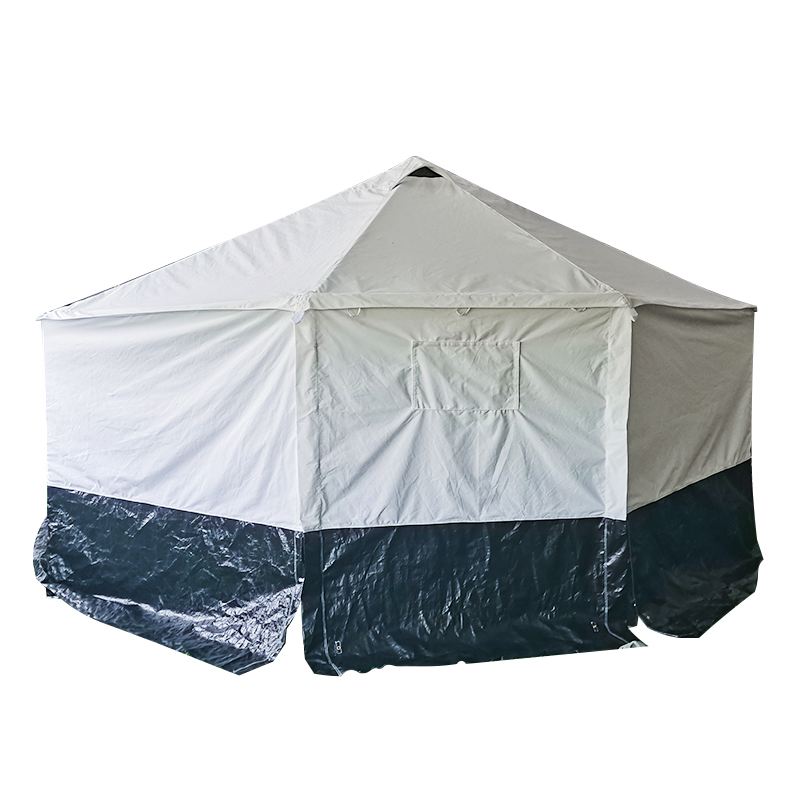
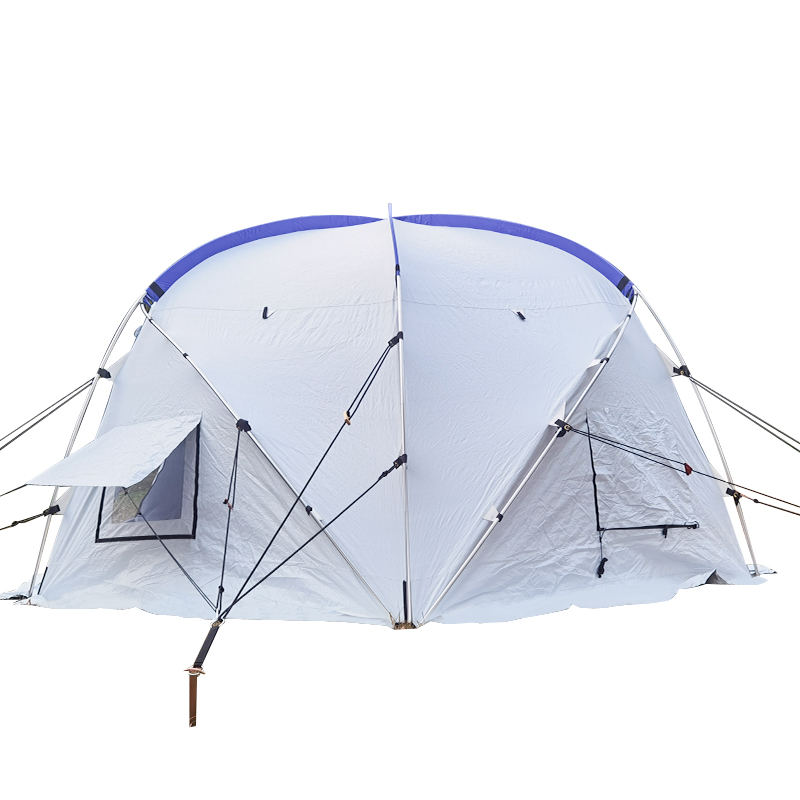
A6x6m pagoda marquee PVC pop up canopy tent is built around a steel or aluminum peg and pole style frame with a high peak roofline, covered in heavy duty PVC fabric, and is designed to be assembled by a small crew without specialized tools. This is the direct answer for event planners comparing structure types for weddings, birthday parties, community activities, club gatherings, or market exhibitions: the pagoda profile combines a tall center peak with sloped roof panels that shed rain effectively while giving a taller, more open interior than a standard pole tent of the same footprint. The sections below cover how this tent format is built, how it compares with other structure types, how to pack it down after an event, and where it fits within a wider range of tent and relief item products.
Key Takeaways on the Pagoda Marquee Pop Up Canopy Tent
The 6x6-2.3m pagoda marquee is built with a galvanized steel frame, using 38x1.1mm and 42x1.2mm tube sections that are galvanized on two sides for corrosion resistance, giving the structure a center height of 3.5 meters and a sidewall height of 2.3 meters. The roof cover is made from 500g per square meter PVC fabric, and the sidewalls use the same 500g per square meter PVC material, which is the same fabric weight class commonly used across durable marquee wedding tent and event tent structures intended for repeated outdoor use.
This tent format is part of a broader category sometimes referred to as a pole tent or peg and pole tent when using traditional guy rope anchoring, though the pagoda style specifically refers to the pyramid shaped roof peak at each corner or center point. Because the frame components are modular, the same structural approach used in this partytent can be scaled or reconfigured, which is part of why pavilion, pagoda, and gazebo style structures are frequently grouped together in outdoor structure planning guides.
Center height of 3.5 meters provides a taller usable interior compared with lower profile canopy formats.
500g per square meter PVC cover and sidewalls are designed to resist water penetration and reduce ultraviolet exposure inside the structure.
The 6x6m footprint is generally sized to accommodate seating and standing space for dozens of guests, depending on furniture layout.
Structure and Material Performance
The performance of any outdoor canopy structure depends heavily on two factors working together, the frame geometry and the cover fabric. The pagoda roof shape distributes wind and rain load down through sloped panels toward the frame legs, which is a similar principle used in high peak tent and western frame tent designs. Frame tube sections finished with two sided galvanization are intended to resist corrosion from repeated outdoor exposure and from condensation that can form inside sealed storage during transport between events.
Fabric weight is commonly used as a general indicator of durability and water resistance across canopy and marquee products, with heavier PVC generally offering greater resistance to tearing and UV degradation over repeated seasonal use. The chart below is an illustrative comparison of typical cover fabric weight ranges across several common outdoor structure fabric categories, based on general industry fabric specification ranges rather than a single test result.
Heavier PVC fabric in the 500 gram per square meter range is generally positioned toward the durable end of common canopy fabric ranges, which supports its use in structures intended for repeated commercial or community events rather than occasional single use. Lighter fabrics in the 220 gram range are more typical of compact, easily portable pop up canopies meant for short duration outdoor use, while mid weight fabrics balance portability with a moderate level of durability. Selecting fabric weight relative to expected usage frequency is one of the more practical decisions when comparing tent options for recurring events.
Comparing Pagoda Marquee, Frame Tent, and Pole Tent Formats
Event organizers frequently compare a pagoda style marquee against a standard frame tent or a traditional pole tent before selecting a structure for a given venue. Each format has different strengths depending on ground conditions, wind exposure, and how much unobstructed floor space is needed. The radar chart below is an illustrative comparison across four structure types on a simple one to five scale covering setup speed, structural stability, wind resistance, and interior space flexibility.
The comparison illustrates that pagoda marquee structures tend to score well on interior space and venue versatility because the modular frame legs do not require the wide guy rope perimeter that a traditional pole tent needs, which makes the pagoda format better suited to paved surfaces, courtyards, and venues with limited surrounding space. Traditional pole tents can offer strong wind resistance in open field settings where anchoring space is available, but they require more ground clearance around the perimeter. A stretch tent or stretch marquee format, by comparison, is generally chosen for its flexible fabric silhouette rather than a fixed frame profile, which serves a different aesthetic and setup use case than the pagoda structure.
How to Pack a Pop Up Tent After an Event
Packing a pop up canopy tent correctly after use is one of the most practical steps for extending its usable life, since folding a frame incorrectly or storing damp PVC fabric are two of the most common causes of premature wear. The general sequence below reflects standard practice commonly recommended across pop up and frame canopy product guides.
Remove any sidewalls, window panels, or door zippers first and fold them separately from the frame and roof cover.
Lower the frame gradually and evenly from all corners rather than collapsing one side first, to reduce stress on the joints.
Wipe down the PVC cover to remove dirt, moisture, and debris before folding, since packing damp fabric can lead to mildew during storage.
Fold the cover along its original crease lines where possible to avoid creating new stress points in the fabric over time.
Store the frame components and cover in their designated carton or carry bag, keeping hardware such as pins and connectors together in a separate labeled pouch.
Following a consistent packing sequence each time also makes the next setup faster, since components are easier to locate and are less likely to be damaged from being folded or bent incorrectly during the previous breakdown. For structures used repeatedly across a season of events, a brief inspection of frame joints and fabric seams during packing can help identify wear before it becomes a larger issue.
Product Specifications
The table below summarizes the core specifications for the 6x6-2.3m pagoda marquee party tent, item number PM0606, which is useful for event planners and buyers comparing structures for wedding, community, or exhibition use.
Specification summary for the 6x6-2.3m pagoda marquee party tent, item PM0606
Attribute
Detail
Item number
PM0606
Frame tube specification
38x1.1mm and 42x1.2mm, galvanized two sides
Center height
3.5 meters
Cover fabric
500 g/m2 PVC
Sidewall fabric and height
500 g/m2 PVC, 2.3 meters, square church window style
Sidewall configuration
10 sidewalls with window, 2 sidewalls with window and zipper door
Packaging
7 cartons or one pallet, 234x36x74cm
Volume and gross weight
0.524 cbm, 201kgs
Below is a simplified isometric schematic diagram of the pagoda marquee structure, showing the peak roof section, frame legs, and sidewall placement. This is an illustrative structural diagram rather than a photograph of a specific unit.
Product Range Across Tent and Relief Item Categories
Beyond event structures, manufacturing capability across tent products commonly extends into several distinct categories, each built for a different operating environment. The donut chart below is an illustrative breakdown of how a diversified tent manufacturing range is typically distributed across these categories, based on common industry product line groupings rather than a specific sales dataset.
This category spread reflects how tent manufacturing knowledge, particularly around frame engineering and heavy fabric coatings, tends to carry across very different end uses, from a refugee tent manufacturer program supplying humanitarian operations to a portable garage or carport product used for vehicle protection. The sections below list common product categories within each group.
Relief and Emergency Shelter Categories
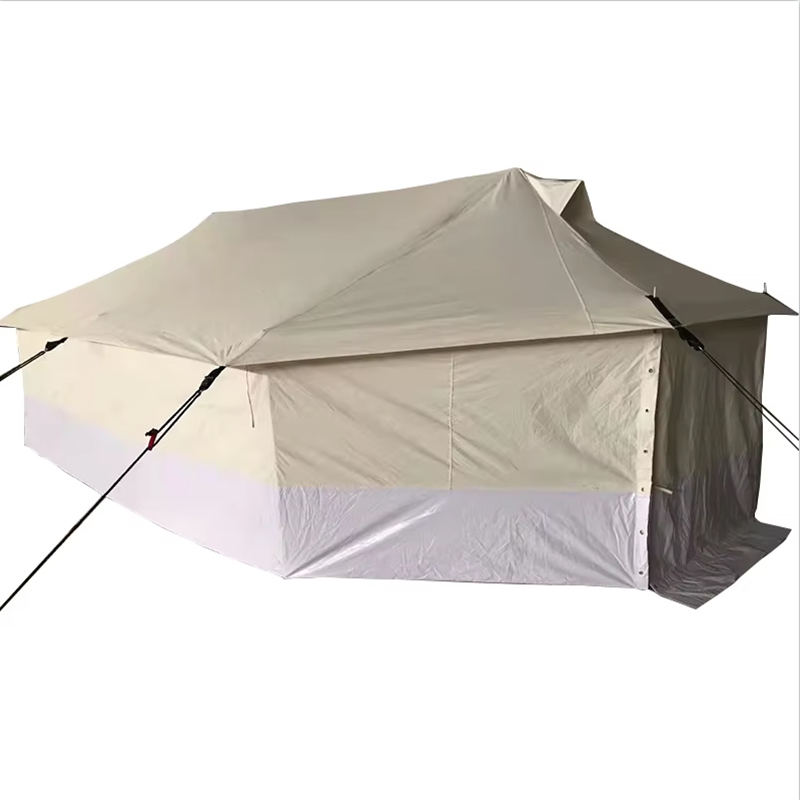
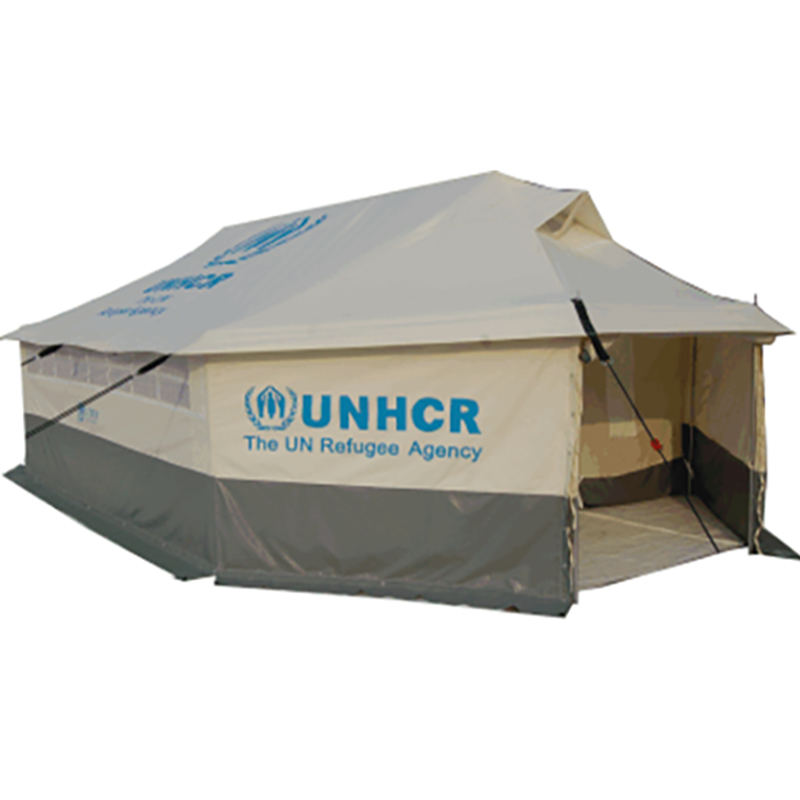
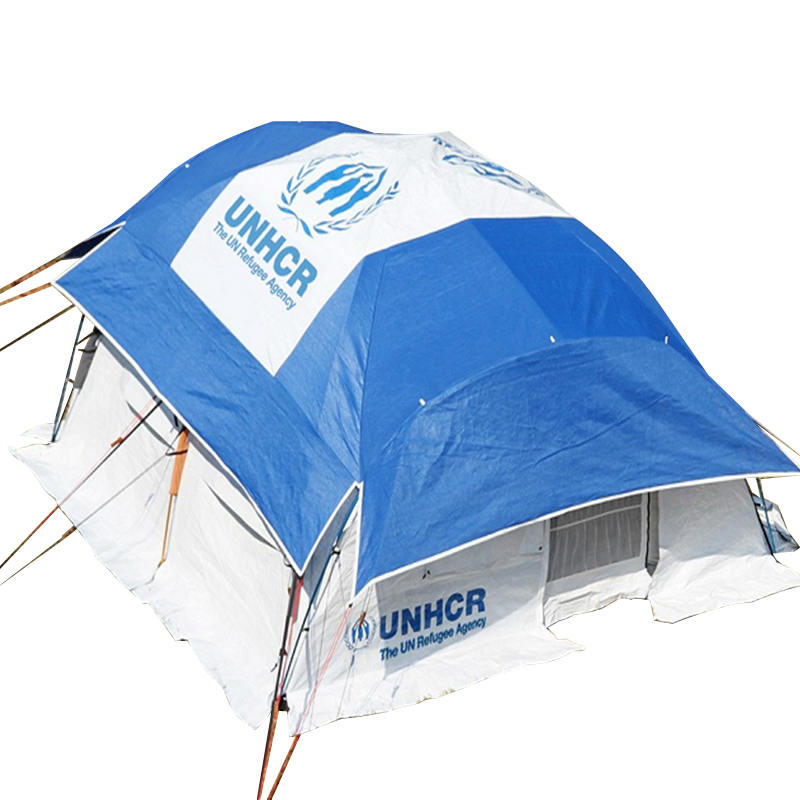
Relief and emergency shelter product lines commonly include the relief tent, disaster tent, family tent, multipurpose tent, and high performance tent or HPT category, alongside function specific structures such as the dispensary tent, hospital tent, storage tent, and warehouse tent. Programs referencing MSU Relief Items typically also include supporting supplies such as a shelter kit, plastic tarpaulin, plastic sheeting, water container, jerry bucket, thermal blanket, sleeping mat, folding bed, and field cot. Structural formats in this category also include the military tent, army tent, 5 men tent, 10 men tent, and Modular General Purpose Tent or MGPT, which is often specified alongside refugee tent programs.
Inflatable Structure Categories
Inflatable structures range from the rapid deployment focused Inflatable Rapid Deployment Tent and low pressure inflatable shelter, used in time sensitive relief settings as an inflatable relief tent, through to leisure oriented formats including the inflatable camping tent, Inflatable family tent, and inflatable outdoor tent.
Event, Utility, and Outdoor Categories
Event oriented structures include the sukkah tent, along with general utility formats such as the portable garage, carport, car shelter, greenhouse, and polytunnel, plus agricultural formats including the livestock tent, pasture tent, and corral shelter. Outdoor and camping categories commonly include the canvas tent, bell tent, safari tent, glamping tent, camping tent, geodesic dome, scout tent, bow tent, tipi tent, teepee tent, backpacking tent, and dome tent.
Setup Time by Crew Size
One of the practical questions event planners ask when evaluating a pop up canopy tent is how long setup takes relative to available crew size. The line chart below is an illustrative representation of typical setup time trends for a structure of this size as crew size increases, based on general assembly patterns reported for modular frame canopy structures rather than a specific timed test.
The downward trend line reflects the general pattern that setup time decreases as more people are available to raise frame sections simultaneously, though the rate of improvement tends to level off once crew size exceeds a certain point, since coordination between additional workers becomes the limiting factor rather than raw labor availability. A two person crew can generally still complete setup of a modular pagoda frame without additional tools, consistent with the tool free assembly design commonly used across pop up canopy products, but adding a third or fourth person tends to meaningfully shorten total setup time by allowing frame sections and cover fitting to proceed in parallel. This pattern is useful for event planners scheduling crew time ahead of a wedding, market exhibition, or community activity where setup needs to be completed within a fixed window.
About Yangzhou Mailenda Outdoor Products Co., Ltd.
Yangzhou Mailenda Outdoor Products Co., Ltd. is an international trade enterprise combined with a factory, specializing in the manufacturing of relief tents, inflatable tents, party tents, carports, and warehouse tents, among other structures. The company operates advanced production equipment, including automatic cutting machines, laser machines, automatic cutting tables, automatic welding machines, high frequency machines, hot air machines, and hot air seam sealing machines.
The company is among the earliest factories in China to engage in PVC party tent production, and the team has more than 20 years of industry experience working with PE, PVC, TPU, polyester cotton fabric, steel, aluminum, and other materials. The company has extensive experience in international bidding processes and cooperation with supermarket chains, with products exported to dozens of countries and regions including Germany, the United States, Japan, the United Kingdom, Spain, Italy, Canada, and Chile. Its customer base has included United Nations agencies, humanitarian organizations, and a number of well known supermarkets.
Frequently Asked Questions
Q1: What size events is a 6x6m pagoda marquee suited for
A 6x6m footprint is generally sized for weddings, birthday parties, community activities, club gatherings, and market exhibitions, with capacity depending on furniture layout and whether the space is used for seating or standing.
Q2: How is a pagoda marquee different from a standard pole tent
A pagoda marquee uses a modular frame with a peaked roofline rather than the wide guy rope perimeter required by a traditional pole tent, which generally makes it more suitable for paved surfaces and venues with limited surrounding space.
Q3: How should the tent be packed after an event
Sidewalls should be removed and folded separately, the frame lowered evenly from all corners, and the PVC cover wiped dry before folding along its original crease lines to reduce stress on the fabric during storage.
Q4: Does the company produce tents beyond event and party structures
Yes, product categories also include relief and emergency shelter structures, inflatable tents, storage and warehouse tents, carports, and camping or outdoor tent formats, built using shared frame engineering and fabric coating expertise.
Q5: What frame material is used in the 6x6-2.3m pagoda marquee
The frame uses 38x1.1mm and 42x1.2mm steel tube sections that are galvanized on two sides, paired with 500 gram per square meter PVC cover and sidewall fabric.