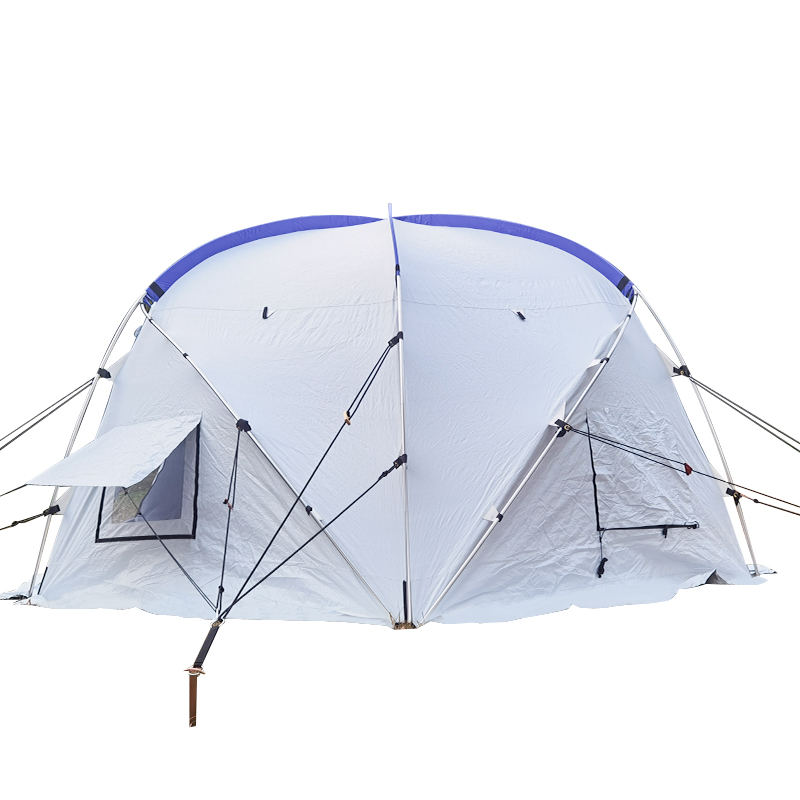
For backcountry enthusiasts, a tent is more than just a shelter; it is a critical piece of survival equipment that must balance three conflicting factors: weight, space, and protection. A high-quality Camping Backpacking Tent must be light enough to carry for 20+ kilometers a day, yet robust enough to withstand sudden alpine storms or high-altitude winds.
Modern hikers frequently ask: "Can an ultralight tent really keep me dry in a torrential downpour?" The answer lies in the fusion of advanced textile technology and geometric stability. By utilizing high-tenacity fabrics and aerodynamic pole structures, today's backpacking tents offer a 4-season safety rating without the heavy bulk of traditional camping gear. This guide explores the technical metrics that define a truly reliable mountain shelter.
Technical Analysis: Material Science and Waterproofing Metrics
The performance of a backpacking tent is determined by its Hydrostatic Head (HH) rating and the denier (D) of its fabric. For multi-day trekking, a "balanced" tent uses a silicon-coated nylon (Silnylon) or a PU-coated polyester to ensure that the fabric remains impermeable even under sustained pressure from heavy rain.
Table 1: Performance comparison of different tent fabric technologies for backpacking.
Fabric Type
Waterproof Rating (HH)
Average Weight (2P)
Durability Index
Standard Polyester
1,500mm - 2,000mm
2.5kg - 3.0kg
Moderate
20D Ripstop Silnylon
3,000mm - 5,000mm
1.2kg - 1.8kg
High (Stretchable)
Dyneema (DCF)
8,000mm+
0.5kg - 0.9kg
Extreme (Non-stretch)
Our latest series utilizes a 3,000mm HH rated 20D Ripstop Nylon for the rainfly. This ensures that even in wind-driven rain, moisture is unable to penetrate the outer layer. Additionally, the tent floor is reinforced with a 40D fabric to prevent punctures from sharp rocks or roots, which is a common failure point for cheaper, low-spec ultralight alternatives.
Maximizing Comfort: Ventilation and Condensation Control
Advanced Double-Wall Architecture
One of the biggest complaints among backpackers is internal condensation. A "single-wall" tent often leaves sleeping bags damp by morning. Our backpacking tent features a breathable inner mesh separated by a 10cm gap from the waterproof rainfly. This creates a chimney effect, drawing moist air out through the high-level vents.
Reduces internal humidity by up to 40% compared to single-wall designs.
Prevents "misting" effects during heavy rainfall.
Dual-vestibule design provides dedicated gear storage, keeping wet boots and packs away from the sleeping area.
Structural Stability with 7001 Aluminum Alloy Poles
While carbon fiber is lighter, 7001-series Aluminum remains the preferred choice for serious backpacking because it can bend without snapping. In high-wind scenarios (up to 60km/h), the high tensile strength of these poles allows the tent to flex and shed wind energy, maintaining a safe interior volume for the occupants.
Optimizing Your Trail ROI: Durability Over Time
Buying a backpacking tent is a long-term investment in your outdoor safety. A tent that fails on night three of a seven-day trek can lead to hypothermia and a ruined expedition. By selecting a tent with fully taped heat-sealed seams and reinforced guy-out points, you ensure that the shelter remains a reliable "home" for years of trail use.
Key features that enhance long-term value include:
YKK snag-free zippers for reliable operation in freezing conditions.
Reflective guy-lines to prevent nighttime tripping hazards.
A freestanding design that allows for easy pitching on rocky terrain or wooden platforms.
Conclusion: Engineering the Perfect Night Under the Stars
The Camping Backpacking Tent has evolved into a masterpiece of engineering. By choosing a model that prioritizes silicon-coated nylon and high-grade aluminum poles, you are securing a shelter that is ultralight yet indestructible.
As more travelers head into the wilderness, the importance of "Leave No Trace" and equipment reliability grows. Our tents are designed to offer the maximum protection-to-weight ratio, ensuring that you can push further into the wild with total confidence. Whether you are facing the humid forests of the Pacific Northwest or the dry, windy peaks of the Sierras, the right backpacking tent provides the operational security you need to focus on the journey, not the weather forecast.